
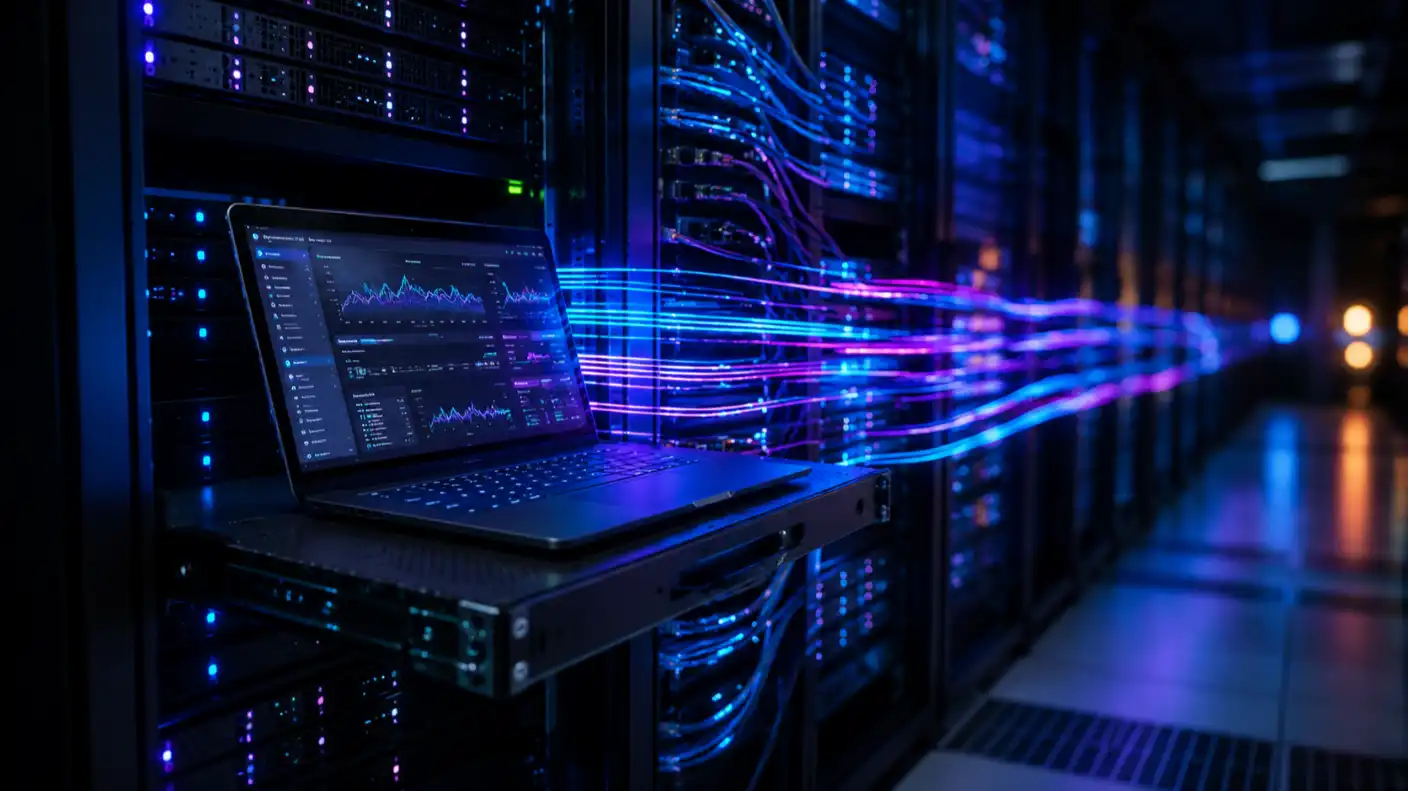
The future of the digital economy rests on the physical infrastructure that powers it. At the heart of this global network are hyperscale data centers, massive facilities that house tens of thousands of servers, processing exabytes of data every single day. As we move deeper into an era dominated by artificial intelligence, machine learning, and advanced cloud computing, the traditional server architectures that have served us for the past two decades are reaching their physical and economic limits. The future of server hardware in hyperscale data centers is undergoing a radical, unprecedented transformation to meet the insatiable demands of modern workloads.
Hyperscale data centers, operated by tech giants like Amazon Web Services (AWS), Google Cloud, Microsoft Azure, and Meta, operate on a scale that defies traditional IT logic. When you operate millions of servers, a mere one percent increase in hardware efficiency or a slight reduction in power consumption translates to hundreds of millions of dollars in savings and a massive reduction in carbon footprint. Consequently, these hyperscale operators are no longer just buying off-the-shelf hardware from traditional vendors; they are actively dictating the future of server hardware design, heavily investing in custom silicon, advanced cooling solutions, and revolutionary interconnect technologies. This comprehensive guide explores the multifaceted evolution of server hardware in hyperscale data centers, detailing the innovations that will define the next decade of cloud computing and artificial intelligence.
The Shifting Architecture of Hyperscale Servers
The fundamental blueprint of a server is being rewritten. For decades, the standard server was a self-contained box with a central processing unit (CPU), local memory, and local storage, all tied together by a motherboard. Today, this monolithic design is being replaced by highly modular, flexible, and specialized architectures.
The Rise of Heterogeneous Computing
The era where the general-purpose CPU handled every computational task within a data center is officially over. Modern hyperscale workloads, particularly those involving deep learning algorithms and real-time data analytics, require specialized mathematical operations that CPUs struggle to perform efficiently. As a result, server hardware has shifted toward heterogeneous computing, an architecture that pairs traditional CPUs with highly specialized hardware accelerators. This allows the system to route specific computational tasks to the piece of silicon that is explicitly designed to handle it, maximizing both speed and energy efficiency.
Heterogeneous computing environments rely on integrating various processing units to achieve maximum operational efficiency. This structural shift provides hyperscale data centers with unparalleled performance capabilities.
- Central Processing Units (CPUs): These remain the primary orchestrators of the server, handling general operating system tasks, basic logic, and coordinating the distribution of workloads to other specialized components.
- Graphics Processing Units (GPUs): Originally designed for rendering images, GPUs excel at parallel processing, making them the absolute backbone of modern artificial intelligence and machine learning model training.
- Data Processing Units (DPUs): These specialized chips offload network, storage, and security management tasks from the main CPU, freeing up valuable processing cycles for core business applications.
Modular Server Designs and Disaggregation
One of the most significant inefficiencies in traditional data centers is the concept of “stranded resources.” In a conventional server, compute, memory, and storage are bound together in fixed ratios. If an application requires a massive amount of memory but very little processing power, the data center operator must still provision an entire server, leaving the CPU severely underutilized. To solve this, hyperscale data centers are moving toward server disaggregation.
Disaggregation relies on separating compute, memory, and storage into distinct, independent resource pools connected by high-speed network fabrics. This modular design strategy drastically improves hardware utilization rates across the entire facility.
- Independent Upgrades: Facility operators can upgrade processor modules without having to needlessly replace perfectly functional memory or storage components, thereby reducing electronic waste and capital expenditure.
- Dynamic Provisioning: Cloud orchestration software can dynamically assemble “virtual servers” by pulling exactly the right amount of compute, memory, and storage from the distinct hardware pools on demand.
- Compute Express Link (CXL): This revolutionary interconnect technology allows servers to share memory pools across different racks, virtually eliminating the problem of stranded memory in modern hyperscale environments.
Moving Beyond Traditional CPUs
As Moore’s Law slows down, the simple strategy of shrinking transistors to pack more power onto a CPU is delivering diminishing returns. To maintain the exponential growth in computational power required by cloud consumers, hyperscalers are aggressively exploring new avenues of processor design.
Advanced GPUs and AI Accelerators
Artificial intelligence has become the primary driver of hardware evolution in the modern hyperscale environment. Training large language models (LLMs) requires trillions of mathematical calculations to be performed simultaneously. Traditional CPUs process tasks sequentially, making them woefully inadequate for this task. Consequently, hyperscale data centers are dedicating vast amounts of floor space to densely packed GPU clusters. These clusters are highly specialized supercomputers built explicitly for AI training and inference.
Artificial intelligence workloads require specialized processing power that traditional central processing units simply cannot provide efficiently. Therefore, hyperscale operators are heavily investing in specialized hardware accelerators designed to handle massive parallel computations.
- Tensor Cores: Modern GPUs are equipped with dedicated tensor cores that are mathematically optimized to execute the matrix multiplication operations that are foundational to deep neural networks.
- High-Density AI Clusters: Hyperscalers are deploying server racks containing multiple interconnected GPUs, utilizing advanced fabrics to allow thousands of chips to function as one massive, cohesive AI supercomputer.
- Inference Accelerators: While massive GPUs handle AI training, smaller, hyper-efficient AI inference chips are being deployed across server fleets to execute AI models in real-time with minimal power draw.
The Era of Custom Silicon (ASICs and FPGAs)
Perhaps the most disruptive trend in hyperscale hardware is the move toward custom-designed silicon. Hyperscale operators are no longer content with purchasing general-purpose chips from traditional semiconductor vendors. Because these tech giants understand their own software workloads better than anyone else, they are now designing their own Application-Specific Integrated Circuits (ASICs). Companies like AWS, Google, and Microsoft are developing proprietary processors tailored specifically to accelerate their most common cloud services, database queries, and machine learning tasks.
Custom silicon allows hyperscale operators to completely bypass the inherent inefficiencies found in general-purpose processors. Designing hardware specifically for targeted software workloads offers several distinct competitive advantages.
- Maximum Power Efficiency: By removing unnecessary logic blocks found in general-purpose chips, custom ASICs consume significantly less electricity while delivering vastly superior performance for specific tasks.
- Enhanced Security Integrations: Custom processors can feature proprietary hardware-level security encryptions and trust zones, making the underlying cloud infrastructure far more resilient to sophisticated cyberattacks.
- Supply Chain Independence: Developing proprietary hardware reduces a hyperscaler’s reliance on external chip manufacturers, protecting them from global semiconductor supply chain shortages and pricing volatility.
Memory and Storage Innovations in Data Centers
Processing power is useless if the server cannot feed data to the processors fast enough. As compute capabilities have skyrocketed, memory bandwidth and storage latency have become the primary bottlenecks in hyperscale architecture.
High-Bandwidth Memory (HBM) Integration
To keep advanced GPUs and custom ASICs fed with data, traditional DDR memory is no longer sufficient. The physical distance between the processor and the memory modules on a motherboard creates unacceptable latency for high-performance computing. The solution is High-Bandwidth Memory (HBM). HBM involves stacking memory chips vertically and placing them on the exact same silicon package as the processor. This microscopic proximity, combined with ultra-wide data buses, allows data to move between the memory and the processor at unprecedented speeds.
The demand for faster data processing has pushed memory technology to evolve rapidly alongside processor advancements. High-Bandwidth Memory addresses this need by stacking memory chips vertically to increase throughput and reduce power consumption.
- 3D Stacked Architecture: By stacking memory dies on top of one another and connecting them with microscopic through-silicon vias (TSVs), manufacturers can pack massive memory capacity into a tiny physical footprint.
- Massive Data Transfer Rates: HBM provides terabytes per second of memory bandwidth, which is an absolute necessity for preventing bottlenecks during the training of massive generative AI models.
- Lower Energy Consumption: Moving data shorter physical distances across a silicon interposer requires significantly less electrical power compared to driving signals across a traditional printed circuit board.
NVMe and the Evolution of Solid State Drives
In the realm of persistent data storage, spinning hard disk drives (HDDs) are being rapidly relegated to cold storage and archival duties. The frontline of hyperscale storage is now dominated by Non-Volatile Memory Express (NVMe) Solid State Drives (SSDs). Unlike older SATA or SAS protocols that were designed for mechanical hard drives, NVMe was built from the ground up specifically for high-speed flash memory. It utilizes the server’s PCIe bus to establish thousands of parallel queues, drastically reducing storage latency and enabling millions of input/output operations per second (IOPS).
Data center storage hardware must continually evolve to manage the exabytes of information generated by modern digital economies. Non-Volatile Memory Express technology provides the extreme speed and reliability required by these massive storage environments.
- Petabyte-Scale Server Racks: The introduction of high-density flash storage allows hyperscale operators to pack petabytes of high-speed data capacity into a standard 1U server chassis.
- Enterprise and Datacenter Standard Form Factor (EDSFF): These new, specialized hardware shapes for SSDs allow for better airflow and thermal management, enabling denser packing of storage drives within the server rack.
- Computational Storage: Next-generation storage drives feature embedded processors that can filter and compress data directly on the drive itself, reducing the amount of data that needs to be sent to the main CPU for processing.
Networking and Connectivity Hardware
A hyperscale data center is effectively a single, massive, distributed computer. The networking hardware that connects the tens of thousands of servers within the facility is just as critical as the servers themselves. As data traffic grows exponentially, traditional copper networking cables and standard network interface cards are becoming severe operational bottlenecks.
Silicon Photonics and Optical Interconnects
For decades, data centers have relied on electrical signals transmitted over copper cables to connect servers within a rack. However, as network speeds push past 400 Gigabits per second (Gbps) toward 800 Gbps and 1.6 Terabits per second (Tbps), copper cables suffer from severe signal degradation and immense power draw. The future of hyperscale connectivity relies on light. Silicon photonics integrates microscopic lasers and optical components directly onto silicon chips, allowing data to be transmitted via pulses of light over fiber optic cables, even for incredibly short distances within a single server rack.
Moving vast amounts of data across a hyperscale data center requires networking hardware capable of light-speed data transmission. Silicon photonics utilizes lasers instead of electrical signals to move data, drastically reducing latency and power usage.
- Lower Thermal Output: Transmitting data using optical light generates virtually zero heat compared to the high electrical resistance found in traditional high-speed copper networking cables.
- Increased Bandwidth Over Longer Distances: Optical interconnects can maintain terabit-per-second data rates over hundreds of meters without signal degradation, simplifying the overall layout and architecture of the data center.
- Co-Packaged Optics (CPO): Future server designs will integrate the optical transceivers directly onto the same silicon package as the network switch chip, further eliminating electrical bottlenecks and power waste.
Data Processing Units (DPUs) and SmartNICs
In a traditional server architecture, the main CPU spends up to thirty percent of its processing power simply managing network traffic, encrypting data, and handling storage protocols. In a hyperscale environment, this is a massive waste of expensive compute resources. To solve this, data centers are deploying Smart Network Interface Cards (SmartNICs) and Data Processing Units (DPUs). These specialized hardware components act as intelligent gateways for the server.
Offloading infrastructure management tasks to dedicated hardware significantly improves the efficiency of the entire data center network. Data Processing Units secure and route data traffic before it ever reaches the server’s primary operating system.
- Infrastructure Offloading: DPUs independently handle hypervisor management, virtual networking, and storage virtualization, returning valuable CPU cores back to the customer’s primary applications.
- Zero-Trust Security Implementation: By encrypting and inspecting network traffic directly on the network card, DPUs create an isolated security boundary that prevents malicious actors from moving laterally across the data center.
- Enhanced Network Telemetry: Intelligent network cards provide hyperscale operators with deep, hardware-level visibility into network congestion and performance, allowing for automated, real-time traffic optimization.
Advanced Cooling Hardware
As server hardware becomes denser and processors draw more power, the thermal output of a hyperscale server rack is skyrocketing. A traditional server rack might draw 10 to 15 kilowatts (kW) of power. Modern AI-focused server racks are drawing 50kW, 100kW, and even 120kW per rack. Traditional air cooling—blowing massive amounts of chilled air through the servers using giant fans—is physically incapable of dissipating this level of heat. The future of hyperscale hardware is inextricably linked to advanced liquid cooling technologies.
Direct-to-Chip Liquid Cooling Systems
Because liquid is vastly more dense than air, it has a significantly higher heat capacity, making it far superior at absorbing and transporting thermal energy away from delicate electronics. Direct-to-chip liquid cooling represents the first major shift away from traditional air conditioning. In this hardware setup, specialized metal cold plates are mounted directly on top of the hottest server components, such as the CPUs, GPUs, and ASICs.
As server hardware becomes more powerful, the heat generated by these components exceeds the cooling capacity of traditional air conditioning. Direct-to-chip liquid cooling targets the hottest components by running coolant through micro-channels placed directly on the processors.
- Enhanced Thermal Transfer Efficiency: Liquid coolant absorbs heat hundreds of times more effectively than air, allowing servers to run at maximum clock speeds without engaging thermal throttling protocols.
- Reduction in Data Center Fan Noise: By removing the need for high-RPM server chassis fans, liquid cooling drastically reduces the deafening noise pollution typical of hyperscale data center environments.
- Lower Overall Facility Power Consumption: Pumping liquid coolant requires significantly less electricity than running massive Computer Room Air Conditioning (CRAC) units and giant air handlers, heavily improving the facility’s Power Usage Effectiveness (PUE).
Two-Phase Immersion Cooling Hardware
While direct-to-chip cooling targets specific components, two-phase immersion cooling represents a radical reimagining of server hardware design. In an immersion cooling setup, entire server motherboards, devoid of any fans or heat sinks, are submerged in specialized, non-conductive dielectric fluids. When the processors generate heat, the fluid absorbs the thermal energy and reaches its boiling point.
Immersing server hardware completely in engineered fluids represents the absolute cutting edge of data center thermal management. This revolutionary approach utilizes the physics of phase change to achieve unparalleled cooling performance.
- Phase Change Heat Extraction: As the engineered fluid boils, it turns into a vapor, carrying massive amounts of heat away from the submerged server components as it rises to the surface.
- Condensation and Recirculation: The rising hot vapor hits chilled condensing coils at the top of the immersion tank, turning back into a liquid and falling back into the bath in a continuous, highly efficient closed-loop cycle.
- Maximum Hardware Density: Because immersion cooling removes thermal constraints entirely, hyperscale operators can pack processing hardware incredibly close together, drastically shrinking the physical footprint of the data center.
Sustainability and Energy-Efficient Server Design
Hyperscale data centers consume roughly one to two percent of the world’s total electricity production. As these facilities continue to scale, their environmental impact is under intense global scrutiny. Consequently, the future of server hardware is driven not just by performance, but by a mandate for absolute sustainability. Hyperscale operators are mandating new hardware designs that minimize power waste, utilize renewable energy efficiently, and reduce the overall carbon footprint of the facility.
Power Supply Unit (PSU) Advancements
Every watt of electricity that enters a data center must be converted from alternating current (AC) from the power grid into direct current (DC) usable by the server components. In older hardware, this conversion process lost a significant amount of energy as wasted heat. Modern hyperscale servers require hyper-efficient power delivery architectures. The industry is rapidly shifting from traditional 12-volt power distribution to 48-volt rack architectures, which reduces power distribution losses within the server rack by a factor of sixteen.
Hyperscale data centers consume enormous amounts of electricity, making the efficiency of every power supply unit absolutely critical. Modern server hardware incorporates advanced power delivery systems designed to minimize energy loss during AC to DC conversion.
- Titanium-Rated Efficiency Certifications: Modern hyperscale power supplies achieve over 96 percent energy conversion efficiency, ensuring that virtually all electricity drawn from the grid is utilized for actual computation.
- Wide-Bandgap Semiconductor Materials: Implementing advanced materials like Gallium Nitride (GaN) and Silicon Carbide (SiC) allows power supplies to operate at higher switching frequencies with vastly reduced thermal losses.
- Software-Defined Power Management: Intelligent hardware sensors allow data center orchestrators to dynamically cap power consumption at the rack level, ensuring the facility never exceeds its precise energy budget during peak grid pricing hours.
Recyclable and Circular Hardware Components
Sustainability in hyperscale hardware extends beyond electrical efficiency; it encompasses the entire lifecycle of the server, from manufacturing to eventual decommissioning. Hyperscale operators refresh their server hardware every three to five years. If not managed properly, this creates millions of tons of hazardous electronic waste. The future of server hardware relies on the principles of the circular economy. Hardware is being intentionally designed to be easily disassembled, repaired, and recycled.
The immense scale of hardware turnover in hyperscale facilities requires an aggressive approach to reducing electronic waste. Hardware engineers are increasingly prioritizing sustainable materials and modular designs that support extensive component recycling.
- Standardized Open Hardware Specifications: Initiatives like the Open Compute Project (OCP) promote open-source hardware designs, allowing operators to reuse server racks, chassis, and power busbars across multiple generations of server upgrades.
- Component-Level Reusability: Modular server designs allow valuable components like CPUs, memory modules, and NVMe drives to be harvested from decommissioned servers and securely deployed into secondary, lower-tier data centers.
- Reduction of Toxic Materials: Hardware manufacturers are strictly phasing out hazardous chemicals and heavy metals in server motherboards and chassis, making the eventual recycling and smelting processes significantly safer for the environment.
Conclusion
The future of server hardware in hyperscale data centers is defined by a relentless pursuit of density, efficiency, and specialization. The era of the general-purpose, monolithic server has ended, replaced by an intricate ecosystem of custom-designed silicon, heterogeneous accelerators, and disaggregated resource pools. As artificial intelligence continues to drive computational demand to unprecedented heights, the hardware supporting these workloads must break traditional physical barriers.
Innovations in high-bandwidth memory, silicon photonics, and liquid immersion cooling are no longer experimental concepts; they are the mandatory foundations of the next generation of cloud computing. Furthermore, the immense scale of these operations dictates that future hardware must be uncompromisingly sustainable, prioritizing extreme energy efficiency and circular lifecycle management. The hyperscale data center of 2026 and beyond will be an incredibly dense, light-driven, liquid-cooled supercomputer, built upon highly modular and specialized hardware, serving as the invincible backbone of the global digital economy.