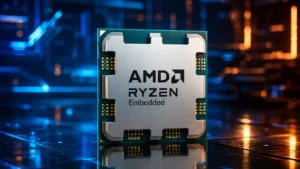

Advanced Micro Devices, more commonly known as AMD, is currently facing a massive challenge: it simply cannot build enough chips to satisfy the world’s appetite for artificial intelligence. On Friday, during a visit to Taipei, CEO Lisa Su confirmed that the company is officially asking its manufacturing partners to speed up production. The surge in demand for AI-related technology has caught even industry veterans off guard, forcing the chip designer to scramble for more factory space and assembly capacity.
AMD relies heavily on Taiwan Semiconductor Manufacturing Company, or TSMC, to build its most sophisticated processors. As the world’s largest contract chipmaker, TSMC handles the complex manufacturing for many of the most valuable technology companies on the planet. However, the AI boom has created a situation where TSMC is essentially sold out of its most advanced production lines for years to come. Su’s request for a production ramp-up highlights the intense pressure currently sitting on the shoulders of the entire semiconductor supply chain.
The global tech industry is currently pouring over $700 billion into artificial intelligence infrastructure this year alone. Companies that provide the hardware for this movement are enjoying incredible financial success. AMD has been a primary beneficiary of this trend, watching its share price and market influence grow steadily. However, without enough physical chips to sell, that potential revenue remains trapped on the drawing board. Su knows that her company must secure more manufacturing slots to keep its investors happy and its customers satisfied.
This isn’t the first time the semiconductor industry has faced a “bottleneck” crisis. During the pandemic, a sudden shortage of basic chips caused massive delays for everything from cars to washing machines. This time, the problem is different. It’s not just about standard parts; it’s about the cutting-edge “accelerator” chips that power giant data centers. If AMD doesn’t get these chips into the hands of its partners, those data centers remain empty rooms full of idle servers.
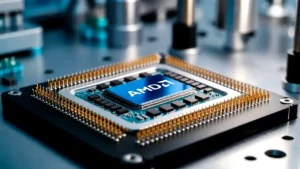
Su’s comments in Taipei suggest that the company is looking at every possible way to increase output. This might involve moving to different factory locations, optimizing existing production lines, or even convincing partners to invest more in advanced packaging facilities. Packaging is an often-overlooked part of the process, but it is just as important as the chip design itself. As chips get smaller and more powerful, the way they are linked together—often called 2.5D or 3D packaging—becomes a critical factor in performance.
The competition is absolutely brutal. Nvidia, AMD’s main rival in the AI space, is also demanding as much capacity as TSMC can possibly give them. Because Nvidia has been the first mover in the AI space, it currently occupies a significant portion of TSMC’s top-tier manufacturing slots. For AMD to win market share, it must successfully navigate a supply chain that is already running at 100% capacity. This is why Su is engaging directly with her partners on the ground in Taiwan to ensure that AMD remains a top priority.
Even a small 1.5% improvement in manufacturing efficiency can result in millions of dollars in extra profit for a company like AMD. The company is currently targeting professional-grade AI workloads, which carry much higher profit margins than standard consumer computer chips. If AMD can increase its total chip supply by even 10%, it could lead to a massive boost in its annual earnings. This explains why the CEO is making high-level trips to personally oversee the production strategy.
Beyond just the current chips, this move is about building long-term trust with major cloud providers. When a company like Microsoft or Google builds a new data center, they need to know they have a reliable partner who can ship thousands of chips every single month. By promising and delivering on a production ramp-up, AMD is showing these corporate giants that it is a serious alternative to the current market leader.
The industry will be watching the next few quarterly reports very closely. If AMD can demonstrate that its supply chain successfully expanded, it will prove that the company has finally matured into a true “big tech” competitor. If the supply issues persist, they risk losing major customers who might get tired of waiting and decide to design their own custom chips instead.
Looking ahead, the road to AI dominance is paved with silicon. AMD has the right designs, the right software, and a growing list of interested buyers. Now, the company must prove that it can manage the physical reality of building a billion-dollar empire. Lisa Su’s trip to Taipei serves as a powerful reminder that in the high-stakes game of semiconductor manufacturing, the CEO is the ultimate project manager.