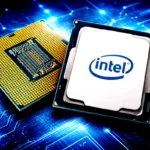

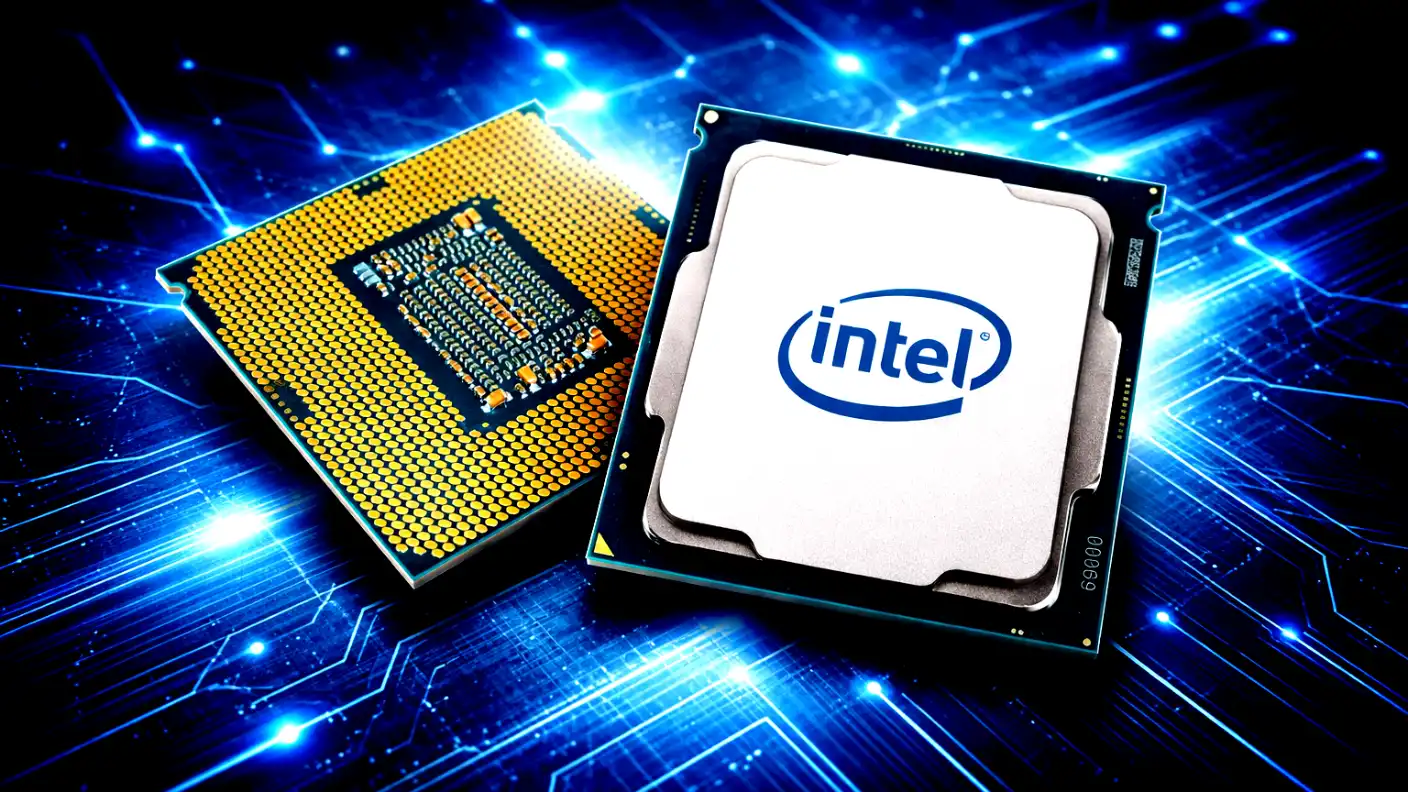
Intel officially confirmed this week that its highly anticipated Clearwater Forest “Xeon 6+” processors have entered full production. This release marks a significant milestone for the company’s advanced 18A manufacturing process. While Intel previously focused its 18A technology on client-focused chips like the Core Ultra Series 3, these new Xeon processors target the heavy-duty data center market. Specifically, the chips aim to handle complex 6G networking tasks and high-speed Edge AI workloads, where massive amounts of data must be processed in milliseconds.
The confirmation arrived during Intel’s latest oneAPI Toolkit briefing. OneAPI serves as a unified suite of compilers, AI frameworks, and analyzers that helps developers squeeze every bit of performance out of Intel hardware. In the updated 2026.0 release, Intel included full support for the Clearwater Forest chips, as well as future product families like Crescent Island, Nova Lake, and Diamond Rapids. This ensures that when the chips finally reach data centers later this year, developers will have the tools they need to optimize their AI and networking applications immediately.
These processors represent the pinnacle of Intel’s current engineering capabilities. They combine four cutting-edge technologies: RibbonFET, PowerVia, Foveros Direct3D, and EMIB 2.5D. Each of these innovations helps the chip manage power more efficiently while fitting more computing density into the same physical space. The hardware itself relies on the “Darkmont” E-Core architecture. In its most powerful configuration, a single Clearwater Forest CPU can pack up to 288 cores spread across 12 separate compute chiplets.
The memory and bandwidth capabilities are equally impressive. These chips feature a massive 576 MB of on-package L3 cache paired with 288 MB of L2 cache, ensuring that data is always close to the processing cores. The platform supports 12-channel DDR5 memory with speeds reaching 8000 MT/s, allowing for incredible throughput. To keep the data moving, the system also supports 96 PCIe Gen 5.0 lanes and 64 CXL 2.0 lanes, which are essential for connecting high-speed storage and secondary AI accelerators in massive server racks.
Early testing shows that the jump in performance is dramatic. Ericsson conducted internal tests comparing a single Xeon 6990E+ Clearwater Forest chip against a dual-socket system running the previous Xeon 6780E “Sierra Forest” platform. Despite having the same total of 288 cores, the Clearwater Forest chip achieved a 30% increase in overall performance. More importantly for data center operators, the new design offered a 38% reduction in power consumption and a 60% boost in performance per watt. In a field where companies spend over $1 billion annually on electricity alone, saving that much power is a massive financial advantage.
Intel is not stopping with the current generation. The company is already looking ahead to the Diamond Rapids family, which will feature “P-core” architecture designed for even more intense computing. While the Clearwater Forest chips focus on core density, Diamond Rapids will scale up to 256 cores per socket in initial variants, with even denser versions potentially reaching 512 cores. Dell already announced its R9810 2U server, which will use these Diamond Rapids CPUs to deliver double the memory bandwidth of previous 17th-generation servers.
The Diamond Rapids platform represents a significant leap forward in hardware capacity. Dell’s new R9810 and R9820 servers will utilize these chips to offer 50% more CPU cores than current models. With the ability to support 16-channel memory, these systems will provide the bandwidth necessary for the next wave of AI-driven research. Intel expects to release this Diamond Rapids platform in 2027, maintaining a steady cadence of innovation that keeps the company competitive against rivals like AMD.
As Intel pushes these chips into production, the impact on the data center market will likely be profound. By focusing on massive core counts and advanced memory bandwidth, the company is positioning itself as the primary supplier for the “AI era.” Whether through the current Clearwater Forest CPUs or the future Diamond Rapids family, Intel is clearly determined to reclaim its spot at the top of the performance mountain. With global demand for computing power showing no signs of slowing down, these technological leaps will remain the primary drivers of growth for the entire tech industry through 2027 and beyond.