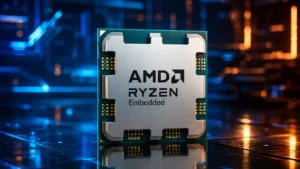

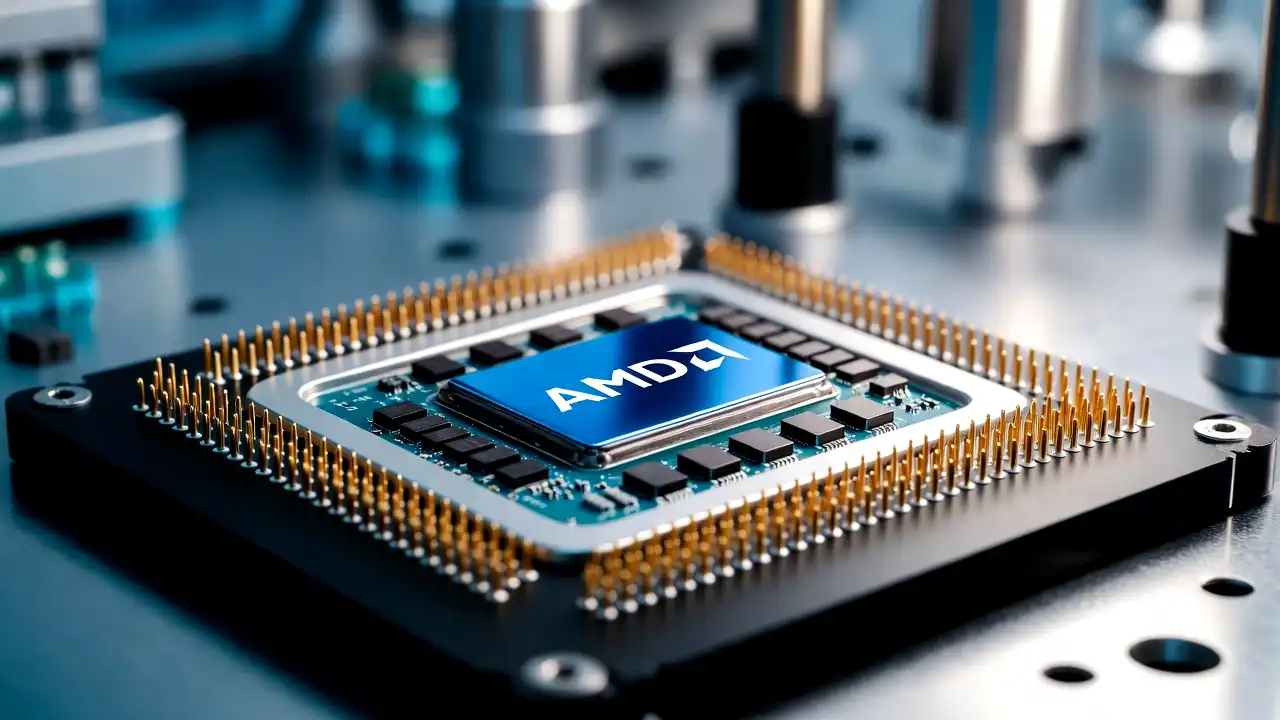
AMD just took a giant leap forward in the race to bring high-end artificial intelligence to laptops and desktop workstations. The company officially unveiled its new Ryzen AI MAX 400 series, a family of chips codenamed “Gorgon Halo.” While these processors share the same core architecture as the previous 300 series, AMD pushed the performance limits by increasing clock speeds and drastically expanding memory support. These chips are designed to let developers run massive AI models, including large language models with over 300 billion parameters, directly on a local machine rather than in the cloud.
The standout feature of this new lineup is the massive support for unified memory. These chips can now handle up to 192 GB of memory, which is a major breakthrough for professionals who work with complex AI software. By utilizing this huge memory pool, users can allocate up to 160 GB of video RAM to the graphics processor. This is a massive jump from the 112 GB limit found in previous 128 GB setups. Having this much memory available locally allows developers to run multiple AI “agents” at the same time without needing to connect to expensive remote server farms.
AMD is aiming this hardware directly at creators, engineers, and AI developers who need workstation-class performance in a portable package. The flagship processor in this new family, the Ryzen AI MAX+ PRO 495, features 16 high-performance Zen 5 CPU cores. It also includes a Radeon 8065S graphics engine that packs 40 compute units. To squeeze out even more speed, AMD bumped the clock rates up by 100 MHz across the board. The CPU now reaches a boost clock of 5.2 GHz, while the GPU hits a peak of 3.0 GHz.
The power efficiency of these chips remains highly flexible to meet different hardware needs. The processors come with a base power draw of 55 watts, but manufacturers can adjust this between 45 watts and 120 watts depending on the laptop design. This flexibility allows OEM partners like ASUS, HP, and Lenovo to build everything from thin, portable creative laptops to bulky, high-performance workstations. These major partners plan to start shipping the first systems powered by the Ryzen AI MAX PRO 400 series in the third quarter of 2026.
This aggressive launch comes as the artificial intelligence sector continues to experience incredible financial growth. Companies around the world are currently on track to spend over $700 billion on AI infrastructure this year. For many of these companies, paying massive monthly cloud fees to host their AI projects has become a significant financial burden. AMD’s new chips provide a way to cut those costs by moving the heavy computing work to a physical piece of hardware that the company owns outright.
The launch of these “Max” chips creates a two-pronged attack against Intel. While the high-end Ryzen AI MAX 400 series targets professional workstations, AMD also plans to release the standard Ryzen AI 400 “Gorgon” chips very soon. These mainstream versions will compete directly with Intel’s new Core Ultra Series 3 “Panther Lake” processors, which are scheduled to hit store shelves next week. This sets the stage for a heated battle throughout the summer as the two chip giants fight to define the future of the AI PC market.
By increasing the unified memory capacity to 192 GB, AMD has effectively created a desktop-class experience for mobile users. In the past, running a 300 billion parameter model required a professional server with multiple expensive graphics cards. Now, a developer can run that same workload on a machine that fits in a backpack. This accessibility is vital for the AI industry, as it allows researchers to prototype and test new ideas much faster than before. Even a 1.5% improvement in development speed can help a company reach the market weeks ahead of its rivals.
As the third quarter of 2026 approaches, the competition will move from press releases to real-world benchmarks. AMD’s choice to stick with the Zen 5 architecture suggests they prioritized stability and memory throughput over a total design overhaul. If these new chips deliver on their promises, they could convince thousands of developers to leave their cloud subscriptions behind and invest in local hardware instead. For now, the tech world waits to see how the new 55 TOPS NPU and high-speed memory perform under actual heavy-duty creative workloads.