
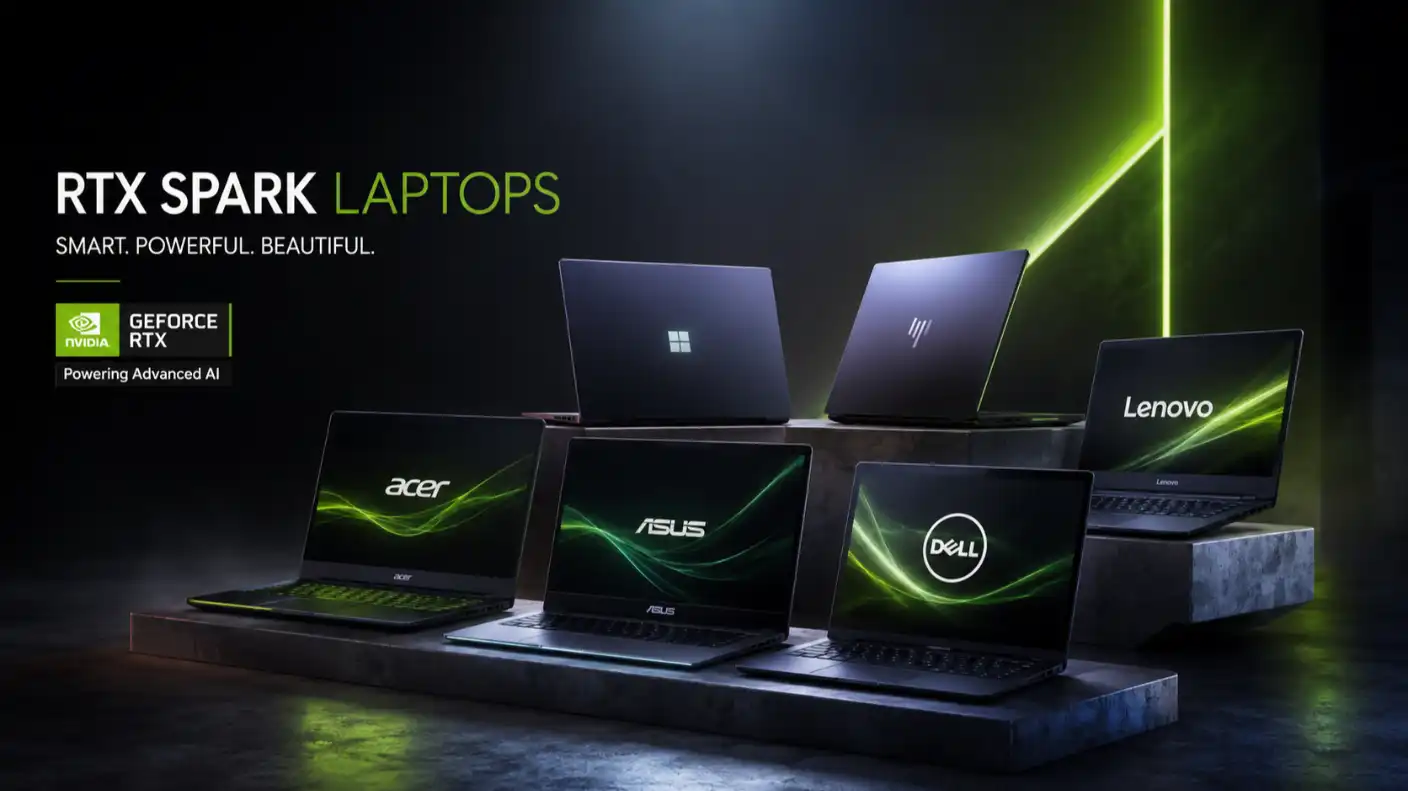
Nvidia is preparing to shake up the portable computing market this fall with the launch of its “RTX Spark” laptop lineup. After months of rumors and industry speculation, the chip giant officially confirmed that the first wave of notebooks featuring its specialized RTX Spark platform will hit retail shelves in late 2026. These machines are not just standard laptops; they represent a fundamental shift in how Nvidia views the intersection of mobile computing and enterprise-grade artificial intelligence. By bringing its massive server-side processing power into a compact, battery-operated form factor, Nvidia aims to give creative professionals and AI developers the tools they need to work anywhere in the world.
The RTX Spark program targets a very specific group of power users: those who currently rely on heavy, immobile workstations but crave the freedom of a thin-and-light laptop. For years, “workstation” laptops carried a reputation for being bulky, loud, and inefficient. The RTX Spark initiative flips this narrative by leveraging Nvidia’s most advanced mobile GPU architectures, ensuring that demanding software for 3D rendering, video editing, and local AI model training runs with incredible efficiency. Early performance projections show these laptops will achieve a 30 to 40 percent boost in AI-related throughput compared to the generation of laptops launched just twelve months ago.
At the core of these machines sits a custom-tailored version of the Nvidia graphics architecture, fine-tuned for a much lower power envelope. Maintaining high performance while keeping the device cool enough for a lap is a difficult engineering feat, but Nvidia believes it has found the right balance. By integrating sophisticated thermal management systems and optimized software drivers, these laptops stay quiet during light web browsing and ramp up power instantly when the user launches a heavy creative application. This balance is critical for the “professional-on-the-go” who cannot afford to have a system that sounds like a jet engine during a client meeting.
The financial scope of this launch is massive, reflecting Nvidia’s desire to dominate every layer of the computing stack. With the company’s market capitalization continuing to flirt with the $5 trillion level, Nvidia has the capital to ensure these devices are aggressively marketed and widely available. Analysts estimate that the AI PC market will generate over $1 billion in new hardware sales throughout the final quarter of 2026. If the RTX Spark laptops capture even a 1.5% share of the total global premium laptop market, it would solidify Nvidia’s position as an indispensable hardware partner for both home and enterprise users.
Industry partners are already scrambling to join the RTX Spark program. Major PC vendors like ASUS, Dell, and Lenovo have confirmed that they are finalizing their own flagship designs to be among the first to feature the new branding. Each manufacturer brings its own unique style to the table—ranging from ultra-durable metal chassis designs to high-refresh-rate OLED panels that cater specifically to visual artists. This variety ensures that whether you are an architectural designer needing screen accuracy or a freelance developer needing a reliable coding companion, there will be an RTX Spark option tailored to your specific workflow.
Software remains the true “secret sauce” for this launch. Nvidia is bundling a massive suite of AI-enhanced creative tools with every RTX Spark laptop. These utilities allow users to leverage the onboard GPU for tasks that previously required a cloud subscription. Features like real-time background noise removal for video calls, automated video frame interpolation, and local large language model (LLM) processing are included out of the box. By moving these tasks to local hardware, users save the monthly subscription fees they previously paid to third-party cloud AI providers, effectively increasing the value proposition of the laptop by hundreds of dollars over the lifetime of the machine.
Security-conscious professionals will also appreciate the focus on “local-first” AI. Because these systems process your sensitive data directly on the graphics card, rather than sending it to a remote server, companies can maintain total control over their intellectual property. This is a massive selling point for financial institutions, legal firms, and government contractors who operate under strict data residency laws. The RTX Spark platform is designed to pass the most rigorous security audits, making it one of the few consumer-facing devices that truly meets the needs of enterprise-level cybersecurity teams.
The move also poses a direct challenge to Apple and its custom silicon. Apple’s MacBook lineup has enjoyed a long period of dominance in the creative space due to its excellent power efficiency and seamless ecosystem. By launching RTX Spark, Nvidia is directly challenging the idea that “Mac” is the only option for a portable, high-performance creative machine. If these laptops can prove that Windows and Nvidia hardware can offer equal—or better—battery life and performance, we may see a significant migration of professional users back to the PC ecosystem.
As the fall launch approaches, the anticipation among the tech community is reaching a fever pitch. We expect Nvidia to host a dedicated event at Computex later this week to show off these machines in real-world scenarios. We will finally get the chance to see how they handle demanding games, 8K video timelines, and live AI model generation. If the hardware can truly deliver on the promise of “workstation power in a backpack,” it will be one of the most successful product launches of the year.
Ultimately, the RTX Spark project shows that Nvidia is not content to simply be the “chip guy.” They are intent on defining the entire user experience. By controlling the hardware, the software, and now the branding of the laptop itself, Nvidia is taking the same path Apple pioneered decades ago. Whether you are a professional looking to upgrade your aging rig or a student waiting for the next big thing in mobile tech, keep an eye on the store shelves this fall. The era of the high-performance AI laptop is officially here, and it looks like Nvidia is holding all the cards.