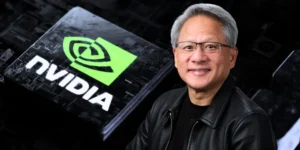

The global technology industry is turning its focus to Taipei this week as Computex 2026 officially begins. Among the many innovators and hardware giants appearing at the event, Nvidia stands out as the undisputed leader of the artificial intelligence boom. CEO Jensen Huang is scheduled to take the stage for a keynote presentation that experts believe will define the next chapter of high-performance computing. With AI investment now exceeding $700 billion across the global tech sector, Nvidia faces immense pressure to prove that its rapid pace of innovation remains sustainable for the rest of the year.
Computex has long served as a vital stage for the PC and server industry, but this year the event carries significantly more weight than in the past. As artificial intelligence moves from research labs to the center of corporate enterprise strategies, the hardware requirements have become exponentially more demanding. Investors are closely watching Huang to see if the company can maintain its lead in the “AI accelerator” market. With competitors like AMD and Intel aggressively pushing their own solutions, Nvidia must show off not just faster hardware, but a more robust software ecosystem that keeps developers locked into its platform.
The keynote is expected to provide a deep dive into the company’s future product roadmaps. While the current “Blackwell” and “Rubin” chip platforms are performing well, the market is already hungry for details on what comes next. Industry analysts suggest Nvidia will highlight how it plans to keep its performance-per-watt advantage over its rivals. As companies across the globe attempt to run larger language models, the efficiency of these chips has become just as important as their raw speed. Nvidia is essentially racing against the laws of physics, trying to pack more intelligence into a single rack without exceeding the power limits of the modern data center.
One of the most anticipated parts of the presentation involves the “AI factory” concept. Jensen Huang has long argued that the future of the internet is not just about searching for information, but about building physical data centers that act like autonomous, intelligent manufacturing plants. We expect Nvidia to showcase new server-scale networking hardware that allows thousands of GPUs to communicate at speeds that were previously considered impossible. This networking “fabric” is the hidden key to scaling large models, as data transmission speeds are currently the biggest bottleneck in the AI world.
Beyond the massive server hardware, Nvidia usually saves a few surprises for the consumer and creative PC segments. Gamers and content creators will be looking for any hints regarding the next generation of GeForce graphics cards. While the data center business drives the majority of revenue, Nvidia still relies on its gaming division to keep its brand relevant for millions of individual users. The company may unveil new software tools that allow creators to utilize local AI acceleration for video editing, image generation, and real-time streaming enhancements that utilize less power than previous versions.
The manufacturing landscape in Taiwan is also a major theme of this year’s Computex. Because Nvidia relies heavily on TSMC to print its most sophisticated silicon, any news about production capacity is critical. The foundry industry is currently operating at near-maximum capacity, and both Nvidia and its competitors are vying for the same 2-nanometer and 3-nanometer manufacturing slots. Huang’s presence in Taipei suggests he is spending his time meeting with key manufacturing partners to ensure that Nvidia’s supply chain remains the most resilient in the world.
Software remains the company’s strongest “moat” against competitors. For more than a decade, Nvidia’s CUDA platform has been the default language for AI development. As open-source alternatives continue to emerge, the company must demonstrate that its software tools are still the easiest and most reliable path to market for AI developers. We anticipate new announcements regarding developer kits that lower the cost of entry for startups, potentially making professional-grade tools accessible to companies with budgets of less than $1 billion.
The scale of the investment pouring into AI continues to surprise even the most seasoned market veterans. With major cloud providers like Microsoft, Amazon, and Google committing to massive infrastructure build-outs, the pressure on Nvidia to deliver is higher than ever. Every single quarter, the company must prove that it can turn these massive research and development budgets into physical hardware that ships on time. If Huang can clearly articulate the path forward for the next 18 months, it will likely provide the confidence investors need to support the stock’s current valuation.
Ultimately, Computex 2026 is more than just a product launch; it is a battle for the soul of the digital economy. Whoever provides the most efficient AI hardware will effectively become the architect of the future internet. Jensen Huang knows this better than anyone, and he has a reputation for turning his keynotes into cultural moments that move markets. Whether the focus is on energy-efficient networking, new AI agents, or groundbreaking graphics performance, the industry will be following his lead.
For those watching from home, the keynote offers a front-row seat to the most expensive race in tech history. We will be analyzing every slide, every benchmark, and every partnership announcement to determine what it means for the PC builder, the enterprise data center manager, and the retail investor. The AI hardware war is moving into its next phase, and this week in Taipei provides the first concrete answers about who will own the future of computing.