
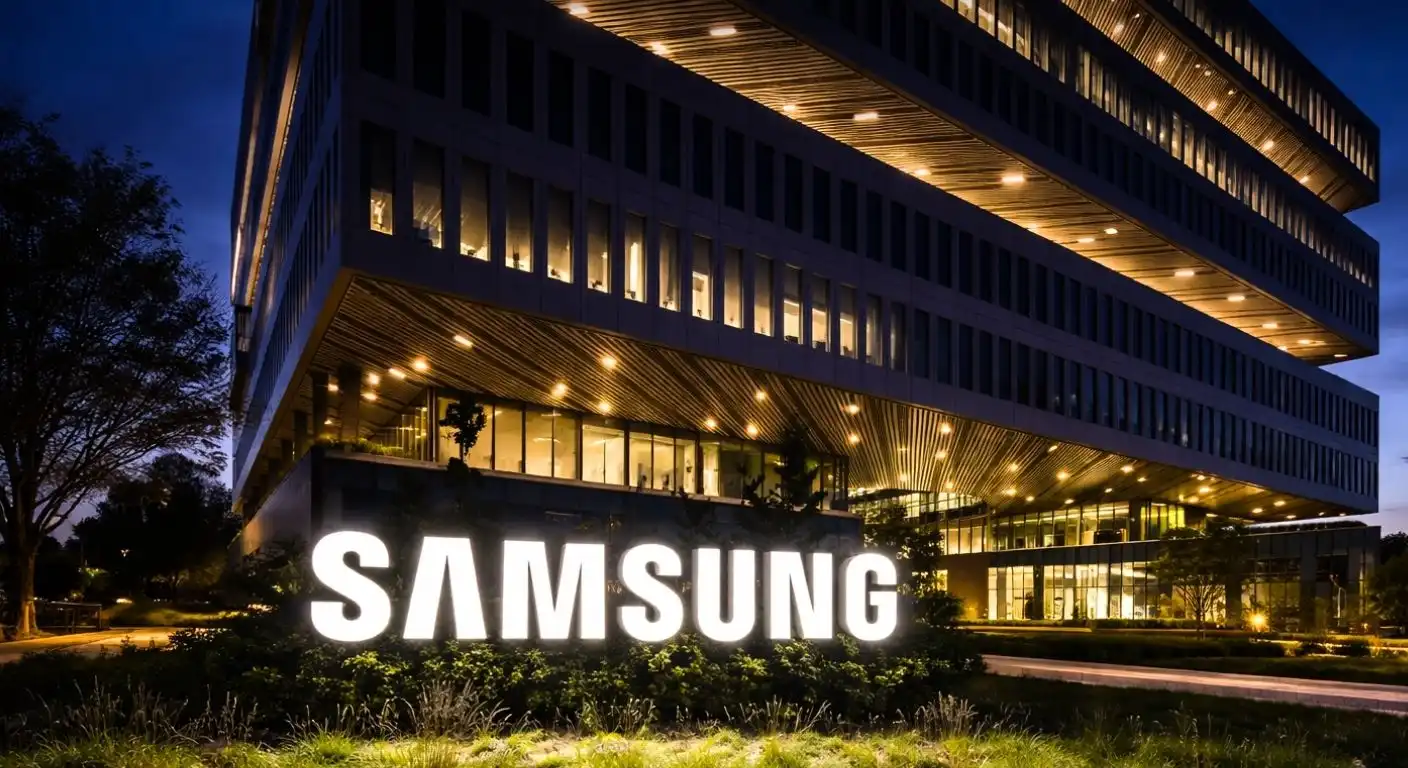
Samsung has officially unveiled the world’s first mock-up of HBM5 (High Bandwidth Memory 5) at Computex 2026, setting a new bar for the future of artificial intelligence hardware. This latest leap in memory technology promises to provide the massive bandwidth required by next-generation AI accelerators. As data centers push toward greater complexity, the physical heat generated by high-speed memory modules has become a major roadblock. To address this, Samsung introduced a unique “Heat Path Block” cooling design that promises to keep these blazing-fast chips stable even under the most extreme computing loads.
For those deep in the tech space, the shift from HBM3E and HBM4 to HBM5 is not just about a simple speed increase; it is about fundamentally changing how processors move data. Modern AI models, which now involve hundreds of billions of parameters, require a constant, high-speed flow of information. If the memory cannot keep up with the GPU or TPU, the entire system essentially freezes while waiting for data. By pushing into the HBM5 generation, Samsung aims to provide the “superhighway” that future AI chips need to avoid these performance bottlenecks, ensuring that every cycle of the processor is used for productive work.
The standout feature of Samsung’s new HBM5 design is the Heat Path Block. Traditional memory stacks often suffer from thermal buildup, as the chips are layered directly on top of each other. In a standard setup, the heat from the bottom layers is trapped by the chips above it. Samsung’s new approach integrates a direct thermal transfer path that pulls heat away from the core of the stack more efficiently than ever before. This is not just a minor improvement; the company claims it could lower operational temperatures by 10 to 15 percent, which translates to a massive improvement in total system reliability.
The financial stakes for this innovation are sky-high. The global industry for AI-ready memory is currently expanding at a record pace, with major hyperscalers spending over $1 billion every few months to build out their compute infrastructure. Manufacturers that can provide a reliable, cool-running, and high-speed memory solution will essentially dictate the direction of the AI market for the next three to five years. Samsung is positioning itself to be that primary supplier, hoping that its advanced thermal management will make it the default choice for data center architects who are tired of dealing with hardware failures and frequent maintenance cycles.
Samsung’s presence at Computex highlighted how the company is moving aggressively to maintain its leadership in the face of stiff competition. While rivals like SK Hynix and Micron are also advancing their own memory roadmaps, Samsung’s use of physical mock-ups demonstrates that they are already transitioning from the research phase to the factory-ready stage. The company is actively working with silicon designers to ensure that future AI chip architectures are compatible with this HBM5 standard, aiming for a smooth transition that minimizes redesign time for partners.
The design philosophy behind HBM5 focuses on three main goals: speed, density, and thermal sustainability. As AI models move toward “agentic” systems—where the AI performs autonomous tasks—the hardware must be able to run for days without a single memory error. Heat is the enemy of accuracy in these systems. When a chip gets too hot, it can introduce “bit flips,” which are tiny errors in data that can lead to large, incorrect AI outputs. By stabilizing the temperature with the Heat Path Block, Samsung ensures that the data integrity remains intact throughout the entire training process.
The move toward HBM5 is also a response to the “energy crunch” that now defines modern computing. Some large data centers now consume up to 2% of their host city’s electricity. Every watt saved through better memory management is a watt that can be used for actual processing. Samsung’s focus on thermal efficiency isn’t just about speed; it’s about making sure that as we increase the number of AI servers, we don’t also increase the power bill to an unsustainable level. This efficiency will likely save large enterprise clients tens of millions of dollars in electricity costs annually.
We are still in the early stages of the HBM5 rollout. While this mock-up proves the technology exists, the journey to mass production requires thousands of hours of testing. Samsung expects to begin sampling these units to lead customers by late 2026, with widespread adoption expected in 2027 and 2028. This lead time is standard for the semiconductor industry, as companies must carefully validate every aspect of the design to prevent a massive, fleet-wide failure.
The competition among memory makers is likely to intensify as HBM5 becomes the new industry standard. With the AI market showing no signs of cooling down, the ability to build, cool, and ship these memory stacks will determine which companies dominate the landscape through the end of the decade. Samsung’s public debut of this technology signals that they are ready for the long fight ahead, and they have the thermal and performance engineering to back up their claims.
For those of us tracking the market, this is a clear sign that the AI hardware war is moving into a more mature phase. We have moved past the initial hype and are now looking at the hard engineering challenges of heat, power, and bandwidth. Samsung’s HBM5 announcement is a reminder that while AI is digital, the progress it makes is ultimately constrained by the laws of physics. Keeping chips cool is the unsung hero of the artificial intelligence era, and Samsung’s Heat Path Block could be the most important innovation they show off all year.