
The way humanity interacts with technology is undergoing a profound and unprecedented transformation. For decades, the boundary between humans and machines was rigidly defined by physical barriers and mechanical inputs. We communicated our intentions to computers through punch cards, then keyboards, mice, and eventually the glowing glass of touchscreens. However, as computational power becomes invisible, ubiquitous, and woven into the very fabric of our environment, the hardware that mediates our interaction with this digital realm must evolve. The future of Human Machine Interface (HMI) hardware is moving rapidly toward paradigms that are immersive, intuitive, and ultimately, invisible.
The traditional concept of HMI is expanding from static control panels and handheld smartphones into a dynamic ecosystem of wearable technology, spatial computing headsets, advanced haptic actuators, and direct neural links. This evolution is not merely a matter of convenience; it is a fundamental shift in how we process information, control industrial machinery, deliver healthcare, and experience reality. As artificial intelligence continues to accelerate, the bottleneck in technological progress is no longer computational power, but rather the bandwidth of human input and output. The future of HMI hardware is dedicated to widening that bandwidth, allowing humans to interact with complex systems at the speed of thought. This comprehensive exploration delves deep into the emerging hardware technologies that are set to redefine the human-machine dynamic over the coming decades.
The Evolution of HMI Hardware
To understand where HMI hardware is going, it is essential to trace the trajectory of its past. The history of human-machine interaction is characterized by a continuous effort to reduce the friction between human intent and machine execution.
The Era of Keyboards and Touchscreens
The current dominant paradigm of HMI hardware relies heavily on 2D screens and tactile peripherals. Keyboards and mice translated physical movement into digital commands, while capacitive touchscreens merged the display and the input mechanism into a single, intuitive surface. These hardware solutions revolutionized personal computing and mobile technology, establishing a global standard for interaction. However, these interfaces inherently restrict our interaction to a flat, two-dimensional plane, forcing our brains to translate three-dimensional, spatial intentions into 2D taps and swipes. Furthermore, they demand our full visual and physical attention, pulling us out of our immediate physical environment to engage with the digital world.
The Paradigm Shift Towards Natural Interfaces
The limitations of screen-based hardware have catalyzed a paradigm shift toward “natural” user interfaces. This shift demands hardware that can understand human communication in its most organic forms: voice, gesture, gaze, and even thought. The hardware required for this leap includes sophisticated microphone arrays with edge-AI processing for localized voice recognition, time-of-flight (ToF) cameras and LiDAR sensors for precise skeletal tracking, and eye-tracking cameras that monitor pupillary movement with sub-millimeter accuracy. As these hardware components shrink in size and increase in efficiency, they are being integrated into our environments and worn on our bodies, moving us away from the era of holding a device and into the era of inhabiting a digital ecosystem.
Next-Generation HMI Hardware Technologies
The future of HMI hardware is not defined by a single device, but by a convergence of several cutting-edge hardware domains. These emerging technologies aim to engage multiple human senses simultaneously, creating a richer and more seamless interaction loop.
Spatial Computing and AR/VR Wearables
Spatial computing represents the next major computing platform, and its success relies entirely on the advancement of Augmented Reality (AR) and Virtual Reality (VR) hardware. Unlike traditional monitors, spatial computing hardware overlays digital information onto the physical world or immerses the user in a completely simulated environment. The hardware requirements for these headsets are incredibly demanding, pushing the limits of current materials science, optics, and display technology.
To achieve true immersion and overcome current hardware limitations, manufacturers are focusing intensely on several critical components within spatial computing headsets. These advancements are essential for making AR and VR hardware lightweight, comfortable, and visually indistinguishable from reality:
- Micro-OLED and Micro-LED Displays: These display technologies offer unprecedented pixel density, allowing for resolutions that eliminate the “screen door effect” while operating at high refresh rates to prevent motion sickness.
- Waveguide Combiners: Advanced optical lenses that bounce light from a hidden display directly into the user’s eye, allowing AR glasses to maintain a slim, socially acceptable form factor.
- Inside-Out Tracking Cameras: Arrays of highly sensitive cameras and depth sensors built directly into the headset, eliminating the need for external tracking beacons while accurately mapping the user’s physical environment.
- Pancake Lenses: Innovative optical hardware that folds the light path within the headset, dramatically reducing the distance required between the display and the user’s eyes, thereby shrinking the overall size of the device.
Advanced Haptic Feedback Systems
While spatial computing engages our vision and hearing, the sense of touch has historically been neglected in HMI hardware. The future of interaction demands that we feel the digital world as convincingly as we see it. Advanced haptic feedback hardware is moving far beyond the rudimentary eccentric rotating mass (ERM) motors that provide the basic buzzing sensation in modern smartphones and game controllers.
The development of sophisticated haptic hardware involves several key technological components. These hardware elements work together to simulate realistic touch sensations, textures, and resistance in a virtual or remote environment:
- Piezoelectric Actuators: These advanced components use specialized materials that change shape rapidly when an electrical current is applied, delivering highly localized, high-fidelity tactile feedback that can simulate the feeling of clicking a physical button on a flat glass surface.
- Ultrasonic Mid-Air Haptics: Arrays of ultrasonic transducers that focus acoustic waves to create localized areas of high pressure in mid-air, allowing users to “feel” invisible 3D objects and interfaces without wearing any gloves or physical accessories.
- Electro-Tactile Feedback Gloves: Wearable hardware equipped with thousands of tiny electrodes that stimulate the nerve endings in the skin directly, recreating the sensation of texture, temperature, and weight.
- Force Feedback Exoskeletons: Lightweight, wearable mechanical frameworks that physically restrict a user’s movement to simulate the weight and physical resistance of lifting or pushing a digital object.
Brain-Computer Interfaces (BCIs)
The most profound leap in HMI hardware is the Brain-Computer Interface (BCI). BCIs bypass the peripheral nervous system entirely, creating a direct communication pathway between the brain’s electrical activity and an external machine. This technology represents the ultimate frontier of HMI, promising a future where intent is translated into action instantaneously, without the need for vocalization or physical movement.
The hardware required for Brain-Computer Interfaces is currently divided into two primary categories, each with its own set of engineering challenges and medical implications. These distinct hardware approaches are driving the rapid evolution of neurotechnology today:
- Invasive BCIs (Microelectrode Arrays): Hardware like the Utah Array or Neuralink’s flexible threads, which are surgically implanted directly into the brain tissue. These devices offer the highest signal-to-noise ratio and bandwidth, allowing for the precise decoding of complex motor intentions.
- Non-Invasive BCIs (Advanced EEG): Wearable hardware such as highly sensitive Electroencephalography (EEG) headsets that rest on the scalp. While these devices do not require surgery, they must utilize advanced signal processing hardware to filter out the noise caused by the human skull and surrounding muscles.
- Endovascular BCIs: A groundbreaking middle ground, utilizing hardware like the Stentrode, which is delivered to the brain’s motor cortex via the jugular vein through a catheter, offering high-fidelity neural recording without the need for open-brain surgery.
Flexible and Epidermal Electronics
As HMI hardware becomes more intimately connected to the human body, rigid silicon chips and bulky batteries become a significant constraint. The future of wearable HMI lies in flexible, stretchable, and even epidermal electronics. This hardware is designed to conform to the complex, moving topography of the human body, acting as a seamless secondary skin that continuously monitors physiological data and user intent.
The realization of flexible HMI hardware depends on significant breakthroughs in materials science and novel manufacturing processes. Researchers are actively developing the following hardware components to make epidermal electronics a reality:
- Liquid Metal Interconnects: Circuits printed using liquid metals like gallium alloys, which maintain electrical conductivity even when stretched to multiple times their original length.
- Organic Thin-Film Transistors (OTFTs): Transistors made from carbon-based polymers rather than rigid silicon, allowing them to be printed onto flexible plastic or rubber substrates.
- Micro-Fluidic Sweat Sensors: Microscopic channels embedded in flexible skin patches that capture and analyze sweat in real-time, providing continuous, non-invasive biomarker data directly to health-monitoring interfaces.
- Flexible Solid-State Batteries: Ultra-thin, bendable power sources that eliminate the bulky lithium-ion cells of the past, allowing HMI patches to remain entirely unobtrusive on the skin.
Industrial HMI: Revolutionizing the Factory Floor
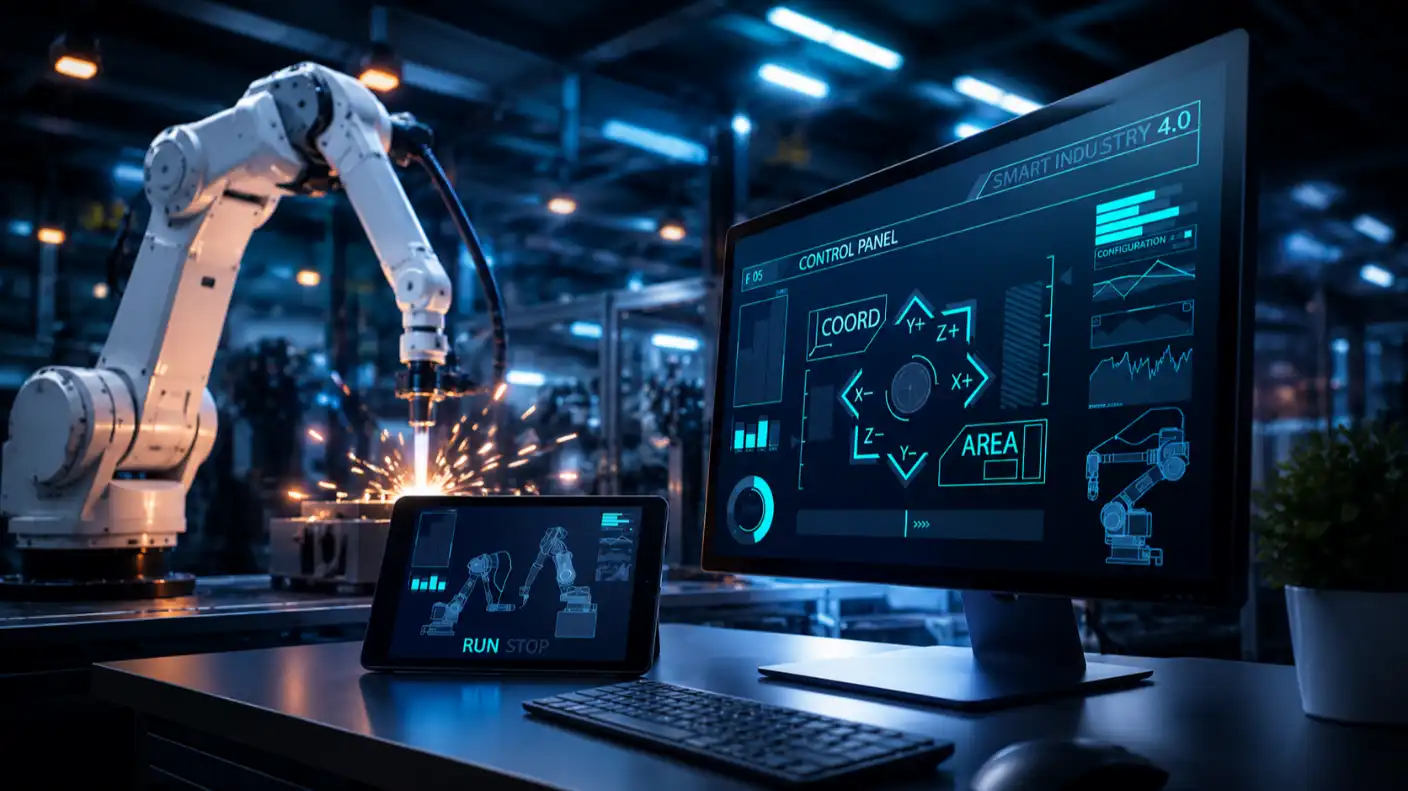
While consumer electronics often dominate the conversation surrounding new technology, the industrial sector is a massive driver of HMI hardware evolution. In environments encompassing manufacturing, energy production, and logistics, HMI hardware is the critical link between human operators and complex, potentially dangerous automated systems. The future of Industry 4.0 and the Industrial Internet of Things (IIoT) relies entirely on robust, intelligent, and highly durable HMI hardware.
Ruggedized and Edge-AI Integrated Panels
The traditional industrial control panel—characterized by physical pushbuttons, analog dials, and basic LCD screens—is undergoing a massive technological overhaul. Modern industrial HMI hardware must withstand extreme temperatures, severe vibrations, high-pressure washdowns, and constant exposure to dust and chemicals. However, ruggedization is no longer the sole requirement. Industrial HMI panels are transforming into powerful edge computing hubs. Rather than simply displaying data from a central server, these hardware interfaces are equipped with dedicated Neural Processing Units (NPUs) that allow them to run complex artificial intelligence algorithms locally. This means the HMI panel itself can analyze machine vibration data in real-time, predict equipment failures before they happen, and visually alert the operator through a dynamic, high-resolution multi-touch display.
Wearables for the Connected Worker
In the factory of the future, the HMI is not a stationary terminal bolted to a machine; it is worn by the operator. The concept of the “connected worker” relies heavily on ruggedized wearable HMI hardware designed specifically for industrial environments. Smart glasses equipped with transparent waveguide displays allow technicians to view real-time schematics, IoT sensor data, and step-by-step assembly instructions directly in their field of view, leaving their hands completely free to work.
To function effectively in harsh industrial environments, connected worker wearables require highly specialized hardware components. These devices must be engineered for durability, longevity, and absolute safety:
- Intrinsically Safe Enclosures: Hardware casings designed specifically to prevent the ignition of flammable gases or dust, allowing smart wearables to be used in hazardous environments like oil refineries or chemical plants.
- Bone Conduction Headsets: Audio hardware that transmits sound directly through the bones of the skull, allowing workers to hear system alerts and remote instructions clearly even while wearing heavy industrial ear protection in high-noise environments.
- Industrial Exoskeletons: Wearable robotic hardware that interfaces directly with the worker’s musculoskeletal system, providing physical strength augmentation and haptic feedback to reduce fatigue and prevent injuries during heavy lifting tasks.
HMI in Healthcare and Medical Devices
The healthcare sector represents one of the most critical and sensitive domains for HMI hardware evolution. In medical settings, the interface between the clinician, the patient, and the diagnostic or therapeutic machinery must be flawlessly intuitive, highly precise, and completely reliable. Advancements in medical HMI hardware are directly translating to improved patient outcomes, reduced surgical recovery times, and enhanced quality of life for individuals with severe disabilities.
Surgical Robotics and Tactile Feedback
Robotic-assisted surgery, pioneered by systems like the Da Vinci, has revolutionized minimally invasive procedures. However, a significant limitation of early surgical robotics was the lack of haptic feedback; the surgeon could see the tissue through a 3D display but could not “feel” the resistance of the tissue against the robotic scalpel. The future of surgical HMI hardware is heavily focused on closing this sensory loop. Advanced surgical consoles are being equipped with highly sensitive, low-latency haptic actuators that translate the micro-forces experienced by the robotic instruments inside the patient’s body directly to the surgeon’s fingertips. This hardware allows surgeons to palpate tissues virtually, identify the boundaries of tumors by touch, and tie sutures with the exact required tension, all while seated at a console across the room.
Assistive Technologies and Neural Prosthetics
For individuals suffering from paralysis, locked-in syndrome, or amputations, HMI hardware is not a luxury; it is a vital lifeline to the outside world. The development of neural prosthetics relies entirely on the successful integration of advanced hardware with the human nervous system. We are moving past traditional myoelectric prosthetics, which rely on the flexing of residual muscles, toward bi-directional neural interfaces.
The hardware powering the next generation of assistive technologies is incredibly complex and requires microscopic precision. These hardware systems must be biocompatible, highly responsive, and capable of translating intent into physical action:
- Peripheral Nerve Interfaces: Micro-cuffs that physically wrap around severed nerve endings in an amputated limb, capturing specific motor commands from the brain and translating them into individual finger movements on a robotic bionic hand.
- Bi-directional Haptic Sensors: Synthetic skin hardware applied to bionic limbs that registers pressure and temperature, sending those electrical signals back up the peripheral nerves to the brain, allowing an amputee to literally “feel” what their robotic hand is holding.
- Oculomotor (Eye-Tracking) Communication Devices: High-speed infrared hardware cameras that track microscopic pupillary movements, allowing patients with severe ALS to type words and synthesize speech simply by looking at a digital keyboard on a screen.
The Role of AI and Machine Learning in HMI Hardware
While hardware provides the physical medium for interaction, artificial intelligence is the invisible tissue that makes these new interfaces intelligent, predictive, and truly seamless. In the past, HMI hardware was deterministic; a button press resulted in a specific, programmed action. The future of HMI is adaptive and probabilistic, driven by machine learning algorithms that understand context, user behavior, and intent. To achieve this, the physical hardware itself must be optimized to run AI workloads efficiently.
Edge AI Processors and Localized Compute
The latency associated with sending user input (like a voice command or a complex hand gesture) to a cloud server for AI processing and waiting for a response is unacceptable for seamless HMI. Consequently, hardware manufacturers are embedding dedicated AI processing units directly into the HMI devices. These Edge AI chips, such as specialized Neural Processing Units (NPUs) and Tensor Processing Units (TPUs), are designed to execute deep learning models locally, using minimal power. This means a pair of smart glasses can recognize a specific hand gesture, or a voice assistant can process natural language commands, instantly and entirely on-device, without requiring an internet connection.
Predictive User Intent and Adaptive Interfaces
With powerful edge AI hardware in place, HMI systems can move from reacting to commands to anticipating them. By continuously processing data from various hardware sensors (eye tracking, heart rate monitors, environmental cameras), the HMI can build a real-time contextual model of the user’s state.
This sensor-rich hardware allows the interface to adapt its behavior dynamically based on what the user is likely to do next. The following hardware-driven capabilities demonstrate how adaptive interfaces will function in the real world:
- Gaze-Triggered Information Expansion: Using eye-tracking hardware, a smart dashboard can detect when a user is struggling to read a specific metric, automatically enlarging the font and providing supplementary contextual data without the user ever touching the screen.
- Cognitive Load Monitoring: By analyzing pupil dilation and galvanic skin response via wearable hardware sensors, a complex industrial control system can determine if an operator is overwhelmed, automatically simplifying the interface and highlighting only the most critical emergency controls.
- Context-Aware Voice Processing: Directional microphone arrays combined with local AI hardware can isolate a user’s voice in a noisy factory, understanding not just the spoken words, but the stress levels and urgency in their tone to prioritize machine execution.
Challenges in the Future of HMI Hardware
Despite the incredible promise of these emerging technologies, the path to a seamless, mind-machine future is fraught with significant engineering, ethical, and logistical hurdles. Creating hardware that can keep pace with human thought while remaining physically comfortable, economically viable, and socially acceptable is a monumental challenge that will require decades of sustained innovation.
Power Consumption and Battery Life
The most significant bottleneck in the advancement of wearable and implantable HMI hardware is power. High-resolution micro-displays, continuous depth-sensing cameras, and edge AI processors require substantial amounts of energy. However, users will not tolerate wearing bulky, heavy battery packs, and implantable medical BCIs must operate for years without requiring surgical battery replacement. The HMI industry is desperately reliant on breakthroughs in battery chemistry, such as solid-state batteries, as well as the development of ultra-low-power silicon architectures and innovative energy harvesting hardware that can pull power from ambient radio waves, body heat, or kinetic movement.
Privacy, Security, and Ethical Concerns
As HMI hardware becomes more intimately connected to our bodies and our brains, the potential for privacy violations and security breaches becomes terrifyingly profound. A compromised smartphone is a major inconvenience; a compromised Brain-Computer Interface is an existential threat to personal autonomy. HMI hardware that constantly monitors our eye movements, physiological responses, and neural patterns generates the most sensitive data imaginable.
To secure this highly sensitive biometric and neural data, hardware manufacturers must implement rigorous, chip-level security protocols. The following hardware security features are absolutely critical for the safe deployment of next-generation HMI:
- Hardware-Based Secure Enclaves: Isolated, encrypted regions within the main processor chip where sensitive biometric and neural data is processed and stored, rendering it inaccessible to malicious third-party software or external hackers.
- On-Device Anonymization Processors: Dedicated hardware components that instantly strip personally identifiable markers from sensor data before it is ever allowed to be transmitted to a cloud network for secondary analysis.
- Physical Kill Switches: Un-hackable, hardware-level disconnect switches built directly into AR headsets, smart glasses, and neuro-prosthetics, allowing users to physically sever power to cameras, microphones, and neural recording arrays instantly.
Materials Science and Manufacturing Bottlenecks
Moving from the prototype phase to mass commercialization requires overcoming massive manufacturing hurdles. The fabrication of micro-LED displays, flexible graphene circuits, and ultra-dense microelectrode arrays is incredibly complex and suffers from low initial production yields. The specialized materials required for these HMI components are often expensive, difficult to source, and challenging to integrate with traditional silicon manufacturing processes. Scaling up the production of these exotic hardware components to meet global consumer and industrial demand will require billions of dollars in manufacturing infrastructure investments.
What to Expect by 2030 and Beyond
Looking toward the horizon of 2030 and beyond, we can expect the distinct categories of HMI hardware to begin merging. The smartphone, currently the center of our digital lives, will likely fracture into a constellation of wearable HMI peripherals. Lightweight AR glasses will serve as our primary visual interface, rendering screens obsolete. Unobtrusive smart rings and neural wristbands will capture our micro-gestures and neuromuscular signals, replacing the mouse and keyboard. Earables will provide spatial audio and continuous voice interaction, while epidermal patches will monitor our health and emotional state.
In the industrial and medical sectors, we will see the widespread deployment of non-invasive BCIs for operating heavy machinery and robotic surgical tools, drastically reducing the cognitive load on human operators. The concept of “learning a user interface” will become archaic; instead, the hardware and its localized AI will learn us. The interface will fade into the background, becoming a transparent conduit for human intention.
Conclusion
The future of Human Machine Interface hardware is driving toward a singularity where the physical constraints of interaction are entirely dissolved. We are transitioning from an era where we must adapt to the rigid, flat hardware of machines, into an era where hardware adapts to the fluid, multi-sensory, and highly complex nature of human biology. From the high-density micro-displays of spatial computing to the profound, life-altering potential of Brain-Computer Interfaces, the hardware currently in development will fundamentally redefine how we work, heal, communicate, and perceive reality.
While formidable challenges remain in power management, materials science, and critical data security, the trajectory is undeniable. The technology is moving closer to our bodies, into our biology, and ultimately, into our minds. By bridging the gap between human thought and digital execution, the next generation of HMI hardware will not just change the tools we use; it will elevate the very limits of human capability, unlocking a future where our interaction with technology is as natural, immediate, and invisible as thinking itself.