
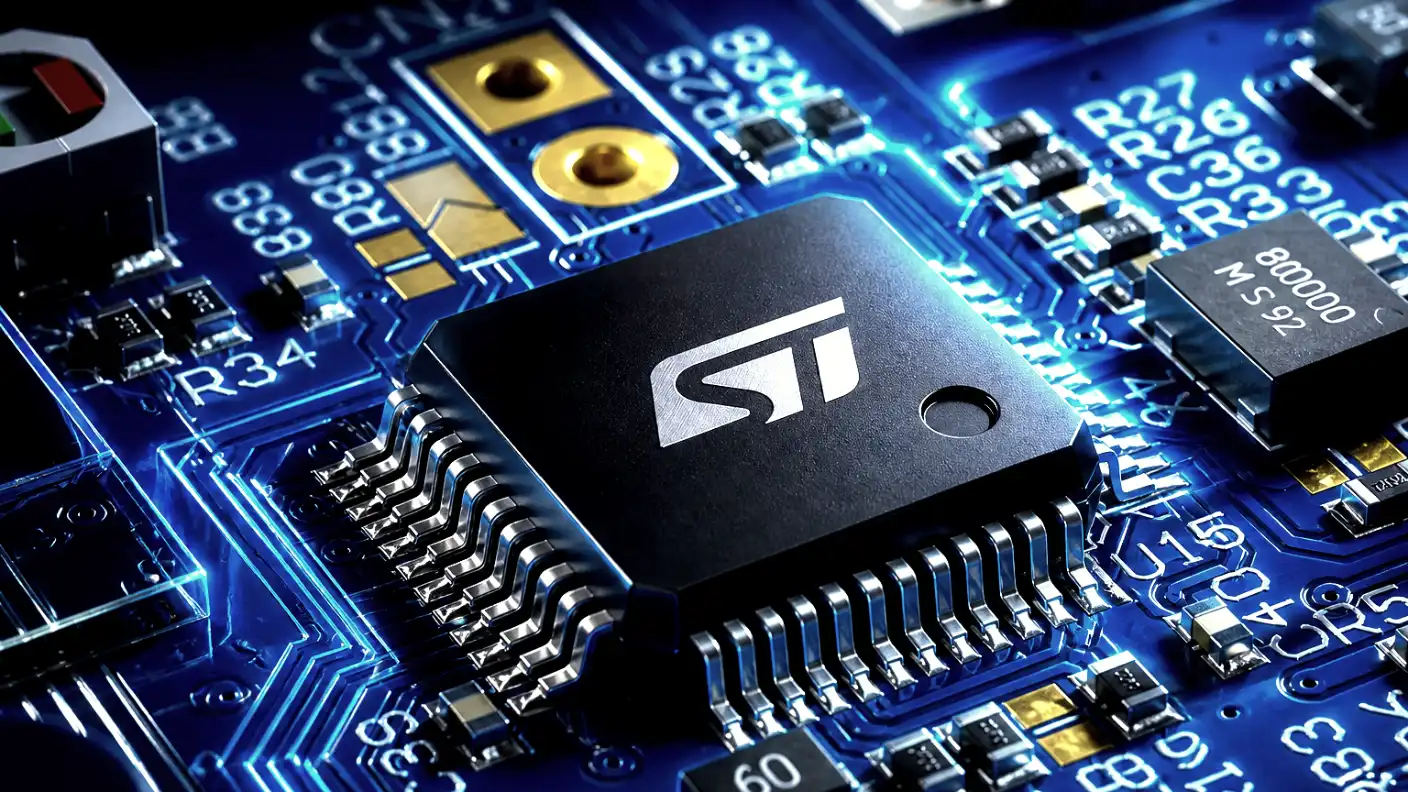
STMicroelectronics, the Franco-Italian chipmaker, announced on Monday that it expects to generate well over $3 billion in total revenue from its semiconductor space business between 2026 and 2028. This ambitious goal is driven by the rapidly increasing demand for chips used in low-Earth orbit (LEO) satellite networks.
Following the announcement, shares in STMicro initially surged by as much as 7% before settling to a 2.2% gain by 1536 GMT. This positive market reaction shows investor confidence in the company’s strategy and the growth potential of the space sector.
STMicro reported a significant increase in its LEO revenue, which grew from about $175 million in 2021 to approximately $600 million in 2023. The company expects this figure to be close to $1 billion in 2024.
“We are just in the early innings of this market,” STMicro executive Remi El-Ouazzane told analysts during a conference call. This statement suggests the company believes there is still massive untapped potential in the space semiconductor industry.
Companies such as Starlink, AST SpaceMobile, and Amazon’s Leo project are pushing low-Earth orbit satellite communications. They are transforming it from a niche service into widely available broadband and direct-to-cell services. There’s even talk of future orbital data centers, further expanding the market.
STMicro hopes its decade-long partnership with Starlink, supplying chips for both satellites and user terminals, will give it a strong advantage. The company aims to maintain as much of its nearly 90% market share as possible as this market grows and attracts new competitors.
One of Europe’s largest chipmakers also identified China as a major opportunity for user terminals. However, it confirmed it will miss out on satellite technology sales to China due to existing export controls.
“We are unapologetically European. So we end up being actually U.S. and China compatible,” El-Ouazzane said. He clarified, “The China compatibility, though, starts and finishes at user terminal. Because of export control, we cannot have any satellite technology happening in China.”
The company also sees orbital data centers as a potential future market but has not yet included any related revenue in its current 2026-2028 targets. “My wild guess as to when we could start to see a relevant amount of orbital data centers in the sky, I would say three years from now would be maybe an interesting guess,” El-Ouazzane told reporters, hinting at long-term possibilities.