
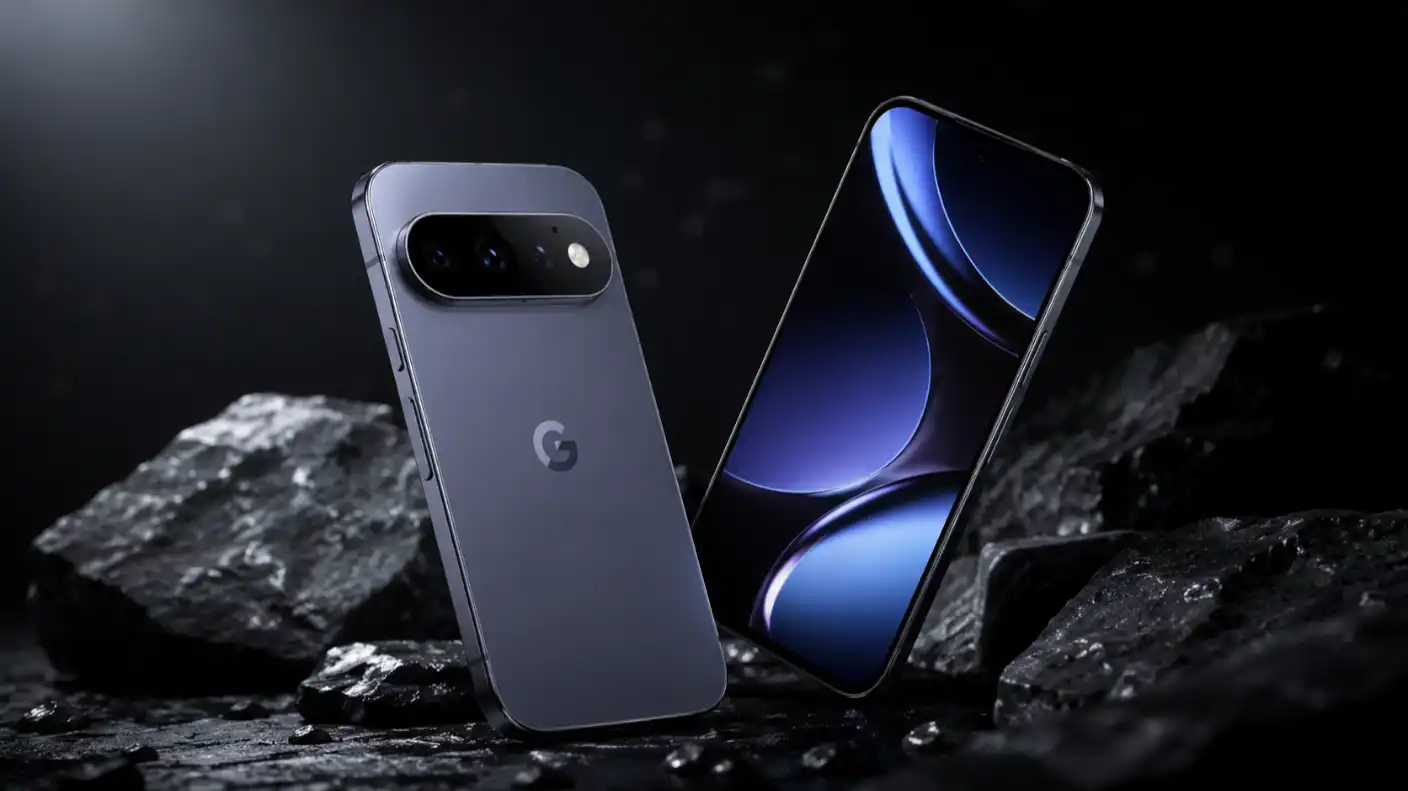
Google surprised everyone at its annual I/O developer conference this week, but not just with software announcements. A keen-eyed attendee spotted a prototype device that appears to be the upcoming Google Pixel 11 Pro. The phone features a striking design choice that looks remarkably similar to the signature “Glyph” lighting interface made famous by Nothing Phone. This leak suggests that Google is looking for new ways to make its hardware stand out in a crowded smartphone market.
For years, Android phone designs have struggled to differentiate themselves from the competition. While most manufacturers focus on camera bumps and screen resolution, Google seems to be pivoting toward interactive hardware. The device on display at the conference featured a series of glowing lights embedded into the back glass. These aren’t just for decoration; they appear to serve as notifications, battery status indicators, and perhaps even interactive visual cues for Google’s new Gemini AI tools.
The decision to adopt this light-based interface is a bold move for the tech giant. Nothing, a smaller challenger in the mobile space, turned heads when it launched its first phone with a rear-facing light show. By borrowing this “trick,” Google is signaling that it wants to capture the same sense of fun and novelty that helped Nothing gain a loyal following. It is a rare moment where a trillion-dollar company takes inspiration from a boutique startup to spice up its flagship hardware design.
Why would Google make such a massive change to the Pixel formula? The answer lies in the increasingly competitive smartphone industry. When you consider that major firms spend over $1 billion every single year on industrial design and R&D, every minor feature counts. Adding an interactive light interface gives Google a new marketing angle. It’s no longer just a “camera phone”—it is an interactive device that responds to you even when the screen is face down on your desk.
Industry experts believe these lights will be deeply tied to the Gemini AI assistant. If you ask the AI a question, the back of the phone could pulse to show that it is processing. If you get a text message from a favorite contact, the lights might flash in a specific pattern. For a world where users are spending 1.5% to 3% more time interacting with digital assistants every month, this provides a way to get information without constantly staring at a bright screen.
This prototype also signals that Google wants to move away from the “standard” glass rectangle look that has defined smartphones for nearly a decade. The light-up back panel suggests a desire to return to the era of experimentational hardware. We have already seen foldable phones and dual-screen devices, but interactive light panels offer a completely different way for hardware to communicate with its owner. It makes the device feel more alive and less like a boring slab of metal and glass.
The leak is also a major win for the Pixel enthusiast community. Google has a long history of leaking its own products at I/O to build hype, and this “accidental” display may be exactly that. By letting the device be seen in a semi-public setting, the company tests the waters to see if fans hate or love the new look. Early social media reactions have been overwhelmingly positive, suggesting that the “Pixel Glyph” look could be a massive hit for the 2027 flagship lineup.
If the Pixel 11 Pro hits the market with this interface, it will put immediate pressure on Samsung and Apple to innovate. Samsung, in particular, has leaned into “dull” professional designs for its recent Galaxy S series. If Google can prove that a light-up back is both useful and desirable, we might see the rest of the industry follow suit. It is the kind of trend that could dominate the market for the next few years.
We still have a long way to go before the official launch of the Pixel 11 Pro. Google typically keeps its hardware plans under wraps until the final reveal, so these prototypes can change drastically. The company might decide to refine the lighting patterns, change the hardware layout, or even scrap the idea entirely if the manufacturing costs prove too high. However, if the buzz around this light-up feature continues to grow, Google will have a hard time ignoring the demand.
As we look toward the future of mobile tech, it is clear that hardware is finally getting interesting again. After years of boring, iterative updates, a simple light-up interface is exactly the spark the industry needs. Whether this feature is a gimmick or the future of notifications, it shows that Google is ready to take risks to keep the Pixel brand fresh. We will keep a close eye on future leaks to see if the Glyph-inspired Pixel becomes the standard for the next generation of Android hardware.