
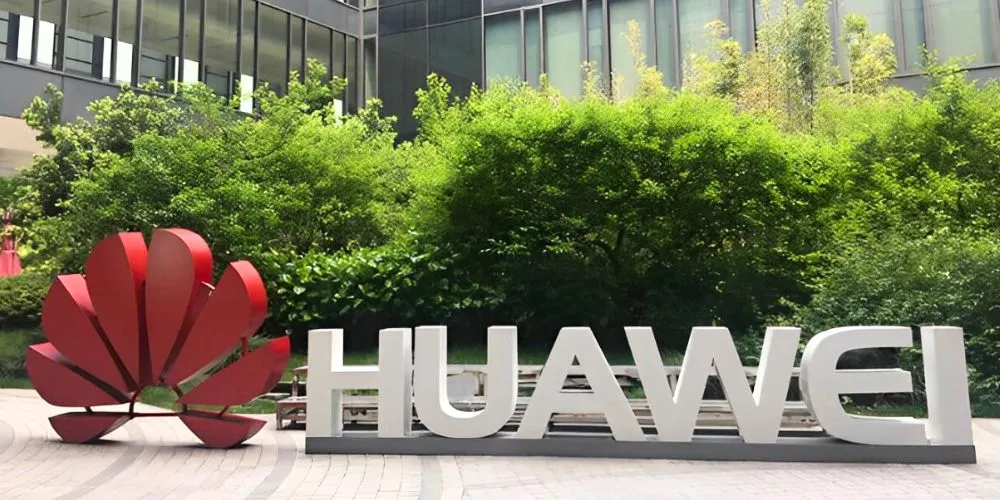
Huawei just stunned the global semiconductor industry with the unveiling of its latest flagship processor, the Kirin 9050. This new chipset marks a massive technical achievement for the Chinese tech giant, which has spent years working under strict international trade sanctions. By adopting a revolutionary “3D IC” (Integrated Circuit) design, Huawei claims its new processor finally matches, and in some specific performance metrics, beats Apple’s highly regarded A18 Pro chip. This release signals that Huawei has found a way to maintain peak performance despite losing access to the world’s most advanced lithography equipment.
The secret behind the Kirin 9050 lies in its innovative packaging strategy. Since U.S. sanctions prevent the company from purchasing the newest extreme ultraviolet (EUV) machines, engineers could not simply shrink the transistors on a flat, two-dimensional chip. Instead, they moved upward. By using 3D Integrated Circuit technology, Huawei stacked different functional layers of the chip on top of one another. This vertical integration allows for shorter signal paths, reduced power consumption, and a significant boost in raw data throughput that essentially mimics the performance of a more “advanced” manufacturing node.
Financial analysts believe the cost of this breakthrough was astronomical. Huawei reportedly funneled over $1 billion into the R&D division responsible for advanced chip packaging last year alone. This massive investment allowed them to create proprietary bonding techniques that connect these stacked layers with extreme precision. For the company, this is not just about building a faster phone; it is about proving that it can build a sovereign, domestic supply chain that remains immune to geopolitical pressure.
The performance specifications of the Kirin 9050 are already shaking up the mobile industry. Early benchmark tests show the chip delivering a 10 percent increase in multi-core processing speeds compared to Apple’s current A18 Pro silicon. While Apple has long maintained a reputation for having the fastest single-core performance, Huawei’s new focus on vertical stacking allows it to excel in power-intensive tasks like high-end mobile gaming and on-device artificial intelligence processing.
Energy efficiency remains the most impressive achievement of the 9050 architecture. By shortening the physical distance that electricity must travel between layers, the chip generates 15 percent less heat during peak usage compared to traditional flat-die processors. This improvement is crucial for modern smartphones, which often throttle performance to prevent the battery from overheating. With this design, Huawei handsets can sustain peak processing speeds for significantly longer periods without needing to slow down.
The release of the Kirin 9050 carries immense weight for the global tech landscape. For years, the consensus was that a company could not compete at the high end without access to the absolute best foreign-made factory machines. Huawei has effectively rewritten the rulebook. By relying on clever engineering and vertical stacking, they have shown that performance can be “manufactured” through design innovation rather than just raw equipment power. This could force other companies to reconsider their own reliance on increasingly expensive 2-nanometer and 1.4-nanometer factory lines.
However, the path forward for Huawei is not entirely smooth. Scaling 3D IC production is notoriously difficult, as it involves bonding fragile silicon layers without creating microscopic defects. Even a 1.5% defect rate in these stacked chips could render thousands of expensive processors useless, making it a much more expensive process than traditional flat manufacturing. The company will need to refine its yields significantly before it can hope to match the massive production volume of Apple’s annual iPhone launches.
Furthermore, the software ecosystem must adapt to these new hardware layouts. Huawei is currently working with thousands of app developers in China to optimize their code for the unique “folded” logic of the Kirin 9050. Without optimized software, the hardware advantages will disappear, as the operating system will not be able to take full advantage of the stacked layers. Huawei is reportedly offering developers extra financial incentives to prioritize these optimizations, ensuring the user experience remains fast and fluid.
Despite these hurdles, the industry response has been cautious but respectful. Rivals in the United States are reportedly re-examining their own packaging roadmaps in light of the Kirin 9050’s launch. If Huawei can successfully mass-produce these chips for its next series of flagship devices, it will cement its role as a tier-one designer of mobile silicon. This achievement proves that innovation often thrives when companies are pushed against a wall.
Ultimately, the launch of the Kirin 9050 is about more than just one phone. It is about a company refusing to be excluded from the global tech race. By betting on vertical integration and 3D stacking, Huawei has successfully created a roadmap that many other tech companies will now scramble to follow. While the tech war between Washington and Beijing shows no signs of cooling down, this breakthrough ensures that Huawei remains a primary player in the development of the next generation of mobile computing power.