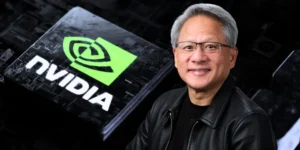

Nvidia has quietly ascended to the number one spot in the highly competitive data center Ethernet switch market. While the tech giant is primarily known for its dominance in the artificial intelligence chip space, this new milestone signals a massive shift in how the world’s largest data centers build their networking infrastructure. By leveraging its integrated hardware-software ecosystem, Nvidia has successfully outpaced traditional networking powerhouses to secure the top position in this lucrative sector.
Market analysts report that Nvidia’s rapid growth is directly tied to the explosion of AI-driven computing. Modern data centers require incredibly fast, low-latency networks to keep thousands of high-performance AI GPUs communicating effectively. Because Nvidia supplies the GPUs that power the vast majority of AI clusters, the company has effectively persuaded data center operators to buy its proprietary “Spectrum” Ethernet networking platforms to ensure seamless compatibility. This strategy has helped the company capture an estimated 25% share of the high-end switch market in a very short period.
The financial scale of this achievement is staggering. Nvidia’s networking division, which includes its robust portfolio of switches, cables, and software, is now generating over $12 billion in annual revenue. This represents a significant increase from just a few years ago. The shift toward AI-centric architectures has forced companies to move away from legacy networking hardware that cannot keep up with the massive data throughput requirements of new large language models and real-time processing tasks.
Industry experts point to the “Nvidia ecosystem lock-in” as a primary driver for this victory. When a data center invests over $1 billion in an AI supercomputer, they need the networking layer to be absolutely rock-solid. Nvidia offers a “full-stack” solution where the GPUs, the networking switches, and the management software are all designed to work together. This removes the headache of troubleshooting complex inter-vendor interoperability issues, making it an easy choice for cloud providers and large enterprises to standardize on Nvidia hardware.
Traditional networking competitors are now scrambling to respond to this aggressive expansion. While companies like Cisco and Arista have long dominated the enterprise networking space, they have struggled to pivot as quickly as Nvidia toward the specialized demands of AI factories. Nvidia’s platforms offer unique features, such as automated load balancing for massive AI workloads, which are becoming non-negotiable for engineers building the next generation of cloud infrastructure.
Looking ahead, Nvidia shows no signs of slowing down its networking push. The company recently announced plans to iterate on its switch portfolio every year, mirroring the fast-paced development cycle of its graphics chips. By accelerating the release of new, faster switches—with models reaching speeds of up to 1.6 terabits per second—Nvidia is creating a widening performance gap that older, general-purpose networking vendors find difficult to close.
The impact of this market shift extends beyond just hardware sales. By controlling the “pipes” through which AI data flows, Nvidia is deepening its influence over the future of the internet and cloud computing. As more companies invest heavily in AI, the importance of the underlying network becomes even more critical. Nvidia’s ability to dominate the switch market ensures that the company remains at the center of the AI revolution, whether it is selling the compute power or the networking infrastructure that makes it possible.
For data center operators, the choice is increasingly clear. They are opting for the stability and performance of a unified Nvidia stack, even if it comes at a premium. As the market for AI-capable data centers continues to expand at a compound annual rate of nearly 20%, Nvidia’s lead in the networking sector is likely to solidify even further, cementing its status as the most important company in the modern data center era.