
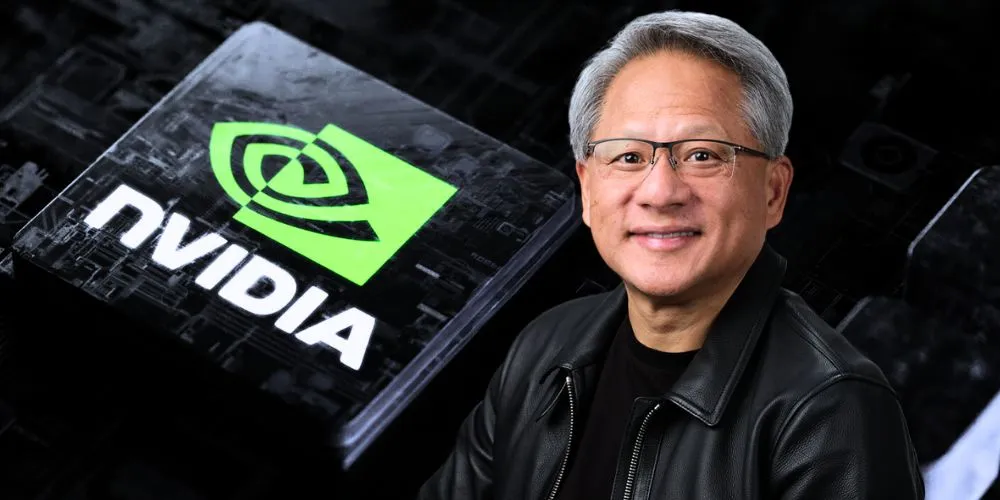
Nvidia CEO Jensen Huang recently appeared before the Senate to address critical questions regarding his company’s role in the global artificial intelligence arms race and its complex relationship with China. As the primary supplier of the high-end processors that power modern AI systems, Nvidia sits at the center of a geopolitical firestorm. Lawmakers questioned Huang about how the company manages to supply the global market while strictly adhering to U.S. government export controls designed to prevent China from accessing advanced military-grade AI technology.
The hearing, led by high-profile members of the Senate, focused on whether Nvidia’s strategy for the Chinese market undermines American national security. For years, Nvidia dominated the AI chip sector, capturing roughly 85% of the global market for data center accelerators. However, the U.S. Department of Commerce has placed increasingly strict limits on the sale of top-tier chips to China. Huang explained that Nvidia fully complies with these regulations, even as they have cost the company billions of dollars in potential revenue.
During the discussion, Huang highlighted the technical challenge of balancing trade with security. He noted that Nvidia specifically developed downscaled versions of its flagship chips to comply with U.S. restrictions. These modified processors, which are significantly less powerful than the versions sold to customers in the United States, provide Chinese firms with enough compute power for basic commercial AI applications without crossing the threshold into prohibited military capabilities. He emphasized that the company works closely with the Biden administration to ensure every product sold meets federal standards.
Lawmakers remain skeptical of this approach, voicing concerns that any technological access could help China close the AI gap with the United States. One senator pointed out that even “watered down” chips can be daisy-chained together to perform complex tasks. Huang countered this by explaining the physical and architectural limitations of the chips, arguing that a massive cluster of restricted chips is still far less efficient and cost-effective than using the cutting-edge hardware available to U.S. companies.
The financial stakes for Nvidia are enormous. In its most recent quarter, the company reported revenue exceeding $30 billion, fueled largely by the insatiable demand for AI hardware. A complete ban on all sales to China would represent a massive blow to the company’s bottom line, potentially erasing $5 billion to $7 billion in annual sales. Huang urged the committee to consider that a thriving global semiconductor industry is essential for funding the massive research and development efforts required to keep American technology ahead of global competitors.
Beyond the specific issue of chips, the hearing underscored a deeper concern: the future of American leadership in AI. Huang spent a significant portion of his testimony advocating for increased investment in domestic infrastructure and talent. He warned that if the U.S. makes it too difficult for its own companies to compete globally, it risks losing its competitive edge to rivals in other regions. He suggested that policies should focus on “building the strongest moat” around domestic innovation rather than simply cutting off global supply chains.
The tech industry is watching these developments closely. Many companies rely on Nvidia’s technology to power everything from healthcare breakthroughs to autonomous vehicles. If the Senate decides to tighten export restrictions further, the shockwaves would likely hit every major tech hub in the country. Analysts believe the government will eventually move toward a more targeted “small yard, high fence” strategy, where specific technologies are locked down while less sensitive trade continues as normal.
As the hearing concluded, the tension between commerce and national security was clearer than ever. Nvidia continues to walk a narrow tightrope, trying to satisfy investors who demand growth while navigating a regulatory environment that changes almost monthly. Jensen Huang’s appearance showed that he is not just a CEO, but a key player in the most important technological debate of the decade. Whether the Senate will be satisfied with his answers remains to be seen, but one thing is clear: the era of “business as usual” for global tech trade is officially over.