
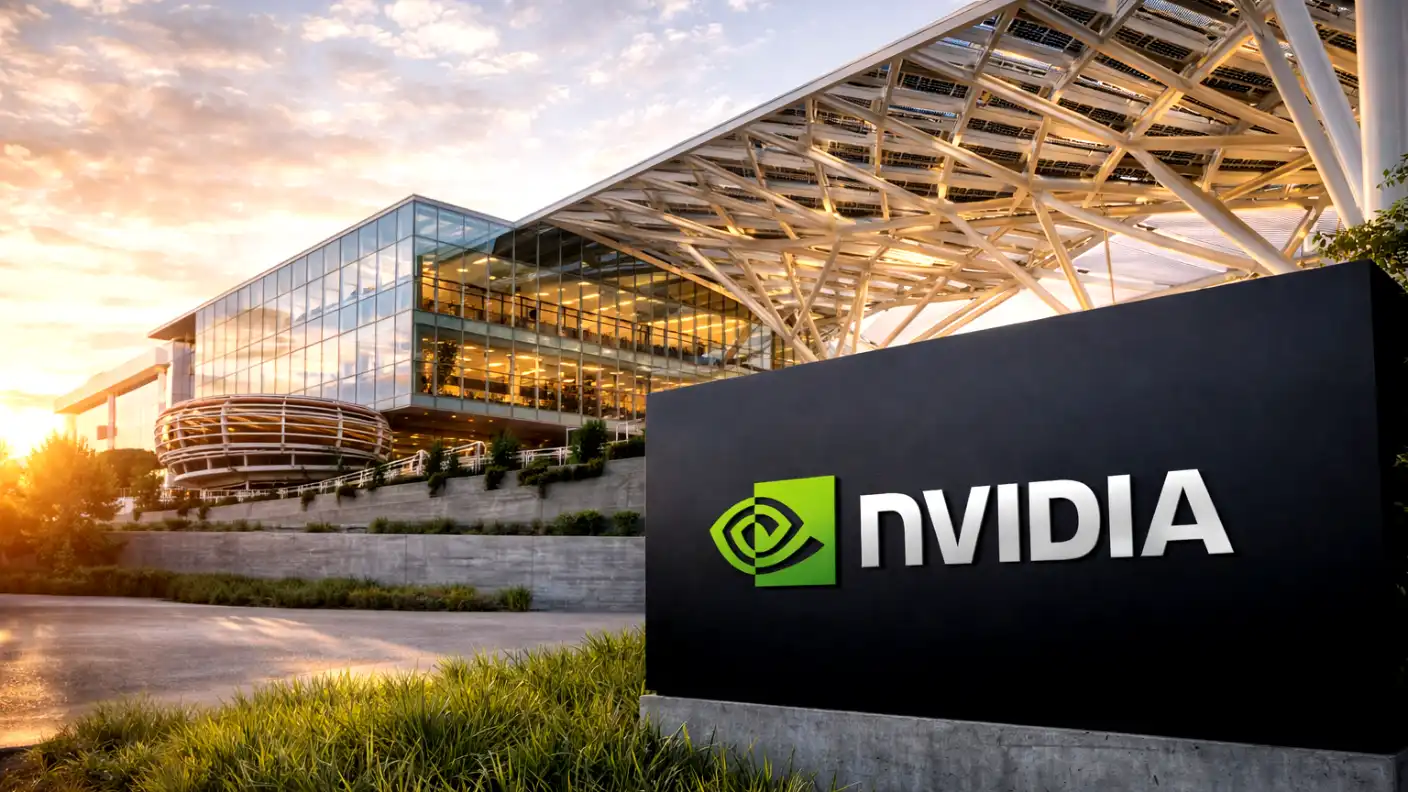
Nvidia continues to cement its status as the heartbeat of the modern artificial intelligence economy. The semiconductor titan has officially joined the latest wave of aggressive Wall Street AI funding, deploying significant financial resources to secure its place in the next generation of computing. By funneling capital into emerging AI startups and infrastructure projects, Nvidia ensures that the ecosystem running on its hardware grows faster and more efficiently than ever before. This move signals that the company is no longer just a chip supplier but a primary architect of the entire AI software landscape.
The scale of this funding initiative is staggering. Market data shows that Nvidia has committed more than $2 billion to various AI-focused ventures over the last twelve months. This strategy effectively creates a closed-loop system where startups receiving Nvidia’s cash almost exclusively utilize Nvidia’s H100 and Blackwell GPU clusters to train their models. By helping these companies bridge the initial funding gap, Nvidia maintains an iron grip on the hardware market, ensuring that as these startups succeed, their reliance on Nvidia’s proprietary CUDA software and silicon remains absolute.
Wall Street analysts view this as a masterclass in market expansion. By investing directly into the companies that consume its products, Nvidia creates a steady stream of demand that persists even when the broader tech market experiences fluctuations. Currently, Nvidia’s data center revenue has surged by nearly 150% year-over-year, largely thanks to these strategic partnerships. Investors seem to appreciate this bold approach, as the company’s market valuation has repeatedly tested the $3 trillion threshold, outperforming almost every other entity in the tech sector.
This funding wave is about more than just hardware; it is about establishing standards. Nvidia is backing projects that focus on autonomous agents, robotics, and large-scale industrial simulation. These are sectors that require massive parallel processing power, which only Nvidia’s high-end chips can deliver. By identifying the winners early and providing them with the necessary capital and technical support, Nvidia effectively steers the direction of AI research away from competing architectures and toward its own.
Of course, this aggressive expansion comes with risks. Critics point out that such heavy concentration of capital in a single hardware provider could invite closer scrutiny from antitrust regulators in the United States and the European Union. Furthermore, if the current AI bubble shows any signs of cooling, Nvidia could find itself exposed to the financial failures of the very startups it has helped fund. However, management seems unfazed, arguing that the transition to AI-integrated computing is a generational shift similar to the invention of the internet.
Efficiency remains a core pillar of this new investment strategy. Nvidia is pouring money into companies that optimize power consumption, which is currently the biggest bottleneck in large-scale AI operations. Some of these startups are developing new software techniques that reduce the energy required for model inference by as much as 30%. Because energy costs represent a significant chunk of a data center’s operating expenses, lowering these barriers to entry helps more companies adopt AI at scale, which in turn fuels further demand for Nvidia’s high-performance chips.
As the race to achieve Artificial General Intelligence accelerates, the relationship between capital, hardware, and software will define the winners of the next decade. Nvidia has successfully positioned itself at the center of this triangle. With a war chest that grows larger every quarter, the company shows no signs of slowing down. For competitors, the challenge is clear: it is becoming increasingly difficult to challenge a giant that not only builds the tools for the future but also writes the checks to fund it.