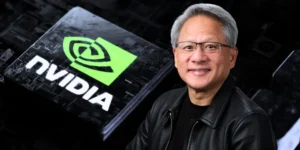

The technology world is setting its sights on Taipei this week as Computex 2026 officially begins. Among the sea of hardware manufacturers and cooling solutions, one company stands at the center of the storm: Nvidia. Following a massive string of financial successes that pushed the company into the $5 trillion market capitalization bracket, CEO Jensen Huang is scheduled to take the stage to share his vision for the next era of computing. With artificial intelligence spending expected to exceed $700 billion this year, investors and gamers alike are waiting to see how the chip leader plans to defend its throne.
The biggest mystery surrounding the event is the future of the Blackwell and Rubin architectures. While the company has already enjoyed massive success with these platforms, the industry is hungry for an update on the “next-next” generation. Recent rumors suggest Nvidia will likely detail its upcoming roadmap, focusing on how it plans to keep its performance-per-watt lead over rivals like AMD and Intel. Nvidia currently faces immense pressure to prove that its dominance is not just a passing trend, but a permanent structural shift in how the world handles data.
Computing power is becoming the most valuable resource on the planet, and Nvidia is the primary supplier of the “brains” that power the AI revolution. During his keynote, Huang will almost certainly address the “AI factory” concept. He believes the future of the internet is not just about searching for information, but about building physical data centers that act like autonomous manufacturing plants for intelligence. Expect to see new server-scale networking hardware that allows these data centers to communicate internally at speeds that were previously considered impossible.
Gaming remains the company’s roots, even if it is no longer the primary driver of revenue. While the spotlight sits firmly on data center hardware, Nvidia usually saves a few surprises for the consumer segment at Computex. Leaks indicate that we might see new additions to the GeForce RTX 50-series or perhaps a refreshed suite of software tools that utilize “DLSS 4” to squeeze more frames out of existing hardware. Even a 1.5% improvement in frame stability using these new AI-driven upscaling tools can make a noticeable difference for the millions of gamers who use Nvidia hardware every day.
The competitive landscape has never been more difficult to navigate. AMD and Intel are both using Computex as a stage to launch their own “AI PC” processors, such as the Panther Lake and Wildcat Lake lineups. These chips are designed to bring high-speed AI tasks directly to your laptop, bypassing the cloud. Nvidia needs to counter this narrative by showing that its own “Edge AI” solutions—specifically those aimed at robotics and workstations—are significantly more powerful than the integrated graphics chips offered by its CPU rivals.
One area where Nvidia will likely spend a lot of time is the integration of its software stack, CUDA. For over a decade, CUDA has been the “moat” that kept developers tied to Nvidia hardware. Now, with more open-source competitors rising to the challenge, Nvidia must demonstrate that its software ecosystem remains the easiest and fastest way to develop new AI products. We expect the company to announce new developer kits that lower the cost of entry, perhaps making professional-grade AI development tools available to smaller startups for a fraction of their current price.
The physical hardware on display will also show how the company plans to manage heat and power. As individual GPUs begin to draw 600 watts or more, traditional air cooling is no longer enough. The Computex floor will be filled with innovative liquid-cooling solutions and rack-scale power management systems. Nvidia’s partners in Taiwan are already showing off cooling systems that are capable of handling these high-wattage monsters, suggesting that we are moving toward a future where “liquid cooling” becomes the standard for high-end AI workstations.
Financial analysts are hoping for guidance on how the company plans to navigate the global supply chain, which remains incredibly tight. With firms currently pouring over $1 billion into AI infrastructure every single month, even a small hiccup in manufacturing or assembly can be catastrophic for the industry’s growth trajectory. Nvidia will need to assure investors that its partnerships with TSMC and other foundry giants are secure and that the roadmap for the next two years is not at risk of major delays.
While the “AI bubble” remains a topic of conversation in financial circles, Nvidia has consistently defied expectations. The company is currently sitting on record-breaking margins, and its ability to turn massive R&D spending into actual product shipments has been flawless. Huang’s keynote will not just be about new features; it will be about projecting confidence in a market that is increasingly worried about sustainability, power costs, and technical stagnation.
As Computex 2026 unfolds, the industry will get a clearer look at whether Nvidia can repeat its past performance. Jensen Huang has a reputation for turning these events into major cultural moments. Whether you are an investor watching the ticker, a developer waiting for new APIs, or a gamer hoping for a better graphics card, the next few days in Taipei are going to set the tone for the rest of the year. The AI hardware war is moving into a new phase, and Nvidia intends to be the company that holds the high ground.