
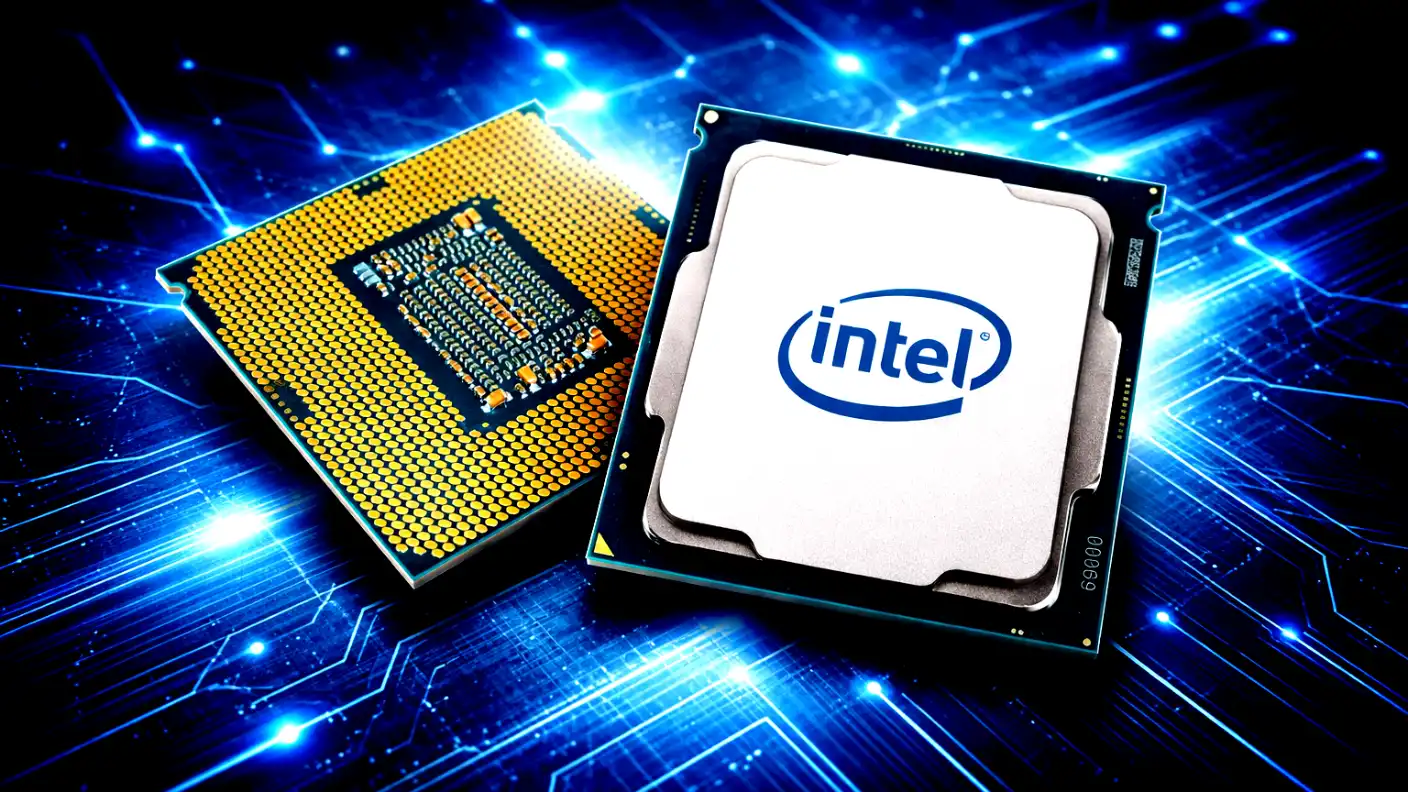
Intel officially confirmed this week that its long-awaited “Clearwater Forest” Xeon 6+ processors have entered full production. This release marks a massive turning point for the company’s ambitious 18A manufacturing process. While Intel previously focused its 18A technology on client-side chips like the Panther Lake “Core Series 3,” these new Xeon processors target the most demanding data center workloads. By packing hundreds of cores into a single package, Intel aims to dominate the 6G networking and Edge AI sectors, where raw speed and energy efficiency are no longer optional—they are essential for survival.
The technical specifications of the Clearwater Forest family are nothing short of extraordinary. The new Xeon 6+ CPUs utilize Intel’s latest “Darkmont” E-Core architecture. In their most powerful configuration, these processors feature up to 288 individual cores spread across 12 high-density compute chiplets. To keep this massive number of cores fed with data, Intel included a staggering 576 MB of on-package L3 cache and an additional 288 MB of L2 cache. This massive memory buffer is designed to minimize the time processors spend waiting for data from system RAM, which is a common performance killer in modern server environments.
This massive scale requires equally impressive power management. The processors are rated for a thermal design power (TDP) of up to 450 watts and utilize the new LGA 7529 socket, which supports both 1S and 2S server configurations. The platform is built to handle the future of high-speed data, supporting 12-channel DDR5 memory at speeds reaching 8000 MT/s. With support for 96 PCIe Gen 5.0 lanes and 64 CXL 2.0 lanes, the platform provides the massive connectivity required for modern AI infrastructure, where hundreds of GPUs often need to communicate with CPUs at speeds exceeding 24 GT/s per lane.
Intel is not just relying on core counts to win the market; the company is integrating four major proprietary technologies into these chips: RibbonFET, PowerVia, Foveros Direct 3D, and EMIB 2.5D. RibbonFET provides superior electrical control at smaller process nodes, while PowerVia rearranges the chip’s power delivery to the backside, leaving the front side clear for signal wiring. Foveros Direct 3D and EMIB 2.5D handle the complex task of stacking and connecting these 12 chiplets. These technologies combined allow Intel to squeeze more performance out of every watt of energy, a critical factor for companies spending over $1 billion annually on data center electricity bills.
Internal testing conducted by Ericsson shows that a single Xeon 6990E+ chip with 288 cores delivers 30 percent higher overall performance than a dual-socket system running a 288-core Xeon 6780E “Sierra Forest” platform. Furthermore, the Clearwater Forest chip achieved a 38 percent reduction in rack power usage and a 60 percent improvement in performance-per-watt. For massive cloud providers that manage thousands of server racks, these efficiency gains are transformative. Reducing power usage by even 1.5% across a fleet of 50,000 servers results in millions of dollars of savings and a significantly smaller carbon footprint.
The industry is watching these developments with great interest because the battle between Intel and AMD in the server space has never been hotter. Intel is currently moving toward its next-generation “Diamond Rapids” P-Core family, which promises to push core counts even higher. While the current Xeon 6+ focuses on efficiency and thread density, the upcoming Diamond Rapids chips will scale up to 256 cores per socket in initial versions, with denser variants planned for the future that may feature up to 512 cores and 16-channel memory support.
Dell has already begun announcing hardware based on these upcoming designs, such as the PowerEdge R9810 2U server. This server promises double the memory bandwidth compared to previous generations, along with a 50 percent increase in total CPU core count. By integrating these massive P-core processors, Dell is providing a platform that can handle the most demanding AI rendering and simulation tasks. The release of these systems is currently scheduled for 2027, fitting perfectly with the broader roadmap Intel has laid out for its enterprise clients.
OneAPI is a vital part of Intel’s strategy to ensure this hardware actually gets used. The updated 2026.0 oneAPI Toolkit provides full support for the Clearwater Forest chips, giving developers a unified set of compilers, libraries, and AI frameworks. Instead of struggling to write custom code for different processors, developers can use this toolkit to unlock the full potential of Intel hardware across the board. This strategy ensures that whether a client uses a Xeon CPU, a Core Ultra laptop chip, or a future dedicated AI GPU, the software stack remains familiar and highly optimized.
Intel’s focus on full production of the Clearwater Forest family is clearly a defensive move. The market is shifting toward specialized AI hardware, and Intel knows it cannot afford to fall behind AMD’s EPYC lineup. The company’s massive investment in the 18A process is finally bearing fruit, and the successful production ramp-up proves that the technical risks the company took years ago are now paying off. With the first chips expected to ship before the end of the year, Intel is positioning itself to be the primary partner for the next wave of Edge AI and 6G networking deployments.
As we look toward the end of 2026, the data center market will likely face more competition than ever before. With both Intel and its competitors accelerating their roadmaps, customers can expect significant jumps in performance and efficiency every single year. The ability to run massive AI models in real-time is no longer a luxury; it is a fundamental requirement for modern business. Intel’s commitment to building the fastest, most efficient silicon in the world shows that the company is ready to fight for every single contract in the server industry.