

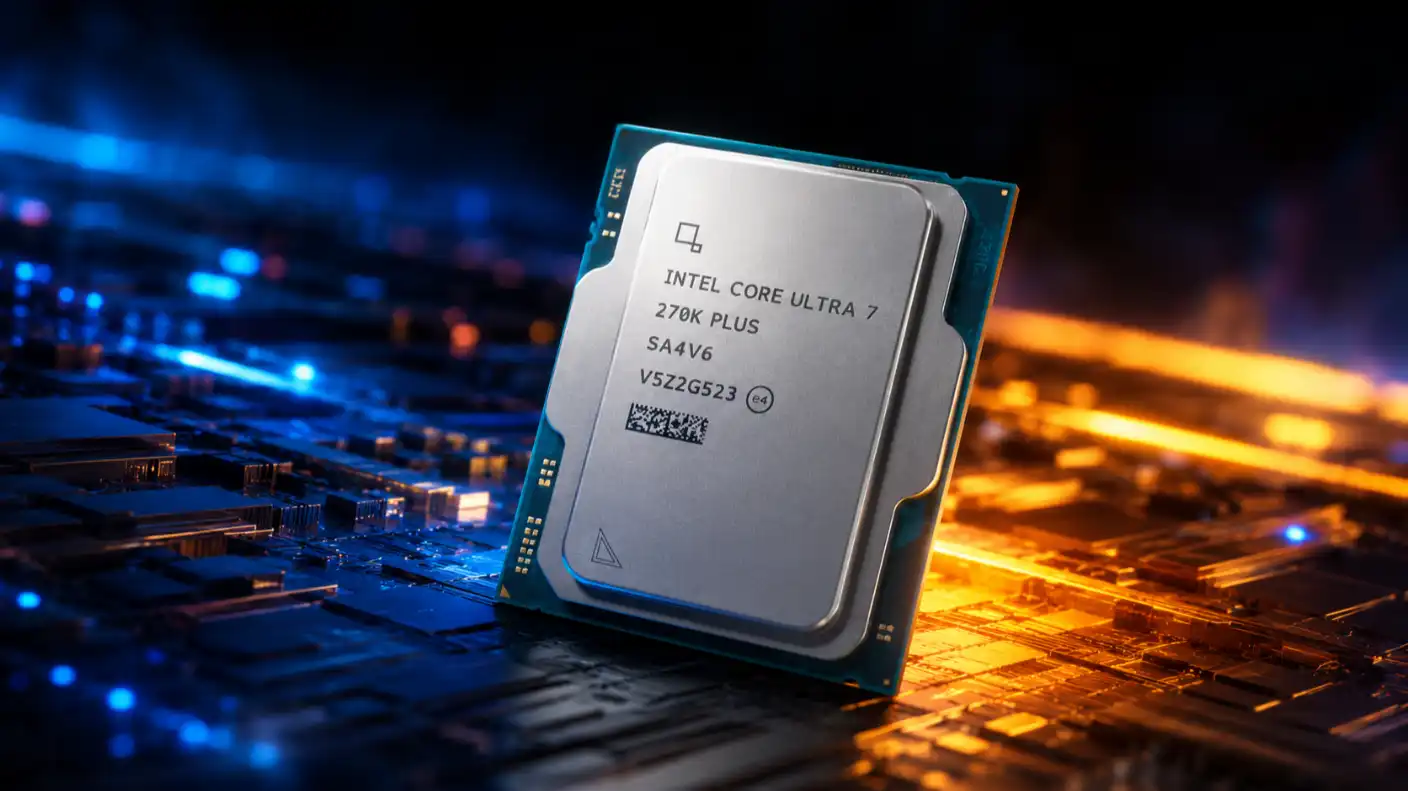
Intel Foundry has officially kicked off risk production for its latest semiconductor innovation, the 18A-P process node. Announced at the 2026 VLSI Symposium, this advanced technology represents a significant leap forward in chip manufacturing. By refining its existing 18A architecture, Intel aims to provide a powerful, highly efficient platform that satisfies the growing demands of data centers, AI accelerators, and mobile devices.
The most notable breakthrough in the 18A-P node is the introduction of “Power Boost.” This industry-first technology utilizes a novel dual-contact transistor architecture to increase drive current and overall frequency. Remarkably, Intel managed to achieve these performance gains without increasing the footprint of the chip. This allows designers to squeeze more speed out of their existing layouts, making the process highly versatile for power-constrained applications.
Engineers at Intel have also tackled the persistent challenge of heat management. The new 18A-P process delivers a 20% to 40% improvement in thermal resistance compared to its predecessor. By integrating new heat-conducting materials and updating electronic design automation (EDA) tools to support thermally-aware layouts, Intel ensures that chips can run cooler even under heavy workloads. Cooler chips sustain higher clock speeds for longer durations, which is vital for modern high-performance computing.
The 18A-P node also brings significant improvements to electrical efficiency. Depending on the needs of the product, the new process can provide either a 9% increase in performance at the same power level or an 18% reduction in power consumption at matched performance. Additionally, Intel reported a 10% to 30% improvement in via resistance, thanks to clever geometric and material optimizations in the critical layers of the chip.
Intel has designed 18A-P to be fully compatible with the design rules of the original 18A process. This compatibility allows manufacturers to transition their existing designs to the more capable 18A-P node with minimal friction. The company has introduced new cell options, including the W1 and W1.5 cells for low-power requirements and the high-performance W3P cell, ensuring a broad range of options for diverse customer needs.
The first major product to utilize this new process will be Intel’s next-generation Xeon 7 server processor, codenamed “Diamond Rapids.” These processors are expected to benefit heavily from the increased performance and thermal efficiency of 18A-P, particularly within their compute tiles. As risk production moves forward, the industry is watching closely to see how this node will impact the competitive landscape against other leading-edge semiconductor foundries.