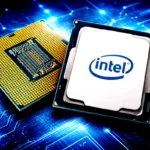

Intel’s new client division is making significant changes in the desktop processor market. Robert Hallock recently revealed that Intel plans to offer longer socket longevity, similar to AMD, while also refreshing existing platforms with new CPU releases. For example, Intel has already launched Arrow Lake “Core Ultra 200S Plus” for LGA 1851 and is preparing a Raptor Lake refresh for LGA 1700 boards.
Hallock explained that overclocking, traditionally limited to unlocked “K” series desktop CPUs, is changing. Most “K” series processors typically target the high-end segment, retailing above $500. However, this year’s Core Ultra 200S Plus lineup brought a shift, introducing the 250K Plus at a competitive $199 and the 270K Plus, which offers performance comparable to the 285K with overclocking support for just $299.
Moving forward, Intel aims to double down on this strategy by not only offering similarly segmented models but also by opening up overclocking support to a wider range of SKUs. Robert’s rationale is that while overclocking is considered an enthusiast feature, not every enthusiast is willing to spend $500 or more on their CPU.
To cater to this broader enthusiast market, Intel plans to expand its unlocked overclocking CPUs into more cost-effective price options. Motherboard manufacturers have already embraced this approach, offering robust mATX and ATX motherboards with excellent CPU and memory overclocking support at mainstream price points. Many of these boards also include an external bCLK generator, which enables overclocking even on non-K CPUs.
The external bCLK generator is a feature that was enabled several generations ago but was later restricted by Intel. It allowed overclocking on non-K desktop CPUs, offering higher performance, but it also voided the warranty and placed additional stress on chips not primarily designed for overclocking. It remains to be seen if Intel will change its approach to this feature in the future. Nevertheless, Intel’s decision to enable overclocking support across a wider range of processors, rather than limiting it to only higher-end and more expensive models, is a very welcome development for PC enthusiasts.