
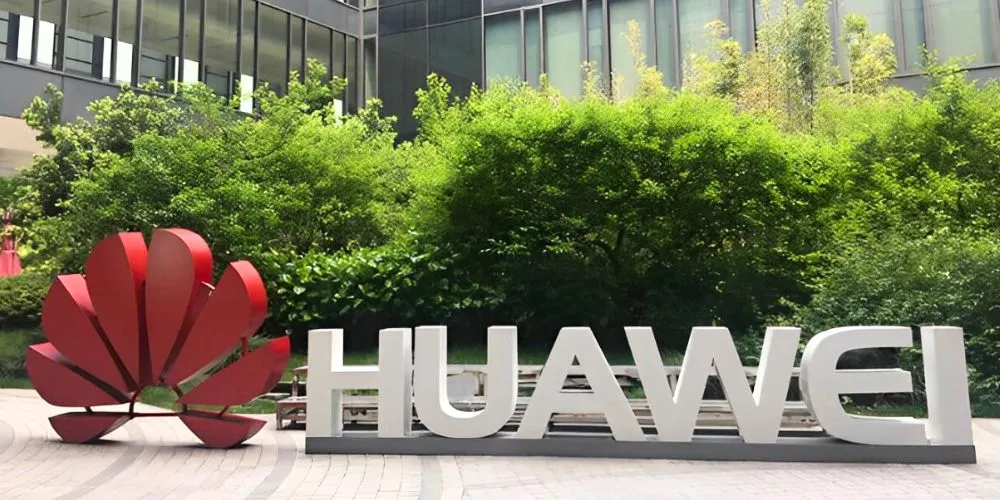
Huawei continues to push the boundaries of operating system efficiency. In a bold new statement, a top company executive revealed that their HarmonyOS platform can be optimized to function on devices with as little as 64KB of RAM. This revelation highlights Huawei’s aggressive strategy to dominate the Internet of Things (IoT) market by making its software accessible to the smallest, most resource-constrained hardware imaginable.
Most modern smartphones require several gigabytes of RAM to handle basic tasks, making the idea of a fully functional OS running on 64KB of memory seem almost impossible. However, Huawei argues that by stripping away legacy code and utilizing a highly modular microkernel architecture, they can shrink the operating system’s footprint to an unprecedented degree. This capability opens the door for HarmonyOS to power everything from smart light bulbs and temperature sensors to tiny industrial monitors that previously relied on much more basic, limited firmware.
This shift toward extreme optimization serves a larger purpose in Huawei’s global expansion plans. As the company faces ongoing hardware restrictions in various international markets, it is doubling down on software dominance. By offering a platform that runs on hardware costing as little as $1 to $2 per unit, Huawei creates a massive ecosystem that can connect billions of devices. This approach essentially turns the smallest chips into nodes within a massive, interconnected network, all governed by a single, unified software foundation.
The technical challenge of squeezing an OS into 64KB of RAM cannot be overstated. Standard operating systems usually consume dozens of megabytes just to boot up. To achieve this, Huawei engineers had to rethink how the kernel manages memory, tasks, and system interrupts. They have effectively created a “stripped-down” version of HarmonyOS that retains the core communication and security features of the full-scale OS while removing all unnecessary bloat. This allows the software to perform real-time tasks without crashing or lagging, even on hardware that would normally struggle to run a simple calculator.
Industry observers suggest this strategy could disrupt the low-power chip market significantly. Many competitors currently rely on scattered, proprietary firmware that often lacks security updates and interoperability. By providing a standardized, secure, and incredibly lightweight OS, Huawei makes it easy for hardware manufacturers to integrate advanced smart features into products that previously lacked any “intelligence.” This could lead to a 10% to 15% increase in the adoption rate of smart home technology in emerging markets where budget-friendly components are the standard.
Furthermore, this development solidifies HarmonyOS as a viable alternative to other embedded systems, like FreeRTOS or Zephyr. While those systems are popular among hobbyists and specific industrial applications, they do not offer the same level of ecosystem integration that Huawei promises. If a manufacturer builds a device running on 64KB of RAM, that device can theoretically communicate seamlessly with a high-end Huawei smartphone, tablet, or car console. This fluid integration is the key to Huawei’s vision of a “1+8+N” strategy, where one phone controls eight categories of secondary devices and an unlimited range of IoT hardware.
Despite the technical achievement, questions remain regarding how well such a tiny OS handles complex tasks. While 64KB is enough for simple sensor reporting, it cannot support heavy AI processing or high-definition graphics. Huawei acknowledges these limitations but emphasizes that the goal is versatility rather than raw power. By making the OS scalable, they ensure that the same underlying software architecture can serve as the brain for a $500 smartwatch and a $2 smart switch.
As Huawei continues to refine its software, the rest of the tech industry is taking notice. If the company can successfully deploy HarmonyOS across millions of low-cost, low-power devices, it will cement its role as a global leader in the software infrastructure space. For consumers, this could mean cheaper, more reliable, and better-connected gadgets in every room of the house. Huawei is betting that by controlling the operating system at the smallest level, it can win the race for the future of the connected world.