

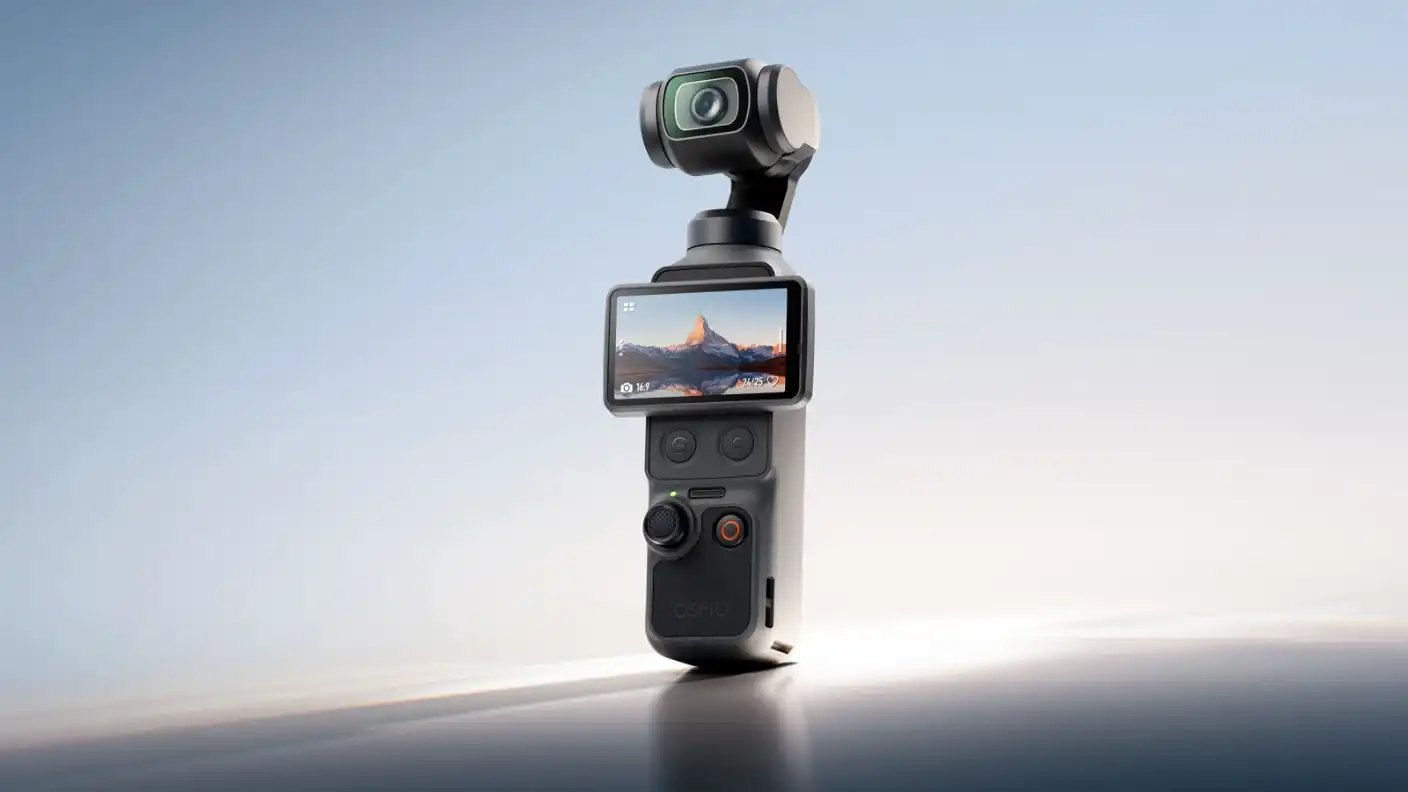
DJI just announced its brand-new vlogging camera, the Osmo Pocket 4, but buyers in the United States cannot purchase it. The new camera looks like a solid upgrade over the popular Pocket 3, which many video creators consider the absolute best tool for making online content. The Pocket 4 keeps the same small handheld shape, the standard 1-inch image sensor, and the smooth 3-axis mechanical gimbal. However, DJI doubled the fastest frame rate to 4K resolution at 240 frames per second, allowing for incredibly smooth slow-motion video. They also upgraded the color profile to D-Log, giving video editors much more control over the final image.
Despite these great features, Americans will simply never get a chance to use the Pocket 4. Last December, the Federal Communications Commission officially added the entire DJI product line to its Covered List. This ban covers all their drones, mechanical gimbals, and handheld cameras. The move did not actually surprise anyone in the tech industry. Back in 2024, Congress passed the National Defense Authorization Act, and former President Biden signed it into law. This bill set a strict deadline of December 2025 for the government to complete a full security audit of every DJI product on the market.
The law clearly stated that if the government failed to complete the security audit by the deadline, all DJI communications and video surveillance equipment would automatically be added to the banned list. As the year 2025 dragged on, it became increasingly clear that no federal agency was actually conducting the required audit work. DJI issued multiple public statements urging the government to complete the review, but the Trump administration instead focused on other political priorities. When the December deadline finally hit, the FCC went further than the law required. They did not just ban DJI; they completely banned all foreign-made drones from entering the country.
The new rules did include a few small exceptions to prevent chaos. Any equipment that the FCC previously approved remains completely legal, meaning people can still buy, sell, and fly older drones and cameras. The government also created special carve-outs for specific drones used by the Department of Defense. However, since the military does not use the same consumer drones that wedding photographers and real estate agents buy, those military exemptions mean absolutely nothing to everyday content creators.
Until today, regular consumers have hardly noticed the harsh FCC actions. DJI cleverly pushed several of its early 2026 products through the FCC approval process right before the December ban took effect. Because of this smart timing, products like the Avata 360 drone, the Mic 3 wireless microphone, and the RS 5 gimbal actually hit the American market this year. While DJI cannot sell these items directly through its official online store, independent camera shops continue to fill the gap and sell the remaining inventory to eager US customers.
Unfortunately, the Osmo Pocket 4 missed that crucial approval window. DJI explicitly stated that the Pocket 4 will not launch in the United States because it still lacks the required FCC authorization. Simply put, DJI submitted the new camera for testing, but the agency refused to approve it before placing the company on the dreaded Covered List. While DJI is currently suing the federal government over the ban, nobody expects the courts to overturn the decision anytime soon. The FCC already extended its ban to include foreign-made Wi-Fi routers, proving that the current administration fully intends to keep foreign technology out of the country.
So, what should an American video creator do right now? If you want a small gimbal camera, you still have one fantastic option left. The older Pocket 3 remains fully legal and is currently selling for around $500. This represents a massive $299 discount compared to its original $799 launch price. While the Pocket 4 looks better on paper, the Pocket 3 still delivers incredible video quality for the price. DJI seems committed to building and shipping the older, FCC-approved gear for the US market, but nobody knows exactly how long those supplies will actually last.