
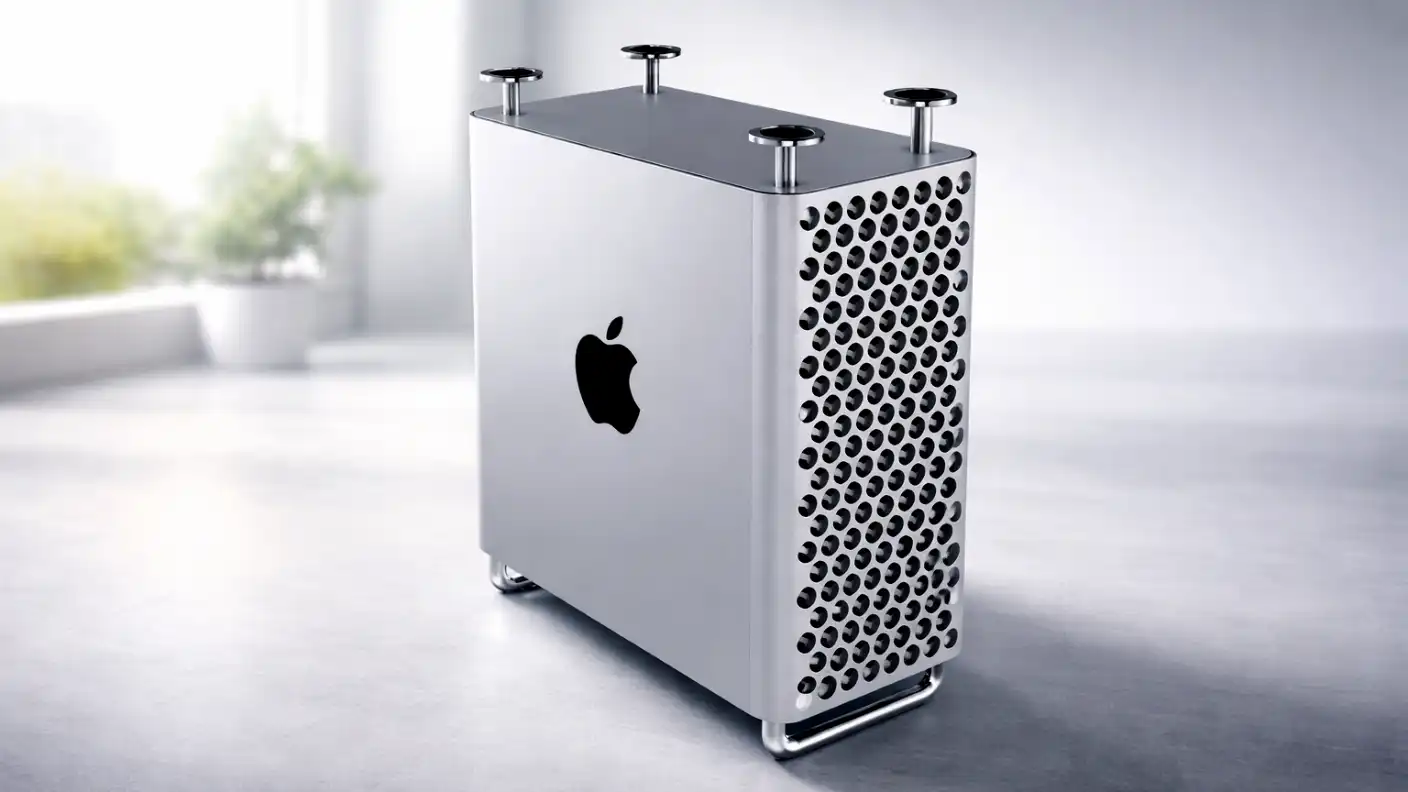
Apple officially ended production of the Mac Pro, marking the death of its largest and most customizable computer. The tech giant is currently erasing all mentions of the massive desktop system from its official website and online retail store. Company representatives confirmed the decision directly to the news outlet 9to5Mac, stating that they have no plans to manufacture the hardware in the future. This move officially closes a long chapter in Apple hardware history, retiring a machine that high-end professionals relied on for years.
Industry watchers did not find this announcement surprising at all. Apple essentially left the Mac Pro to gather dust after transitioning the company to its own custom chips in 2023. While other computers received massive speed boosts, the giant tower remained stuck using the older M2 Ultra processor. Instead of updating the massive tower, Apple pushed the much smaller Mac Studio into the spotlight. The company made the Mac Studio its flagship professional workstation, eventually offering it with much faster M3 Ultra and M4 Max chips last year.
The Mac Pro saw its last major physical redesign way back in 2019. During that era, the system still relied on powerful Intel Xeon processors to handle heavy workloads. The giant computer always maintained a small, highly dedicated group of fans who loved its raw size and capability. However, it clearly sat at the very bottom of Apple’s sales charts. The company struggled to sell large volumes of a desktop computer that started at a massive $6,999.99. Most buyers found the newer, smaller Mac Studio offered much better performance for a fraction of that high price tag.
What made the Mac Pro truly special was its internal expandability. Unlike every other machine in the modern Apple lineup, the massive tower featured open PCIe slots. Apple kept this design alive specifically to support high-end video editors and music producers. These professionals absolutely needed to plug in specialized audio cards or massive banks of extra internal storage. However, the switch to Apple Silicon ruined one of the tower’s main selling points. The newer M2 Ultra chip simply refused to support external graphics cards, meaning video professionals could no longer upgrade their graphics power.
Over its long lifespan, the Mac Pro featured several unforgettable shapes. The original metal design earned the famous “cheese grater” nickname because of its heavily perforated front grill, a look it borrowed from the older Power Mac G5. Later, Apple shocked the tech world by releasing a small, glossy black cylinder that everyone immediately called the “trash can.” That bold cylindrical design ultimately failed because the computer trapped too much heat inside and prevented users from adding new parts. Apple eventually returned to the classic cheese grater look for the 2019 model.
Today, Apple wants high-end users to solve their problems outside the computer case. The company constantly demonstrates how professionals can connect fast external hard drives and accessories directly to the Mac Studio using high-speed Thunderbolt cables. The latest Mac Studio models feature new Thunderbolt 5 connections. These fast ports actually allow engineers to connect several Mac Studio computers. By pooling the processing power of multiple machines, companies can build highly capable server clusters to run resource-intensive artificial intelligence applications.
Apple also changed how these computers fit into professional server rooms. In the past, the company sold a specific, horizontal version of the Mac Pro designed exclusively for heavy server racks. Apple refuses to build a custom server version of the Mac Studio. However, several outside technology companies quickly solved this problem. These independent vendors now build custom metal shelves that perfectly hold the Mac Studio inside standard professional server racks. This allows large businesses to stack new professional computers in their data centers easily.
With the massive tower officially gone, Apple now sells just three distinct desktop computers. Shoppers can choose between the all-in-one iMac, the tiny Mac Mini, or the powerful Mac Studio. Apple still clearly values its high-end professional customers and wants to provide them with massive computing power. However, the tech giant decided to abandon the classic, highly customizable computer tower completely. Moving forward, Apple demands that all its customers embrace a much simpler, streamlined machine that they can never open or upgrade.