
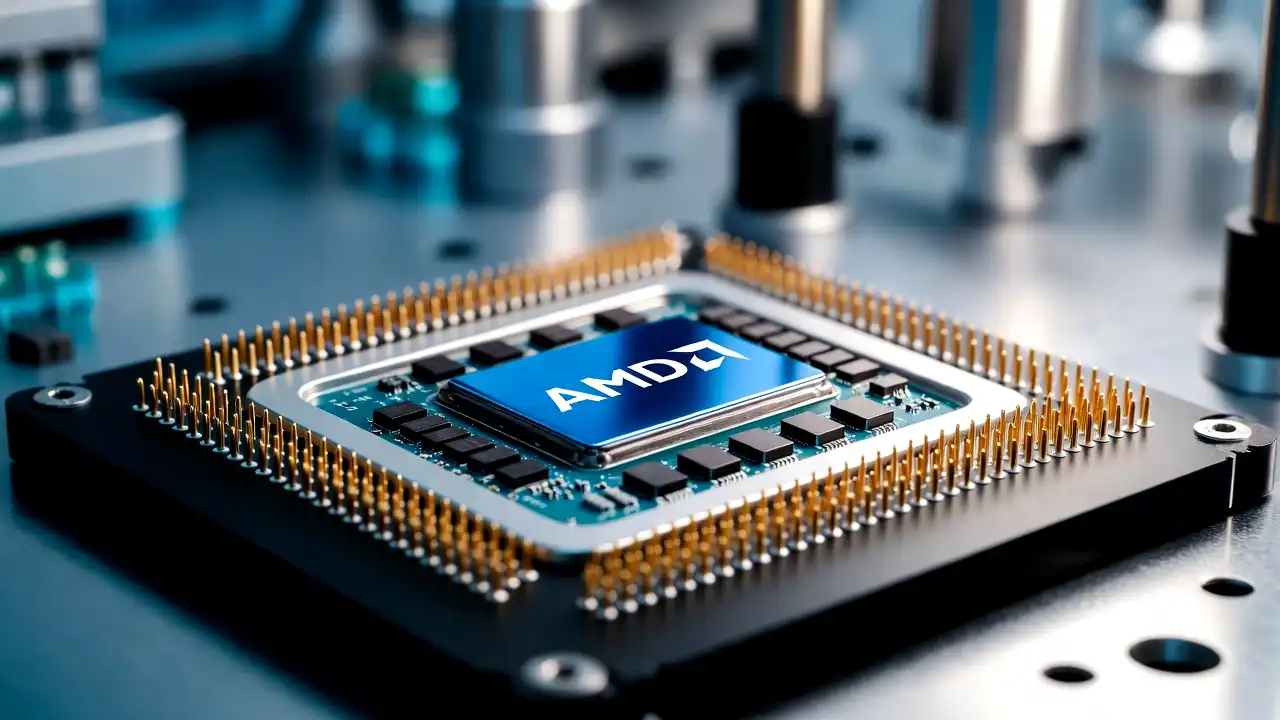
AMD is taking a massive swing at one of the biggest problems in modern computing: memory bottlenecks. As artificial intelligence and machine learning models continue to grow, data centers struggle to keep up with the massive power and storage demands. To combat this, AMD is investing heavily in a new approach called MEXT, or Memory Expansion Technology. This innovation aims to predict memory needs before they happen, effectively slashing the total cost of ownership (TCO) for massive server farms.
The core problem for data centers today involves the “memory wall.” Processors are becoming exponentially faster, but the speed at which they can fetch data from memory has not kept pace. This mismatch wastes time and energy. AMD’s MEXT technology tackles this by using predictive algorithms to pre-fetch data. By guessing what information the CPU will need milliseconds before it is requested, the system keeps the processor busy and reduces idle time by up to 30%. This efficiency gain is a game-changer for companies running massive cloud services.
Financial analysts estimate that data center operators spend more than $20 billion annually on memory-related infrastructure. By integrating predictive memory tech, AMD hopes to help these companies reduce their hardware footprint significantly. Early simulations suggest that MEXT can increase effective memory capacity by 50% without requiring physical hardware upgrades. For a company managing a fleet of 10,000 servers, this could translate into millions of dollars in savings on electricity and cooling costs alone.
Beyond pure cost savings, this technology offers a major boost to sustainability goals. Data centers currently consume roughly 2% of the world’s total electricity supply. AMD aims to lower the power draw per gigabyte of data processed by roughly 15%. This improvement helps hyperscalers hit their aggressive carbon neutrality targets while maintaining the high performance required for demanding AI workloads. As power grids become increasingly strained, efficient hardware has become more valuable than raw, unoptimized power.
AMD is not working in a vacuum, as they are actively collaborating with memory manufacturers to ensure hardware-level compatibility. The MEXT architecture requires specific support within the memory controllers to handle the predictive load. Experts predict that the first generation of MEXT-enabled processors will hit the enterprise market within the next 18 to 24 months. This timeline places AMD in a strong position to disrupt the server market, where competitors currently rely on more traditional, static memory management techniques.
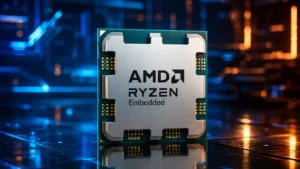
While the technical details are complex, the result for the end user is simple: faster, cheaper, and more reliable computing. By anticipating data requirements, MEXT creates a smoother flow of information through the silicon. This is particularly important for large language models that need to access terabytes of data in a split second. If AMD successfully rolls out this technology across its EPYC processor lineup, the company could capture an even larger share of the enterprise market, challenging rivals who are currently slower to adopt predictive memory strategies.
Looking ahead, the shift toward predictive computing marks a new era for hardware design. Engineers are moving away from brute-force increases in clock speed and toward smarter, more efficient data management. If MEXT performs as well in the real world as it does in controlled tests, we may soon see predictive memory become a standard feature in every high-performance chip. AMD clearly believes that this innovation is the key to unlocking the next generation of AI development and data center profitability.