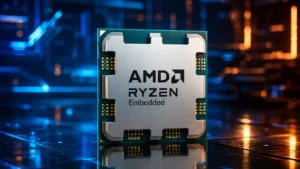

AMD is making a significant course correction for its latest hardware lineup. After receiving clear and vocal feedback from the enthusiast and professional communities, the chipmaker has officially announced that it will bring back Transparent Secure Memory Encryption (TSME) to its upcoming Ryzen 9000 series processors. The company plans to roll out this feature through a mandatory BIOS update scheduled for release in July, just weeks after the initial product launch.
TSME serves as a critical security layer for modern computing. By encrypting the data stored in system RAM, the technology protects users against sophisticated physical attacks, such as “cold boot” exploits where hackers attempt to scrape sensitive data directly from memory modules. Although some early performance tests suggested that disabling the feature could yield a marginal speed boost of roughly 1% to 2% in synthetic benchmarks, the trade-off in security proved to be a dealbreaker for many power users and enterprise clients who prioritize data integrity above all else.
The decision to omit TSME at launch caught many industry observers off guard. AMD originally marketed the Ryzen 9000 series—codenamed “Granite Ridge”—as the gold standard for high-performance desktop computing. When early reviewers discovered that the hardware-level encryption was missing, concerns regarding security regressions began to spread across forums and tech news outlets. AMD’s rapid response indicates that the company is listening closely to its user base, recognizing that even minor feature removals can alienate its core demographic of tech-savvy buyers.
This upcoming BIOS update will provide a seamless transition for those who have already purchased or plan to buy Ryzen 9000 processors. Users will simply need to download the latest firmware from their motherboard manufacturer’s website and toggle the TSME setting within the BIOS interface. While turning on memory encryption often carries a negligible latency penalty, most users will find the impact on day-to-day operations—such as gaming, content creation, or heavy multitasking—virtually imperceptible.
The move to reinstate TSME highlights a growing trend in the CPU market where software and firmware updates play as much of a role as the physical silicon itself. AMD is betting that its commitment to security will keep it competitive against rivals who are also navigating the complex balance between raw speed and hardware protection. By acting quickly, the company prevents a potential PR headache and ensures that its new flagship chips remain viable for sensitive professional environments where security is non-negotiable.
For gamers and enthusiasts, this development is a win for consumer choice. It demonstrates that when a community voices a concern—even one involving highly technical specifications—a company of AMD’s size can pivot effectively to restore missing functionality. Whether you are a workstation user handling confidential data or a gamer worried about potential system vulnerabilities, the return of TSME ensures that your Ryzen 9000 system will operate with the high level of security that has become an industry standard for AMD products.
Looking ahead, motherboard partners like ASUS, Gigabyte, MSI, and ASRock are already preparing the necessary firmware files. Owners of the latest AMD platforms should keep an eye on their support pages throughout July. Once the updates hit, users will gain the peace of mind that comes with hardware-encrypted memory, effectively closing the security gap and allowing the Ryzen 9000 series to reach its full potential in both performance and protection.