
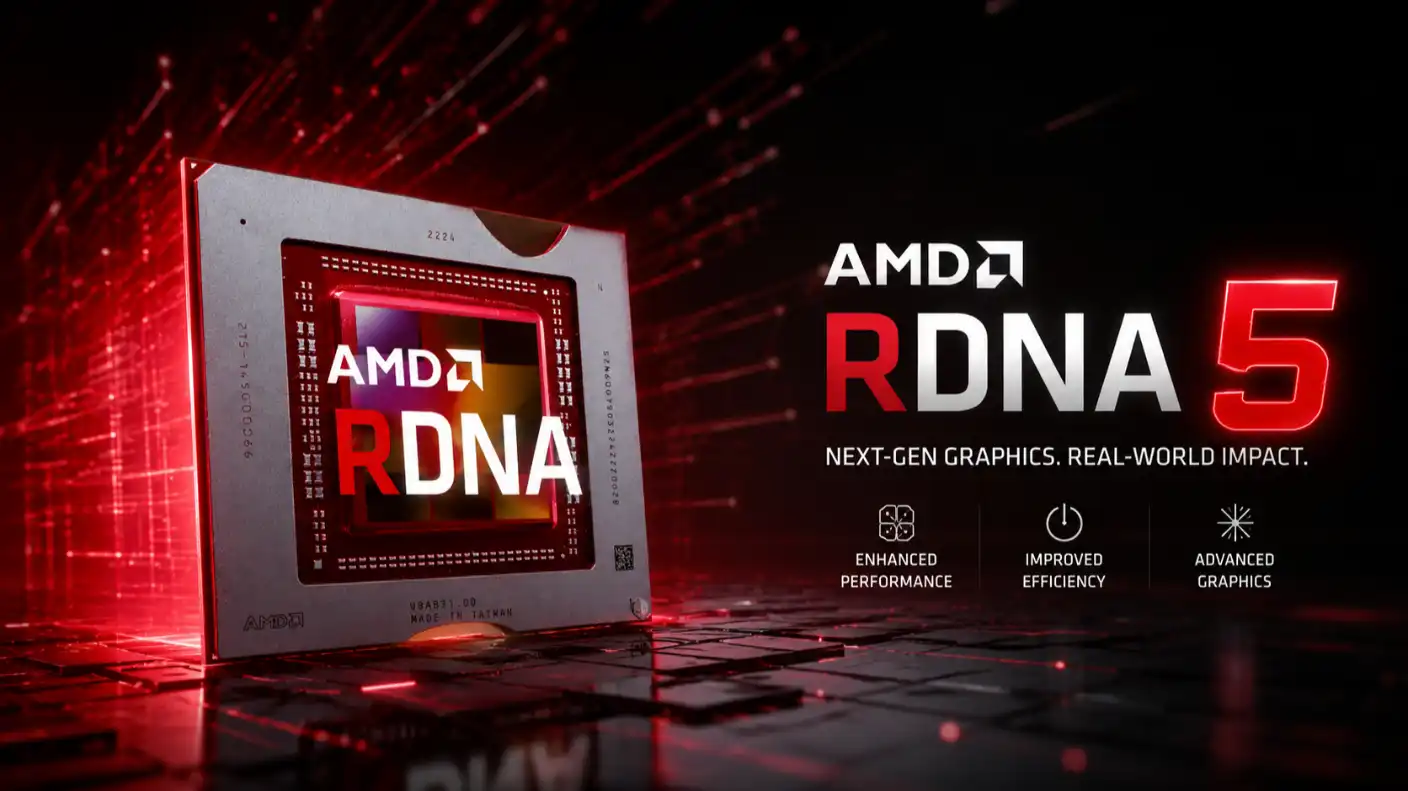
The next generation of high-end gaming graphics cards is taking shape, and hardware enthusiasts have plenty to look forward to. Reports surfacing from Computex indicate that AMD is gearing up for a significant architectural leap with its RDNA 5 gaming GPUs. Industry insiders and Add-In Board (AIB) partners now suggest a release window in the second half of 2027. This timeline positions AMD to go head-to-head with Nvidia’s upcoming product cycle, promising a massive showdown for dominance in the enthusiast PC gaming market.
The move to RDNA 5 marks a critical turning point for Team Red. After iterating on previous architectures, AMD appears ready to introduce substantial performance improvements and architectural changes that could redefine what gamers expect from their hardware. By targeting late 2027, the company aims to capitalize on new manufacturing processes that promise better efficiency and higher clock speeds. While details regarding specific core counts and memory configurations remain under wraps, manufacturers are already preparing their supply chains to accommodate these new, high-performance designs.
Nvidia, as expected, is not sitting idle. Sources close to the industry indicate that the green team plans to launch its own next-generation architecture around the same timeframe. This synchronized release suggests that 2027 will become a pivotal year for the GPU industry. Both giants are pouring billions into research and development to win over gamers who have been waiting for a true generational leap in ray tracing performance and AI-driven upscaling capabilities. The competition will likely result in a 30% to 40% jump in raw rasterization power compared to current flagship models.
Manufacturing partners are particularly optimistic about the upcoming launch. During private briefings at Computex, several major AIB partners noted that the RDNA 5 architecture feels like a “from-the-ground-up” redesign rather than a simple refresh. These partners expect the new cards to solve some of the thermal and power-draw challenges that high-end GPUs currently face. With the industry pushing for better performance-per-watt, AMD’s focus on power efficiency could be the ace up its sleeve to win over budget-conscious enthusiasts.
For the gaming community, the wait for RDNA 5 is significant because it represents the next big evolution in gaming fidelity. Modern games are becoming increasingly demanding, requiring hardware that can handle complex lighting, physics, and textures in 4K resolution at high frame rates. As developers integrate more advanced AI models into game engines, the need for powerful GPU hardware only grows. AMD’s strategy with RDNA 5 appears to be centered on supporting these next-level gaming experiences while maintaining compatibility with the evolving landscape of gaming software.
Beyond the gaming hardware itself, the 2027 release window provides a clear roadmap for consumers currently using older systems. If a gamer is holding onto a graphics card from three or four years ago, the jump to RDNA 5 will likely feel like an entirely new world. Manufacturers expect that this product cycle will trigger a major upgrade wave across the PC gaming industry. With millions of players worldwide looking to refresh their setups, the market potential for these new cards is estimated to reach over $2 billion in the first two quarters alone.
Looking further ahead, the battle between AMD and Nvidia will also extend into the realm of AI and productivity. As GPUs become more essential for local AI tasks, such as running LLMs or creative generative tools, the hardware requirements are expanding. AMD is positioning its RDNA 5 series to handle these dual-purpose workloads effectively. This dual-use capability is vital for the company as it tries to capture a broader audience beyond just traditional PC gamers.
As the industry prepares for this 2027 showdown, the focus remains on supply chain reliability. Both AMD and its manufacturing partners are working to ensure that when these cards finally hit the shelves, availability will be stable. The goal is to avoid the supply shortages that plagued previous generations. If AMD can hit its production targets and deliver on the promise of its new architecture, RDNA 5 could be the most important release for the company in the last decade. Gamers and investors alike will be watching these developments closely as we move toward the second half of 2027.