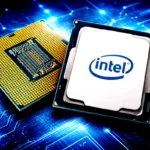

Intel is making a high-stakes move to regain its competitive edge in the semiconductor industry by appointing a former SK Hynix CEO to a critical new role. The company confirmed that the veteran executive will now serve as Executive Vice President in charge of its Foundry business and advanced packaging technologies. This strategic hire arrives as Intel fights to modernize its manufacturing processes and convince major global clients that it can handle the massive production demands of the AI era.
The semiconductor landscape has shifted dramatically over the past two years, with companies like TSMC and Samsung holding dominant positions in advanced chip fabrication. Intel currently trails its rivals in specific high-end manufacturing segments, a gap that has impacted its overall market share. By bringing in a leader with deep experience in the memory and storage sector, Intel hopes to inject new expertise into its “IDM 2.0” strategy—a plan designed to transform the company into a premier foundry service for outside chip designers.
Advanced packaging is the secret weapon in this turnaround. As traditional chip shrinking reaches physical limits, “packaging”—the process of stitching together different silicon tiles to create one powerful processor—has become the new frontier. Intel plans to spend over $100 billion across its global sites to expand its footprint in this area. The new executive will oversee these massive infrastructure investments, ensuring that the company’s packaging facilities operate at maximum efficiency to serve both internal and external customer needs.
This appointment also underscores the growing importance of the memory-to-logic interface. Modern AI chips require lightning-fast memory access to function, and the incoming executive’s background at SK Hynix provides him with a unique advantage in understanding how to bridge these two critical worlds. If Intel can successfully integrate its high-bandwidth memory expertise with its logic foundry business, it could provide a one-stop-shop solution for AI companies that currently have to source components from multiple different suppliers.
The pressure on Intel remains high. The company recently saw its stock fluctuate, and investors are watching the foundry division’s performance with keen interest. Financial analysts suggest that if the foundry business can capture just 1% to 2% more of the global market share over the next three years, it would represent a revenue shift of several billion dollars. Intel clearly believes this leadership change is the catalyst needed to achieve that target and stabilize its financial trajectory.
Internal morale and organizational focus are also key priorities for the new executive. Transforming a legacy giant like Intel into a nimble, customer-first foundry service requires a massive cultural shift. The new EVP is expected to streamline decision-making processes and reduce the red tape that has previously slowed down Intel’s ability to respond to market trends. Industry experts expect a series of rapid operational changes as he takes the reins of the foundry unit.
The competitive landscape shows no signs of cooling down. Rivals are pouring capital into their own foundry projects, with some companies committing $50 billion or more to new manufacturing hubs in the United States and abroad. Intel’s ability to differentiate itself will depend heavily on its execution in advanced packaging. By betting on a seasoned leader with a track record of managing high-volume, high-precision operations, Intel is signaling to Wall Street that it is serious about reclaiming the crown in chip manufacturing.
Ultimately, this move is about more than just filling a management vacancy; it is about survival and relevance in a world where silicon is the most valuable commodity. As the company pushes toward the next generation of 2nm and 1.8nm manufacturing nodes, the leadership at the foundry unit will be the primary driver of success. If this transition goes smoothly, Intel might finally be able to silence critics who have questioned its ability to compete in the modern era of chip design and production.