
The competition for the future of mobile computing has reached a fever pitch. With Nvidia recently announcing its “RTX Spark” initiative, the company aims to dominate the high-performance laptop market by pushing its dedicated graphics hardware into a wider range of thin-and-light devices. However, AMD executives are not backing down. During a press briefing, company leaders expressed strong skepticism regarding Nvidia’s strategy, urging potential buyers to look past the hype. According to AMD, anyone ignoring the upcoming “Strix Halo” laptop platform is making a fundamental mistake in their search for the ultimate mobile workstation.
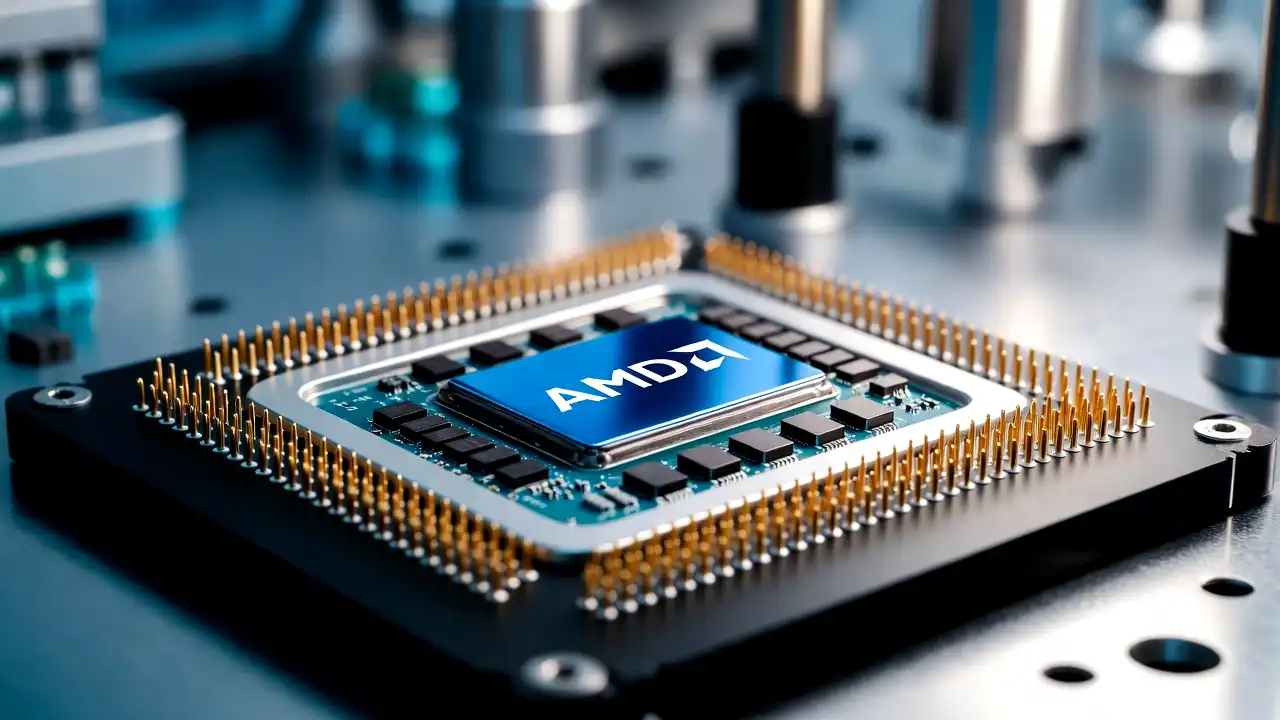
AMD’s Strix Halo processors represent a complete rethink of what a mobile chip can do. Instead of relying on a power-hungry, separate graphics card, these new SoCs (System-on-a-Chip) combine a high-performance CPU with a massive integrated GPU that features a high core count. The company claims this “all-in-one” approach delivers better power efficiency and significantly lower heat output than systems forced to shuttle data between a separate processor and a dedicated graphics card. AMD argues that this efficiency gap is exactly what the modern “AI PC” market requires to succeed.
The marketing war between the two companies has become personal. When asked about Nvidia’s entry into the laptop space with its new RTX Spark brand, several AMD executives were blunt. They suggested that buyers who prioritize Nvidia’s approach—which often involves pushing high wattage through separate, isolated components—are simply wrong if they overlook the architectural benefits of the Strix Halo platform. AMD believes the future of the laptop market is not found in pushing more power through a heat-generating dedicated GPU, but in creating a smart, unified chip that handles both logic and graphics tasks with surgical precision.
This is not just a disagreement over specs; it is a battle for a massive and growing revenue stream. The market for premium, AI-capable laptops is projected to exceed $1 billion in total quarterly value by the end of 2026. Both AMD and Nvidia are fighting to ensure their architecture becomes the backbone of this next generation of computers. AMD is betting that its Strix Halo chips can offer “workstation-class” performance in a chassis that is thinner, lighter, and cooler than anything equipped with a traditional, separate Nvidia GPU.
One key advantage that AMD is leveraging is the integration of its XDNA AI engine. Because the Strix Halo platform keeps the neural processing unit (NPU) and the GPU on the same silicon die, the latency between an AI task and the hardware execution is virtually zero. In a world where developers are increasingly using local AI agents to automate daily office tasks, this reduction in latency—often by 1.5% to 3% compared to two-chip systems—can make the user experience feel much more snappy and responsive.
For creative professionals who rely on Adobe Creative Cloud, 3D rendering software, or video editing suites, the choice between these two platforms will come down to software support and thermal efficiency. Nvidia has historically held the upper hand in software compatibility, but AMD is pouring significant capital into its driver and optimization teams. The company aims to prove that Strix Halo can handle the same professional creative workloads as an Nvidia-equipped machine, but with much better battery life. For a freelance editor or a digital artist on the move, a machine that offers six extra hours of battery life is worth more than any theoretical benchmark score.
Gaming performance also remains a major front in this rivalry. AMD contends that its RDNA graphics architecture, when paired with the high-speed LPDDR5X memory support found in Strix Halo, will punch far above its weight class. Early testing from independent labs suggests that these chips can handle modern triple-A titles at high resolutions without requiring the massive power draw of a traditional 160-watt laptop GPU. This allows manufacturers to build gaming-capable laptops that look like professional business machines, effectively blurring the line between a sleek ultrabook and a dedicated gaming rig.
The pricing strategy for Strix Halo will likely be the final piece of the puzzle. AMD knows it cannot win if it charges prices that are indistinguishable from Nvidia’s premium-tier hardware. Instead, the company expects to offer a “value-per-dollar” advantage that appeals to professional shops and students who need high performance on a budget. If AMD can undercut the price of equivalent Nvidia-powered systems by even a small margin, it could convince major PC manufacturers like Lenovo and HP to favor its chips for their primary holiday lineups.
Supply chain dynamics will dictate who wins this summer. Nvidia has done an excellent job of securing manufacturing capacity, but AMD has also been aggressively booking more wafers to meet the expected demand for Strix Halo. Both firms are engaged in a high-stakes game of manufacturing capacity, where the company that can actually put the most units on retail shelves will ultimately control the market narrative. With the launch of these laptops scheduled for the third quarter, the race is officially on to see which design philosophy the public prefers.
In the end, this clash represents the most significant hardware competition in the PC space in over a decade. Whether the future belongs to the “all-in-one” efficiency of AMD’s Strix Halo or the “power-first” approach of Nvidia’s RTX Spark, one thing is certain: the consumer is the ultimate winner. We are seeing a level of innovation that has been absent from the laptop market for years, and the results will be on display at every major electronics store across the country within months.