
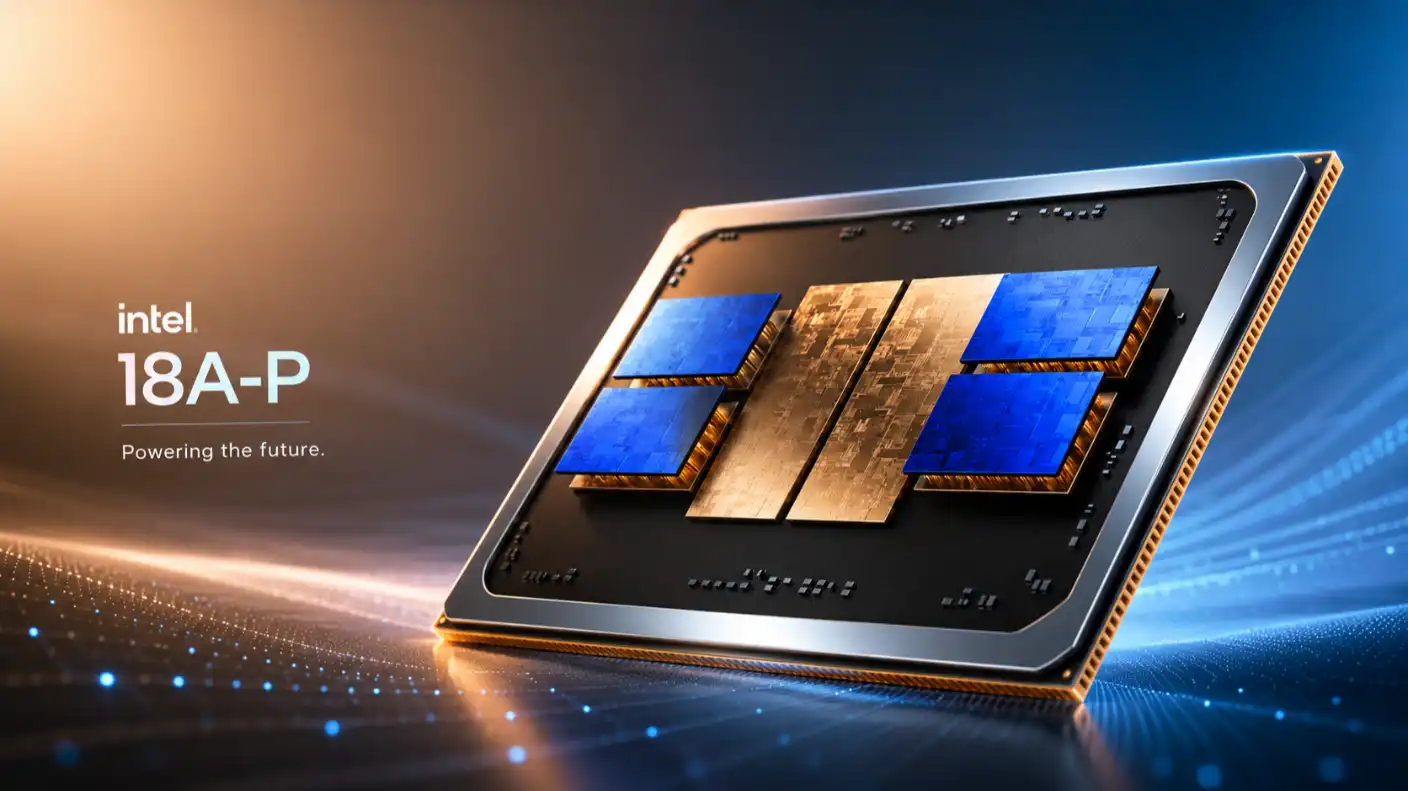
Intel is preparing to strike back in the high-performance computing market with its upcoming “Diamond Rapids” Xeon 7 processors. Slated for a 2027 release, this new architecture represents a major leap forward for the data center industry. With massive core counts, 16-channel memory support, and the latest connectivity standards, Intel aims to reclaim its throne from competitors that have slowly chipped away at its market share over the last few years. The shift to the advanced 18A-P manufacturing process will serve as the engine for these chips, delivering the performance density needed to power the next generation of artificial intelligence and cloud computing.
The most shocking spec of the Diamond Rapids family is the core count. Reports indicate that the top-tier chips will boast up to 192 cores. This represents a massive increase in thread density compared to Intel’s existing server lineup. By cramming nearly 200 cores onto a single silicon package, Intel intends to help data center operators consolidate their hardware footprint. This consolidation is a financial game-changer, as it allows companies to replace four or five older, power-hungry servers with a single Diamond Rapids-powered unit, saving thousands of dollars in rack space and cooling costs.
Memory bandwidth has long been a bottleneck for large-scale AI models, but the Diamond Rapids platform addresses this with a massive 16-channel memory architecture. This is double the capacity found in many of today’s flagship server chips. By providing 16 channels of DDR5 memory support, Intel ensures that the processor can pull and push data fast enough to keep those 192 cores busy. When you consider that major hyperscalers now spend over $1 billion every few months on hardware infrastructure, the ability to eliminate memory bottlenecks is the most valuable feature a manufacturer can offer.
The platform also embraces the future of high-speed data transfer by adopting the PCIe Gen 6 standard. This interface doubles the throughput of the previous generation, providing the massive lanes required to support modern, high-speed storage and top-tier AI accelerators. The integration of PCIe Gen 6 means that every part of the server—from the drives to the networking cards—can communicate at speeds that were previously considered impossible. For developers training large language models, this translates to faster model compilation and quicker access to massive datasets.
Manufacturing this chip on the 18A-P process is central to Intel’s comeback strategy. The “P” stands for a high-performance version of their 18A node, optimized to deliver more speed and lower power consumption. Intel has been open about the fact that its 18A process is the most important manufacturing milestone of the decade. By putting Diamond Rapids on this node, the company hopes to prove that its “Made in USA” foundry strategy can match the technological maturity of its rivals in Taiwan and Korea, who currently hold a lead in the global chip-making race.
This new hardware arrives at a critical time for the global AI economy. Every major business now realizes that its future depends on artificial intelligence, and the demand for compute has created a global shortage that experts expect to persist for years. Even a small 1.5% improvement in processing efficiency can equate to massive savings for firms like Amazon, Google, and Microsoft. Intel is betting that its Diamond Rapids architecture will offer the best performance-per-watt ratio on the market, making it the most logical choice for the next cycle of data center upgrades.
The shift toward 16-channel memory is also a clever tactical move against its primary competitor, AMD. While AMD has historically led in core count and memory bandwidth for its EPYC processors, Intel’s move to 16-channel support aims to erase that advantage completely. This technical race is good news for the consumer, as it forces both companies to innovate faster and drive down the cost of entry for businesses of all sizes. As these chips move into the final stages of design, the goal remains clear: provide more raw performance than anything else available on the market.
However, the road to 2027 is filled with potential obstacles. Intel must prove that it can scale this manufacturing process to volume without major flaws, as even a minor error in production can cost a company its entire quarterly output. Additionally, the software ecosystem must be ready. Intel is working closely with its software partners to ensure that compilers and AI frameworks can take full advantage of the 16-channel memory and the Gen 6 PCIe lanes. Without optimized software, these hardware features remain largely theoretical.
For IT directors and data center architects, the decision to hold out for Diamond Rapids is already becoming a standard strategy. We are seeing companies delay their 2026 server refreshes specifically to secure these 192-core monsters when they arrive next year. This creates a “wait-and-see” dynamic that might slow down sales in the immediate term but sets the stage for a massive, multi-billion-dollar upgrade cycle in 2027.
The emergence of Diamond Rapids is a sign that the “silicon wars” are heating up. Intel is clearly determined to stop the bleeding and recapture the enterprise market. By combining high-density cores with record-breaking memory bandwidth, the company is creating a product that is hard to ignore. Whether or not these chips officially restore Intel’s industry leadership will be the biggest tech story to watch as we move into 2027, but for now, the blueprints suggest a product that could genuinely reset the performance baseline for the modern data center.