
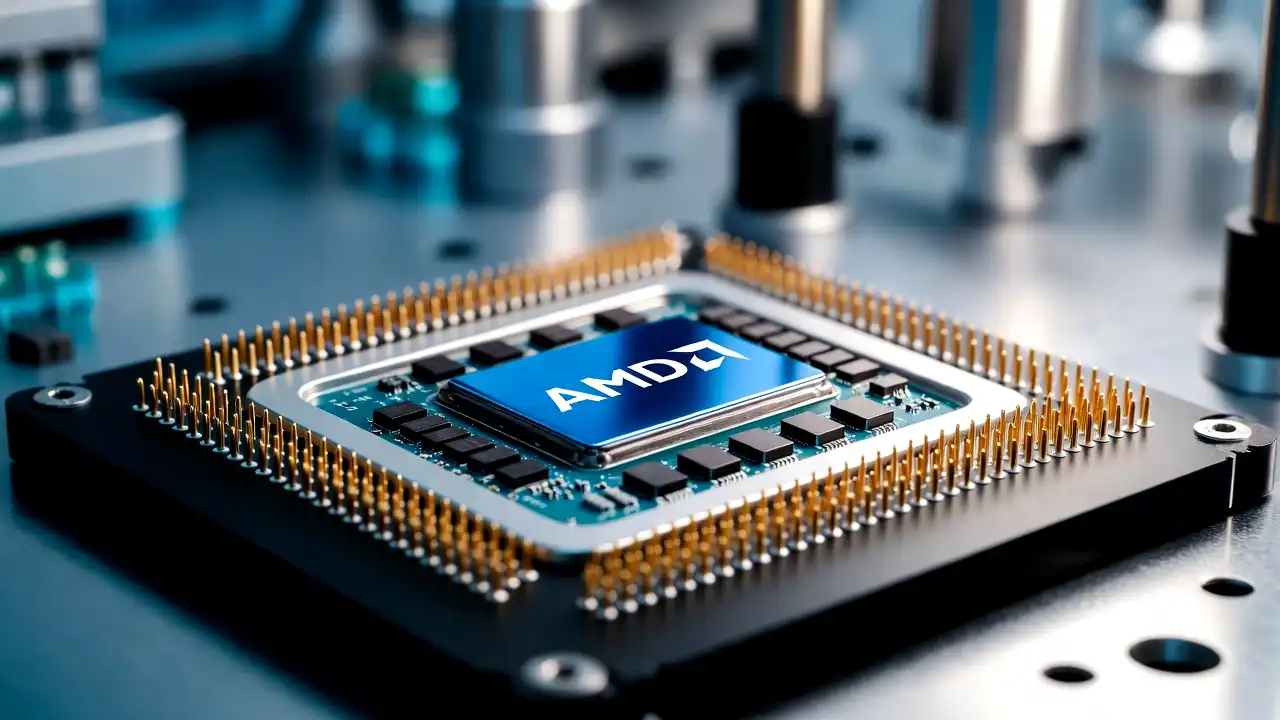
The global technology industry is turning its attention to Taipei for Computex 2026, where the future of computing will take center stage. Among the many giants preparing to showcase their latest innovations, AMD stands out as a company on the offensive. With CEO Lisa Su at the helm, AMD is expected to deliver a series of high-stakes announcements that challenge the current market dominance of its fiercest rival, Nvidia. As demand for artificial intelligence infrastructure continues to reshape the corporate landscape, AMD’s performance this week will determine if it can successfully pivot from a traditional CPU maker to a titan of the AI hardware era.
At the heart of the excitement is the ongoing battle for data center superiority. While Nvidia currently controls the vast majority of the AI accelerator market, AMD’s “Instinct” platform has gained traction among hyperscale cloud providers who are tired of paying massive premiums for limited hardware. At Computex, the company is expected to pull the curtain back on its next-generation Instinct series. These chips are not just designed for simple calculations; they are built to handle the massive, complex models that define modern generative AI. By offering more memory capacity and superior energy efficiency, AMD aims to prove that there is a viable alternative for companies currently feeling the pinch of Nvidia’s supply chain bottlenecks.
The financial context for these announcements is incredibly serious. Global tech giants are projected to pour over $700 billion into artificial intelligence infrastructure by the end of 2026. AMD understands that even capturing a small 1.5% to 2% slice of this massive spending pool translates into billions of dollars in new annual revenue. Lisa Su has been aggressively courting enterprise customers, offering them “open ecosystem” solutions that allow businesses to avoid the closed-software traps that often accompany proprietary hardware. This message of openness resonates well with companies looking to protect their long-term infrastructure investments.
Beyond the server room, the consumer PC market is seeing a major revolution. The “AI PC” concept has moved from a marketing buzzword to a requirement for every major laptop manufacturer. AMD is expected to showcase its latest mobile processors, which include powerful dedicated NPUs (Neural Processing Units). These chips allow laptops to run sophisticated AI agents locally, ensuring that private business data never leaves the device. By prioritizing local processing, AMD is trying to address the growing consumer demand for both privacy and offline functionality, a direct counter to cloud-dependent AI tools.
Manufacturing capacity remains the biggest hurdle for every company in Taipei this week. TSMC, the world’s most advanced contract chipmaker, is currently operating near maximum capacity, leaving both AMD and Nvidia fighting for the same factory slots. AMD has been working overtime to secure production agreements that guarantee a consistent stream of 2-nanometer and 3-nanometer wafers. Lisa Su’s presence at the conference is likely a tactical move to cement these manufacturing relationships, ensuring that AMD has the physical silicon needed to fulfill its aggressive sales projections for the remainder of the year.
The battle for talent is just as fierce as the battle for production space. AMD continues to hire top-tier engineering experts to improve its software stack, known as ROCm. For years, the lack of robust, reliable software tools kept AMD’s hardware from competing with Nvidia’s mature CUDA ecosystem. AMD has spent over $1 billion in recent years to modernize its software, and at Computex, the company will likely demonstrate new optimization features that make it easier for developers to port their existing AI workloads from Nvidia hardware to AMD’s Instinct platform.
The gaming segment, where AMD first made its name, will also receive attention. While AI is the primary story of 2026, the company knows that its loyal base of gamers, streamers, and creative professionals still drives a massive portion of its brand identity. We expect to see new RDNA-based graphics cards that focus on efficiency and high-fidelity ray tracing. These cards don’t just target standard gaming; they target the “prosumer” market—creators who use the same hardware to edit 8K video, render 3D assets, and stream high-quality content to global audiences.
If AMD manages to execute its roadmap, the impact on the stock market will be significant. With a market capitalization that has already seen impressive growth, the company is looking to solidify its position as a “must-own” stock for anyone looking to invest in the AI infrastructure cycle. The company has moved past the days of being a “budget alternative” and is now competing directly with the biggest names in tech for dominance in the data center, the office, and the home.
However, the industry is not without risks. The volatility of the global economy and the potential for a slowdown in capital expenditures by major tech firms mean that AMD must deliver on every promise it makes. The market expects perfection, and any sign of a delay or a performance miss could lead to immediate investor pushback. Lisa Su has built a reputation for delivering results exactly when she says she will, and that reputation will be put to the test during the Computex keynote.
As the doors open in Taipei, the industry is waiting to see if AMD can truly redefine the performance hierarchy. By bridging the gap between gaming, AI acceleration, and standard desktop computing, AMD is aiming to become the most versatile chipmaker in the world. The next few days of announcements will provide the first real look at the hardware that will power our offices and digital lives for the next several years. If Su’s team shows off a clear path to production, the rest of 2026 will be a very busy year for the entire semiconductor industry.