
The technology world is descending upon Taipei this week for Computex 2026, and all eyes are fixed on Intel. The company enters this year’s event facing intense pressure to prove its comeback strategy is working. After a difficult stretch of financial losses and manufacturing hurdles, Intel leadership is ready to show off a massive new lineup of processors aimed at the desktop, laptop, and data center markets. This week serves as the company’s most important stage in recent years, as it tries to reclaim its status as a leader in the face of rising competition from AMD and Nvidia.
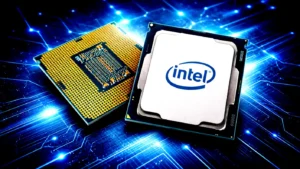
The core of Intel’s presentation will focus on the “Core Series 3” lineup, better known by its internal codename: Panther Lake. These processors represent the vanguard of Intel’s 18A manufacturing process, a technology the company describes as its ticket back to the top of the semiconductor hierarchy. By squeezing more performance out of every watt, these chips aim to convince mainstream laptop manufacturers that they don’t need to look elsewhere to power their newest “thin and light” devices. If these chips succeed, they will likely generate over $1 billion in quarterly revenue within their first year on the market.
While Panther Lake grabs the attention of laptop buyers, the data center division has a different, yet equally critical, mission. Intel is expected to showcase its “Clearwater Forest” Xeon 6+ processors. These are not just standard server chips; they are designed to handle the heavy-duty artificial intelligence and 6G networking tasks that define today’s enterprise computing. Because these chips utilize the latest packaging technologies, they should offer the efficiency that hyperscale cloud providers—the companies building the world’s AI infrastructure—are desperate to find.
One of the most persistent complaints about Intel’s recent history has been the confusing naming of its product lines. For Computex 2026, the company is attempting to simplify its message. The new branding strategy aligns desktop and mobile chips under clear “Core” and “Xeon” banners, helping consumers understand exactly what they are buying at the store. This move to reduce complexity is a direct response to feedback from PC manufacturers who felt that previous generations were too difficult to explain to the average shopper.
Of course, hardware performance is only half the battle. Intel is doubling down on its “oneAPI” software ecosystem to ensure its chips don’t just sit there. This unified set of tools allows developers to write code once and run it across CPUs, GPUs, and specialized AI accelerators. By making it easy for programmers to adopt its platforms, Intel hopes to build a “moat” that keeps customers within its ecosystem. With rivals investing significant resources into their own software, Intel knows that being the fastest chipmaker isn’t enough anymore—they must also be the easiest to program for.
The desktop segment, which remains the bedrock of Intel’s DIY community, will also see some much-needed love. The company plans to provide more details on its next-generation desktop platform, featuring faster support for DDR5 memory and the latest PCIe 5.0 interface. Gamers have been waiting for a reason to upgrade their older systems, and these new platforms promise to deliver the stability and speed that have long been Intel’s hallmark. The company hopes to convert the millions of users still sitting on 12th or 13th-generation hardware.
However, the shadow of competition hangs over everything Intel does at Computex. AMD continues to capture hearts and minds with its highly efficient gaming processors, while Nvidia maintains a stranglehold on the AI server market. Intel’s leadership is fully aware that it needs to win on every front simultaneously. A 1.5% increase in market share might sound small, but in an industry with tens of billions of dollars at stake, it represents a massive shift in corporate revenue and shareholder value.
Intel is also addressing the manufacturing concerns that have haunted its stock price for months. The company intends to show off its updated roadmap for its 18A and 14A nodes, hoping to silence skeptics who doubt it can reach mass production on schedule. By showing actual wafers and working hardware, the company aims to rebuild trust with partners who may have considered moving their business to rival foundries. Reliability is the new primary currency in the semiconductor business, and Intel must prove that its “Made in USA” strategy is ready for prime time.
The sustainability of these new platforms is also a key theme. Modern data centers consume a massive amount of power, and Intel is touting “performance-per-watt” as a major advantage of its newer designs. As electricity costs climb, customers are looking for hardware that can deliver the same computational output while using 20 percent less energy than older models. Intel’s new chips are engineered to meet these strict environmental and cost requirements, which will be a significant talking point during the various keynotes and partner presentations.
Ultimately, Computex 2026 is a “do-or-die” event for Intel. The company has moved past the era of making excuses and now must deliver hardware that ships on time, performs as advertised, and offers a clear value to the end user. If the demonstrations at the show match the ambitious promises made in the slide decks, Intel will re-enter the second half of the year with a significant tailwind. If not, the competition will continue to chip away at its core business. The world is watching, and Intel’s next big move starts right here in Taipei.