
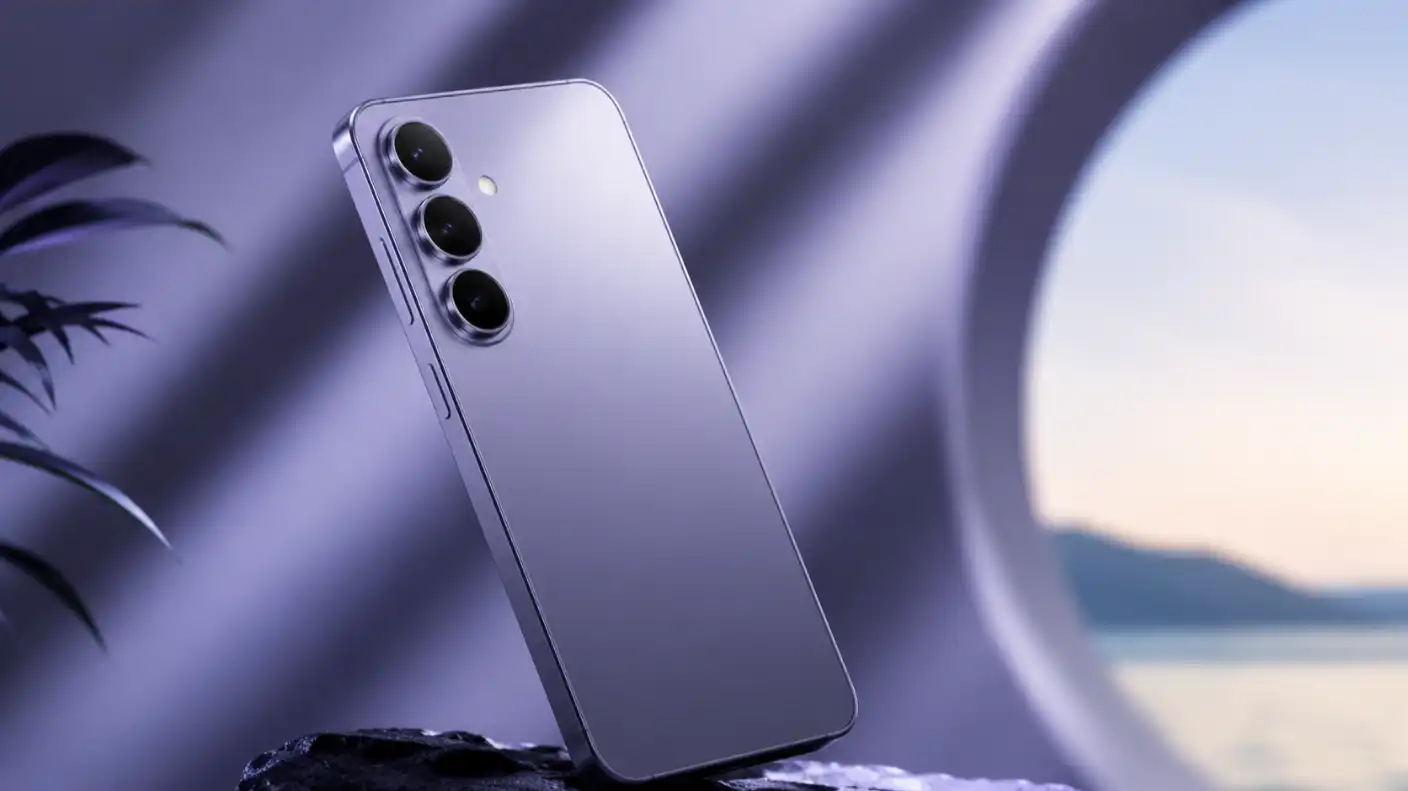
How much faster do smartphones actually get every year? It is easy to look at promotional brochures and see claims of massive performance upgrades, but real-world tests often tell a very different story. To find out if newer phones are worth the premium, the popular YouTube channel PhoneBuff ran an in-depth speed test. They did not just compare the new Samsung Galaxy S26 Ultra to last year’s model. Instead, they put it up against five generations of previous Galaxy Ultra flagships, going all the way back to the Galaxy S21 Ultra. This massive, five-generation showdown shows exactly how far mobile technology has advanced over the last half-decade.
The brand-new Galaxy S26 Ultra won the race quite easily, crossing the finish line in just 4 minutes and 42 seconds. The phone owes its victory to its customized Snapdragon 8 Elite Gen 5 “for Galaxy” processor. This high-end chip handles heavy application loads and complex background tasks with ease. Samsung also built a much larger, more efficient internal cooling system into the newer model, which prevents the processor from slowing down when the phone gets hot during heavy use.
One of the most interesting parts of this test is how Samsung handles memory. Tech companies spend over $1 billion developing advanced software every year, yet Samsung has kept the memory capacity surprisingly stagnant. Almost every single phone in this test—from the oldest S21 Ultra to the newest S26 Ultra—features exactly 12GB of RAM. The only exception is the S23 Ultra, which dropped to 8GB of RAM in the specific model used for this test. Despite the identical 12GB memory capacity on almost all these phones, the raw upgrades to the central processor are what kept the S26 Ultra ahead.
The speed gap between the three newest models is actually very small. The S26 Ultra beat the S25 Ultra by only 10 seconds, and it beat the S24 Ultra by just 19 seconds. This tells us that smartphone performance is starting to hit a bit of a plateau. In daily use, the average person will not notice a 1.5% difference in how fast an app opens. However, for hardcore gamers and people who run local artificial intelligence models on their devices, those extra milliseconds add up to a much smoother experience.
The older models, on the other hand, struggled to keep up with modern demands. The Galaxy S23 Ultra finished the test in 6 minutes and 28 seconds, showing a massive drop-off from the S24 Ultra. The older Snapdragon 8 Gen 2 processor inside the S23 simply lacks the power of the newer chips. The situation looked even worse for the Galaxy S22 Ultra, which actually finished slower than the older S21 Ultra. The S22 Ultra took 6 minutes and 56 seconds to finish, while the S21 Ultra completed the track in 6 minutes and 53 seconds.
This strange result shows that newer hardware is not always better if the company does not manage heat properly. The Snapdragon 8 Gen 1 processor inside the S22 Ultra was famous for running extremely hot and eating up battery life. When the phone got too warm during the speed test, the software throttled the processor speed to protect the internal parts. The older Snapdragon 888 inside the S21 Ultra ran much cooler, allowing it to maintain its speed and beat its younger brother by a few seconds.
This five-year comparison helps answer the big question: when should you actually upgrade your phone? If you currently own a Galaxy S24 Ultra or S25 Ultra, the speed test proves that buying the new S26 Ultra is mostly a waste of money. You will spend over $1,299 just to save a few seconds on daily tasks. However, if you are still holding onto an older S21 Ultra or S22 Ultra, the jump in performance is absolutely massive. Upgrading to the S26 Ultra will shave more than two minutes off your daily processing times, representing nearly a 32% increase in speed.
Ultimately, the test proves that while year-over-year upgrades are shrinking, the cumulative progress over five years is incredible. The transition from nearly seven minutes in the S21 era to under five minutes today is a major technical achievement. As software continues to grow more demanding, those older processors simply cannot keep up with the physical reality of modern mobile computing.