
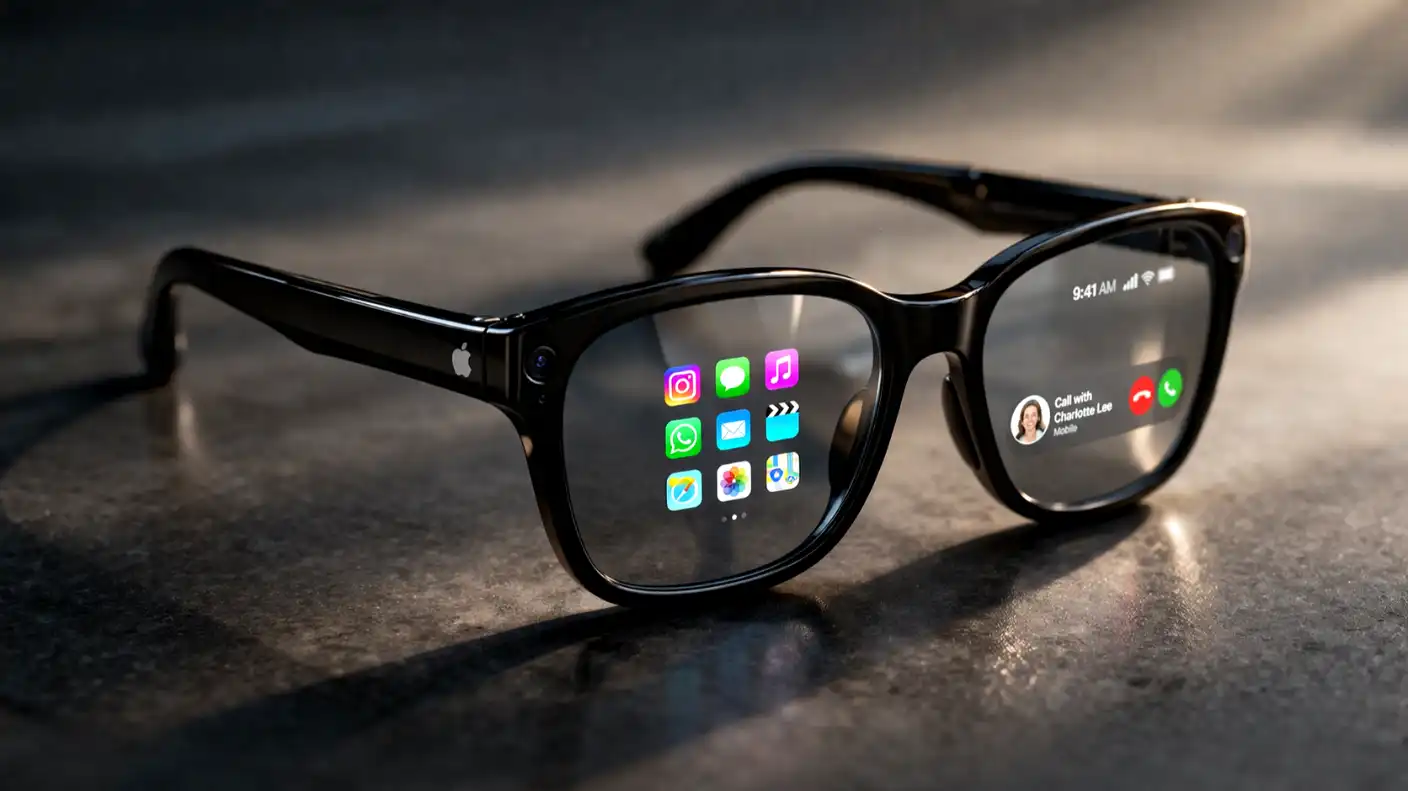
Apple is officially preparing to challenge Meta’s highly successful Ray-Ban smart glasses. According to the latest insider report from Bloomberg’s Mark Gurman, the tech giant plans to release a vastly superior pair of smart glasses by early 2027. Apple intends to give buyers a much more premium build quality and a wider variety of stylish design options compared to the somewhat basic frames currently offered by its rival.
Gurman revealed that these upcoming Apple smart glasses will not feature a built-in display. Instead, the stylish frames will pack high-tech integrated cameras, sensitive microphones, and tiny speakers directly into the arms of the glasses. Wearers will interact with the world entirely through a heavily upgraded version of the Siri artificial intelligence assistant. Users can simply ask Siri to snap photos, record short videos, make phone calls, read text notifications, or play their favorite music without ever touching their phones.
These new glasses will rely heavily on seamless integration with the iPhone. Once the glasses capture a video or a photo, they instantly sync the files to the user’s phone for quick post-capture editing and easy social media sharing. This tight integration gives Apple a massive advantage over competitors that struggle to link their wearable devices to existing smartphones.
The smart glasses represent just one piece of Apple’s much larger hardware strategy. The company plans to release exactly 3 new AI-powered devices in the near future. Alongside the glasses, Apple is developing new AirPods Pro equipped with tiny cameras and a brand new wearable AI pendant. All 3 of these futuristic devices will use advanced computer vision to scan the user’s surroundings constantly. They will feed real-time visual data directly into Siri and the Apple Intelligence system to provide incredibly helpful features, such as providing accurate turn-by-turn walking directions or setting visual reminders based on what the user actually sees.
To completely separate its product from Meta, Apple decided to use premium acetate frames rather than cheap plastic. The company also plans to offer at least 4 distinct frame shapes to fit different face types. Buyers can choose a large rectangular frame similar to classic Ray-Ban Wayfarers or pick a slimmer rectangular design that mimics the exact glasses worn by Apple CEO Tim Cook. The lineup also includes both large and small circular frame options. Customers can grab these stylish frames in 3 colors: solid black, ocean blue, and light brown. The actual camera system might even feature uniquely oriented oval lenses to hide the technology better.
Gurman believes that Apple has everything it needs to win this hardware battle. While Meta got a huge head start and Google controls the massive Android ecosystem, Apple holds several distinct advantages. The company boasts an incredibly loyal customer base, powerful custom-built computer chips, thousands of massive retail stores, and deep integration with the iPhone. Gurman predicts that if Apple launches these glasses with a truly functional Siri assistant, the product could easily follow the same path as the Apple Watch. Apple rarely brings a product to market first, but they usually end up dominating the industry anyway.
While fans wait for the screenless glasses in 2027, another major hardware release sits further down the roadmap. The tech research firm Omdia expects Apple to launch a true augmented reality pair of smart glasses sometime in 2028. This future model will finally include dual 0.6-inch OLEDoS displays built directly into the lenses.
For those who do not follow display technology closely, OLEDoS represents a massive leap forward. Instead of building the screen on a cheap plastic base, factories mount the organic light-emitting diodes directly onto a single-crystal silicon wafer. This advanced semiconductor manufacturing process allows for extreme miniaturization. The final display packs an ultra-high pixel density while using significantly less battery power than traditional screens. Even if these advanced AR glasses cost well over $1,000, Apple fans will likely line up for hours just to buy them.