
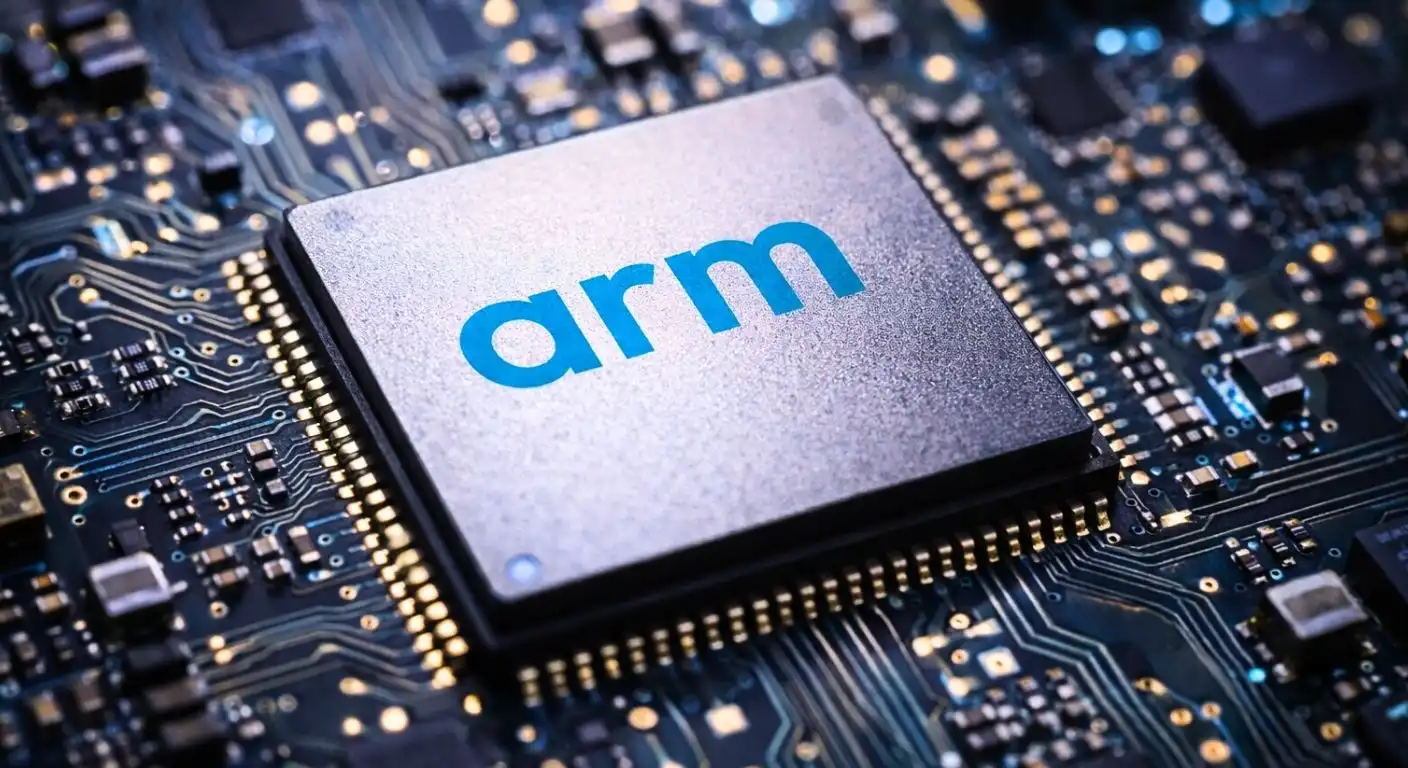
Arm just took a massive step forward by moving into the production silicon market. The company officially introduced the AGI CPU, which it calls the next evolution of its compute platform. Unlike standard processors built for general tasks, this chip serves a very specific purpose: powering the massive data centers that run agentic AI. These AI systems do not just answer simple questions; they continuously reason, plan, and execute complex actions across digital environments.
The hardware specifications demonstrate a clear focus on raw power and efficiency. Each CPU contains up to 136 Neoverse V3 cores, each with 6GB/s of memory bandwidth. With sub-100 ns latency, the processor ensures that AI agents can complete tasks without waiting for the hardware to catch up. The design supports a 300-watt TDP and provides a dedicated core for every single program thread, ensuring performance remains steady even under heavy, sustained loads.
Infrastructure engineers will find the cooling options particularly impressive. The architecture fits into standard air-cooled 1U server chassis, holding up to 8,160 cores in a single rack. For those running the most demanding AI models, liquid-cooled deployments can push that number all the way to 45,000 cores per rack. When engineers compare this to traditional x86-based chips, the Arm AGI CPU provides more than double the performance per rack. This leap allows companies to process much larger AI workloads without burning through their energy budgets.
Meta worked closely with Arm as the lead partner and co-developer during the design phase. They plan to integrate the new CPU with their own Meta Training and Inference Accelerator (MTIA) to squeeze every bit of efficiency out of their data centers. This partnership highlights the importance of matching specialized processors with custom accelerators to handle the extreme demands of modern machine learning.
Arm has already gathered support from over 50 industry leaders across the cloud, software, and semiconductor sectors. Early commercial adopters include high-profile names like OpenAI, Cerebras, Cloudflare, Positron, Rebellions, SAP, and SK Telecom. Additionally, Arm is collaborating with hardware giants like Lenovo, Supermicro, Quanta Computer, and ASRock Rack to build out the first wave of servers. Customers can expect broader system availability starting in the second half of 2026.
Industry veterans see this as a turning point for the entire Arm ecosystem. James Hamilton, a Senior Vice President at Amazon, noted the success of their long-standing collaboration on Graviton processors, which powered the majority of new compute capacity added to the AWS fleet in 2025. Broadcom’s Charlie Kawwas also praised the move, noting that the new CPU will further unlock opportunities for customers who need high-speed networking and specialized computing power.
While the hype remains high, the ultimate success of the AGI CPU depends on how easily data centers can integrate it with existing memory and accelerator systems. Arm must prove that these performance gains translate into real-world savings for companies spending millions on AI infrastructure. If the processor delivers on its promise to cut power consumption while boosting throughput, it could quickly become the standard foundation for the next generation of enterprise AI applications.