
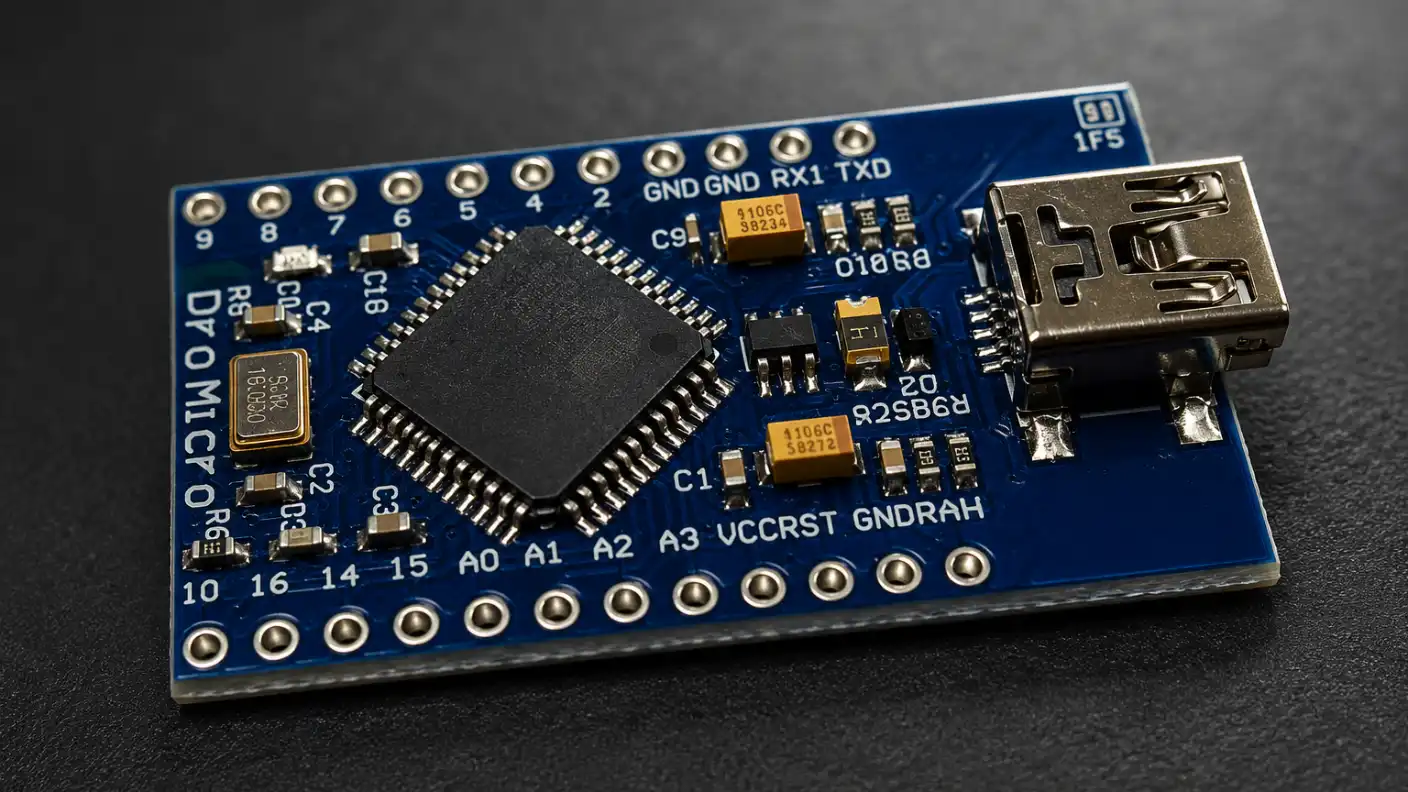
In 2026, robotics projects have grown exponentially in complexity, moving beyond simple motor control to incorporate advanced sensors, real-time data processing, machine learning inference, and sophisticated communication protocols. The microcontroller, as the “brain” of any robot, must now offer not only raw computational power but also a rich ecosystem, robust I/O capabilities, and energy efficiency.
For hobbyists, researchers, and professional engineers building the next generation of intelligent machines, selecting the right microcontroller is paramount to success. Here are the top five microcontrollers leading the market for robotics projects in 2026.
ESP32-S3 (with ESP-IDF Ecosystem)
The ESP32-S3 continues its dominance in robotics by combining robust Wi-Fi and Bluetooth LE connectivity with an AI-focused Xtensa LX7 dual-core processor and a rich set of peripherals. Its integration with the comprehensive ESP-IDF development framework makes it incredibly versatile for connected robots.
This microcontroller is ideal for robotics projects requiring wireless communication, sensor fusion, and on-device machine learning inference (TinyML). Its key advantages in 2026 include:
- Integrated Wi-Fi & Bluetooth LE 5.0: Essential for IoT connectivity, remote control, and inter-robot communication.
- AI Acceleration: Features vector instructions for accelerating neural network inference, perfect for on-robot vision or voice processing.
- Rich Peripheral Set: Offers abundant GPIOs, ADC, DAC, I2C, SPI, UART, and PWM, supporting a wide array of sensors and actuators.
Raspberry Pi Pico W (with MicroPython/C++ SDK)
The Raspberry Pi Pico W builds on the success of the original Pico by adding Wi-Fi connectivity, making it an incredibly powerful yet affordable choice for connected robotics. Its RP2040 chip, with dual ARM Cortex-M0+ cores and PIO (Programmable I/O), offers unique capabilities for real-time control.
This microcontroller is perfect for educational robotics, rapid prototyping, and projects where space and cost are critical without sacrificing capability. Its core strengths in 2026 are:
- Integrated Wi-Fi: Enables easy connection to networks for data logging, remote control, or cloud interaction.
- Programmable I/O (PIO): Allows for custom hardware interfaces and precise timing control, ideal for motor drivers, encoders, and sensor arrays.
- Dual-Core ARM Cortex-M0+: Provides sufficient processing power for complex tasks, with one core dedicated to real-time operations.
STM32 (e.g., STM32H7 Series with STM32Cube Ecosystem)
The STM32 family, particularly high-performance series like the STM32H7, remains a professional standard for complex and mission-critical robotics applications. Offering powerful ARM Cortex-M7 cores, extensive memory, and an industrial-grade ecosystem, they are built for reliability and high computation.
This microcontroller is chosen by engineers for high-precision control, industrial automation, and research robotics where performance and robust peripheral integration are paramount. Its notable features for 2026 include:
- High-Performance ARM Cortex-M7 Core: Offers blistering clock speeds and a rich instruction set for complex calculations and algorithm execution.
- Extensive Peripherals: Boasts a vast array of high-speed ADCs, DACs, timers, communication interfaces (CAN, Ethernet, USB OTG), and motor control peripherals.
- STM32Cube Ecosystem: Provides a comprehensive suite of development tools, libraries, and examples, facilitating rapid and reliable development.
Teensy 4.1 (with Arduino IDE Compatibility)
The Teensy 4.1 packs an incredible punch in a small form factor, featuring a powerful ARM Cortex-M7 processor running at 600 MHz and extensive RAM. Its compatibility with the Arduino IDE, combined with its raw speed, makes it a favorite for advanced hobbyists and rapid prototyping.
This microcontroller is ideal for projects requiring very fast processing, complex sensor fusion, and generating high-speed control signals in a compact footprint. Its key advantages in 2026 include:
- Blazing Fast ARM Cortex-M7 (600 MHz): Provides unparalleled processing speed for real-time control, inverse kinematics, and complex algorithmic execution.
- Large Memory: Offers substantial RAM (e.g., 1MB) for storing larger programs, data buffers, and even small embedded operating systems.
- Breadboard Friendly: Its compact size and pin layout make it easy to integrate into breadboards and custom PCBs for quick prototyping.
NVIDIA Jetson Nano/Orin Nano (for Edge AI Robotics)
While technically a “single-board computer” rather than a pure microcontroller, the NVIDIA Jetson Nano (and its successor, Orin Nano) is indispensable for robotics projects requiring significant on-device AI and machine learning inference. It integrates a powerful GPU for parallel processing, making it ideal for computer vision and complex decision-making.
This platform is crucial for advanced autonomous robots, drones, and intelligent systems that need to perform real-time object detection, navigation, and complex AI tasks at the edge. Its core strengths in 2026 are:
- Integrated GPU & AI Cores: Designed for accelerating neural networks, enabling real-time computer vision, object recognition, and sophisticated AI algorithms.
- Linux OS Support: Provides a full Linux environment, allowing for complex software stacks, ROS (Robot Operating System), and high-level programming languages.
- Camera and Sensor Interfaces: Offers robust support for multiple cameras (CSI), making it perfect for multi-sensor perception systems in robotics.
Conclusion
In 2026, the microcontroller landscape for robotics is rich and diverse, offering specialized tools for every kind of intelligent machine. Whether you’re building a connected IoT robot with the ESP32-S3, an educational platform with the Raspberry Pi Pico W, an industrial-grade system with the STM32, a high-speed prototyper with the Teensy 4.1, or an AI-powered autonomous system with the NVIDIA Jetson Nano, these top five microcontrollers empower innovators. Choose wisely to bring your robotic visions to life with precision, intelligence, and reliability.