

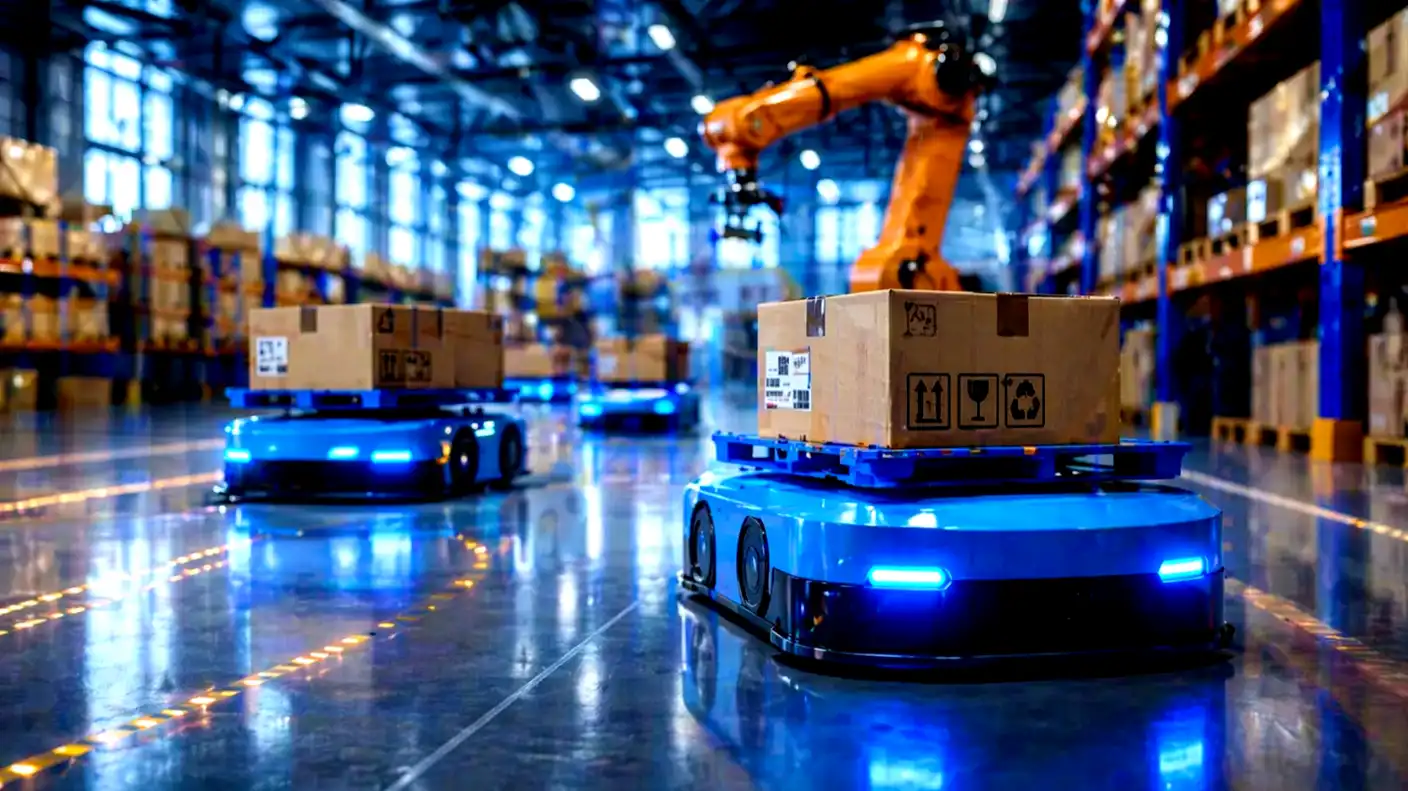
Warehouse companies are rapidly changing how they build and run their massive storage centers. Today, businesses design these buildings with automation as the main focus, slowly pushing human workers out of the daily routine. A recent report from Gartner predicts that developers will build exactly 50 percent of all new warehouses in developed markets as completely robot-centric facilities by the year 2030. In these future buildings, human employees will no longer handle the core execution of packing and moving boxes. Rising labor costs, which often exceed $20 an hour in major cities, force companies to seek cheaper options. At the same time, fewer people want to perform physically exhausting, repetitive jobs.
Artificial intelligence currently drives this massive industry shift. Smart software constantly looks at the warehouse floor and optimizes the layout in real time. This technology turns a basic, static building into an active system that adapts instantly when consumer demand spikes. Abdil Tunca, a senior principal analyst at Gartner, explained that supply chain leaders now completely change how they think about building new facilities. Instead of drawing up floor plans that support 500 human workers walking down narrow aisles, developers now create wide environments that maximize the speed and efficiency of large robotic fleets.
Companies spend billions of dollars on these robotic systems to survive tough economic constraints. Supply chain directors simply cannot hire enough people to keep up with the massive volume of modern online shopping. During peak holiday seasons, a company might need to ship over 1 million packages a day. Instead of running expensive and frustrating recruitment drives to find temporary staff, managers just buy more machines. These robots no longer act as simple tools to help human workers. Instead, the robots take center stage and perform exactly 95 percent of the heavy lifting and sorting workflows.
As machines take over the heavy physical labor, the role of the human worker changes entirely. Experts claim that humans will soon stop performing routine execution tasks completely. Instead, the few workers left in the building will handle rare exceptions and fix broken machines. While the robots move the boxes, advanced digital simulation programs run the entire facility. These digital models, often called digital twins, do much more than just plan the building layout. They constantly monitor the real-time conditions inside the warehouse. The software tells the robots exactly where to route a package, where to store a pallet, and which machine should handle the next specific job.
Iain Davidson, the head of product marketing at Wireless Logic, stated that these digital twins now act as the operational nervous system of the modern warehouse. Builders use these software models early in the process to stress-test the layout and optimize performance before they even pour the concrete. However, giving software total control over a facility introduces some major risks. Automated decision-making systems rely entirely on fast and accurate data. If the internet connection drops for just 10 seconds, the robots might operate on outdated information, causing a massive pileup on the factory floor.
Because developers plan to remove most of the human workers, the margin for error shrinks to almost zero. Without humans walking the floor to spot a fallen box or a broken conveyor belt, the automated system must catch every single mistake instantly. Davidson noted that warehouse builders must bake resilience into the core design, including backup connections and robust monitoring tools. The companies that win this technology race will do much more than just buy smart robots. They will spend up to $5 million outfitting their buildings with advanced mapping tools, video safety cameras, and perfect internet connectivity to keep the goods flowing without interruption.