
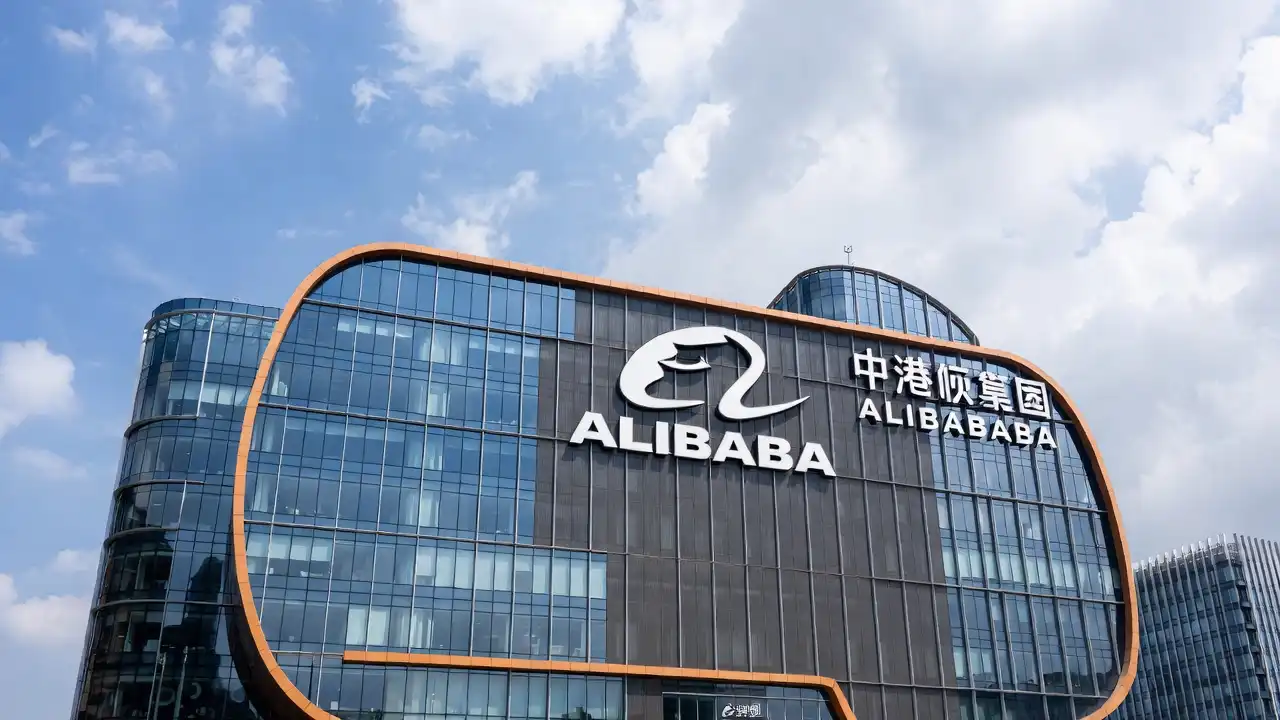
Alibaba Group revealed a major breakthrough in hardware this Wednesday. The Chinese tech giant introduced the Zhenwu M890, a custom artificial intelligence processor designed to compete with high-end chips from companies like Nvidia. This new chip comes at a critical time for China’s technology sector as the United States continues to tighten export rules that prevent Chinese firms from buying the world’s most powerful American processors.
The design team at T-Head, Alibaba’s internal semiconductor subsidiary, built the M890 to be a massive leap forward. According to the company, the new chip delivers three times the performance of the previous Zhenwu 810E. Engineers specifically built this processor to handle the rising wave of “AI agents”—software systems capable of performing complex, multi-step tasks with very little human help.
Alibaba believes the M890 handles the heavy memory and communication needs of these AI agents better than any of its past designs. As AI models become more sophisticated, they need to keep long stretches of context in their memory and coordinate with other software systems in real time. The M890 provides the raw speed and data throughput required to keep these autonomous agents running smoothly without crashing or slowing down.
This launch is just one step in a very aggressive multi-year plan. Alibaba already published a roadmap detailing its future silicon upgrades. The company plans to follow the M890 with a successor called the V900 in the third quarter of 2027. Following that, they aim to release an even more powerful chip called the J900 in the third quarter of 2028. Alibaba claims the V900 will provide another threefold performance jump, showing that they intend to maintain a fast, consistent pace of in-house hardware upgrades.
The plan reflects a broader trend across China’s technology industry. Companies are pouring billions into local alternatives because they can no longer rely on foreign chips. Last year, Alibaba committed to spending more than 380 billion yuan—roughly $53 billion—on cloud and AI infrastructure over the next three years. This represents the largest commitment the company has ever made to a single technology sector, signaling a massive bet on the idea that demand for AI computing power will keep surging for the rest of the decade.
At the annual Alibaba Cloud Summit, the company also showed off a new server system called the Panjiu AL128. This machine is a beast; it packs 128 of the new M890 AI accelerators into a single server rack. Alibaba Cloud made the system available immediately to its domestic enterprise customers through its “Bailian” platform. By selling both the chip and the server, Alibaba hopes to provide a complete, “all-in-one” solution for companies that want to build their own AI software.
The internal numbers from T-Head suggest the company already has a solid foundation. To date, they have shipped more than 560,000 Zhenwu units. Over 400 external customers across 20 different industries, ranging from automakers to financial services, currently use the chips in their daily operations. These partnerships provide a steady stream of revenue and, more importantly, real-world data that Alibaba uses to refine its designs.
Along with the new hardware, Alibaba announced the Qwen 3.7-Max. This is the latest version of its flagship large language model. The company engineered this model specifically for advanced coding and long-running agent tasks. During testing, the company found that the model could operate continuously for up to 35 hours without any performance degradation. This stability is vital for enterprise customers who need an AI that stays reliable during long, complex work cycles.
China’s push for self-sufficiency in chips has intensified since Washington restricted access to the best American silicon. Huawei made a similar move last year, and Alibaba is now following suit. For the US, this is a complicated challenge. Even a 1.5% decrease in US export control effectiveness could allow China to bridge the gap in AI development much faster than expected.
The move by Alibaba proves that the gap between Chinese and American AI hardware is shrinking. As enterprises continue to adopt agent-based applications, the need for custom, locally developed chips will only grow. Alibaba is clearly trying to secure its future by ensuring it never has to wait for an export license from Washington again.