
Nvidia just watched the price of its fastest professional graphics card skyrocket. The RTX PRO 6000 Blackwell now costs more than $10,000 at several major retailers. This massive price tag represents a sharp increase over the past few months.
When Nvidia first launched the RTX PRO 6000 Blackwell, the company priced it around $8,000. Today, buyers struggle to find the card anywhere near that original sticker price. Nvidia completely sold out of the standard version on its own official store, where the company still lists it for $8,900. Right now, shoppers can only buy the Max-Q variant directly from the manufacturer.
Independent retailers immediately took advantage of the short supply. B&H currently charges the highest price in the United States, asking a massive $11,500 for a single card. Microcenter lists the graphics card at $9,999, claiming they discounted it from a previous high of $10,999. Amazon currently holds exactly one unit in stock for $9,449, though sellers price the specialized server editions well over the $10,000 line.
Shoppers looking for the best current deal will find it at Newegg. The online retailer prices the card at $9,349 and throws in a unique bonus. Buyers who purchase the card from Newegg receive a free Gigabyte Brix Mini PC, which normally costs almost $700 on its own.
The artificial intelligence boom drives this steady price climb. Tech companies and researchers desperately need hardware that can process complex AI workloads. The RTX PRO 6000 Blackwell offers the absolute best artificial intelligence capabilities on the market. It packs a massive amount of memory into a single card design, making it the perfect tool for professionals training smart models.
This frenzy also bleeds into the consumer market. Nvidia built the GeForce RTX 5090 for gamers, but AI developers buy them up anyway. Because of this high demand, RTX 5090 prices now start around $4,000. Third-party sellers frequently list the gaming card for more than $6,000.
Regular computer enthusiasts cannot afford to spend $5,000 or $6,000 on a gaming component. As a result, the RTX 5090 stays in stock at many stores. However, artificial intelligence developers gladly pay those high prices. To a professional AI builder, a $5,000 RTX 5090 looks like a bargain because it costs half as much as the flagship RTX PRO 6000 Blackwell.
Nvidia packed the RTX PRO 6000 Blackwell with incredible hardware to justify its price. The chip holds exactly 24,064 processing cores. This core count gives it a 10.5% advantage over the consumer RTX 5090, which features 21,760 cores. Nvidia also included 752 tensor cores and 188 RT cores to handle heavy calculations. The hardware delivers up to 125 TFLOPs of standard performance and 4000 AI TOPS for machine learning tasks.
Memory capacity stands out as the biggest upgrade over the gaming version. The RTX 5090 features 32 gigabytes of GDDR7 memory. The RTX PRO 6000 Blackwell triples that amount, packing an insane 96 gigabytes of error-correcting GDDR7 memory. The card uses a 512-bit bus interface running at speeds of 28 gigabits per second. This setup pushes data at a total bandwidth of 1.8 terabytes per second.
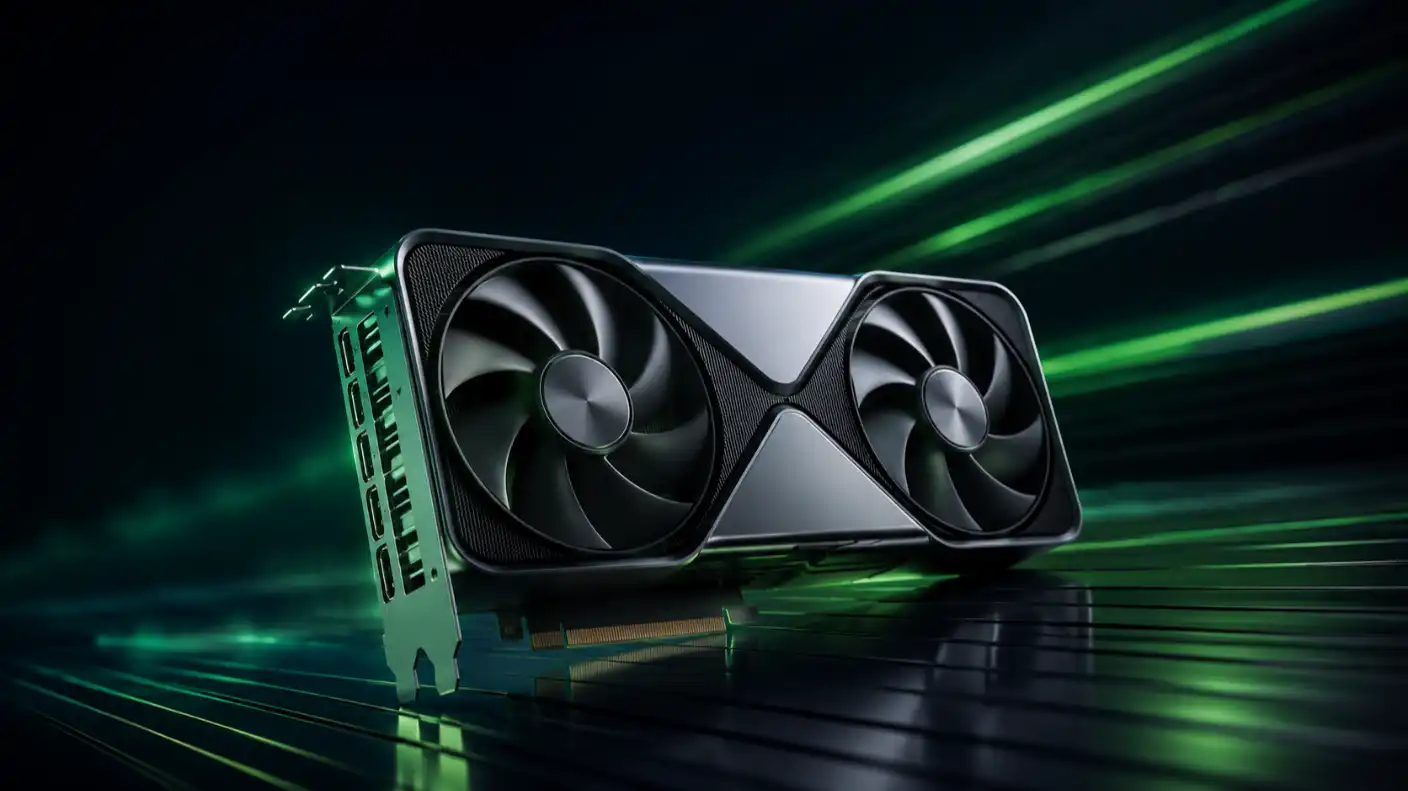
Running this massive chip requires a lot of electricity. Nvidia rated the card at 600 watts of total board power. This rating maxes out the capacity of a single 16-pin power cable. To keep the silicon from melting, Nvidia thermal engineers designed a heavy-duty cooling system. They repurposed a dual-fan, dual-slot cooler to push heat away from the massive 96-gigabyte memory banks.
Buyers hoping for prices to drop soon will likely feel disappointed. Industry experts report that computer component prices will continue to climb throughout 2026. The global market simply needs more memory chips than factories can produce. As long as supply chains remain tight and AI companies keep spending billions of dollars, flagship graphics cards will carry extreme price tags.