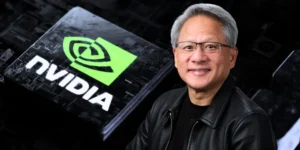

Advanced artificial intelligence technology remains a top national security concern for the United States, yet new reports suggest that the blockade on high-end chips is leaking. Despite strict Washington-led export controls designed to starve China’s military of cutting-edge computing power, researchers have discovered that institutions linked to the People’s Liberation Army (PLA) continue to acquire sophisticated Nvidia processors. Publicly available documents, including procurement notices and academic papers, confirm that multiple Chinese military-linked organizations requested and obtained advanced Nvidia AI hardware well after the U.S. government implemented its most stringent trade bans.
This revelation exposes a significant gap in the enforcement of high-tech export protocols. The U.S. has spent years building a complex regulatory framework intended to prevent the Chinese military from gaining the computational resources required for advanced weapon design, autonomous systems, and cyber warfare. However, the data suggests that these regulations—which cost the semiconductor industry over $1 billion in lost sales annually—are being bypassed through a web of third-party distributors and local intermediaries. These firms often act as a buffer, allowing the military-linked institutions to secure “off-the-shelf” hardware without directly triggering U.S. flags at the point of sale.
The scale of this issue is difficult to quantify, but the presence of restricted chips within sensitive research facilities implies that the U.S. enforcement strategy is struggling to keep pace with the reality of the global gray market. While the total volume of chips involved may represent less than 1.5% of Nvidia’s total output, the strategic impact is disproportionately large. A single server rack equipped with these high-performance GPUs can provide enough training power to give a military research lab a meaningful advantage in developing better encryption-breaking software or more accurate drone guidance systems.
The procurement documents show a clear pattern of activity. Various Chinese research institutes, many of which have direct ties to the PLA, issued public tenders for “high-performance computing clusters” specifically requesting Nvidia hardware. Even when U.S. officials updated their export rules to include stricter criteria, these institutions found ways to acquire hardware by utilizing local distributors who had stockpiled the chips prior to the bans. By leveraging these existing supply chains, military researchers have effectively extended the shelf life of their current technology stacks despite the best efforts of American trade regulators.
This ongoing situation places Nvidia in a position of extreme geopolitical tension. As a publicly traded company, the chipmaker must comply with every directive issued by the U.S. Commerce Department, and it has repeatedly stated that it follows all laws to the letter. However, the company lacks the investigative power to track every chip once it leaves a third-party distributor’s warehouse. Once an intermediary sells the hardware to a secondary firm, the “chain of custody” becomes murky. This lack of visibility is exactly what the Chinese institutions have exploited to keep their high-end hardware supply moving.
Washington lawmakers have reacted with predictable fury to these findings. Several prominent members of Congress are now calling for a “total audit” of how export licenses are granted and monitored. There is growing concern that the current rules rely too heavily on the “good faith” of international distributors who may have more to gain by helping their local customers bypass American rules. Calls for stricter oversight could lead to even more severe trade restrictions, potentially forcing Nvidia to scale back its remaining operations in the Asian market entirely.
The strategy of “de-risking” the tech supply chain has become a core element of U.S. foreign policy. However, the reality of the global semiconductor trade is that hardware is easily portable and difficult to trace. If the U.S. cannot stop these advanced chips from reaching military-connected labs, it must consider whether the current model of hardware-focused containment is actually working. Some strategists now argue that the focus should shift toward “software-based” restrictions or much more aggressive monitoring of the financial transactions that fund these purchases.
For the Chinese side, the acquisition of this hardware is a matter of long-term survival. Beijing views the U.S. ban as a “systematic blockade” intended to stop its rise as a global technology power. By continuing to hunt for these chips, they are effectively buying the time needed to perfect their own domestic manufacturing nodes. Even if they are forced to pay a 20 or 30 percent premium over the standard market price to middlemen, they view the cost as necessary to keep their research teams at the cutting edge.
This game of cat and mouse is not expected to end soon. As long as there is a massive global market for high-performance computing, intermediaries will find ways to bridge the gap between supply and demand. The discovery of these Nvidia chips in PLA-linked facilities serves as a stark reminder that even the most well-funded export controls cannot completely seal off the global economy. As the tech war continues, both sides will continue to test the limits of their respective power, leaving the semiconductor industry caught in the middle of a struggle for technological supremacy.
Ultimately, the global community must grapple with the question of whether “hardware bans” can ever be truly effective in a borderless digital market. As AI-powered technology becomes more pervasive, the temptation to ignore trade restrictions in favor of local technological progress will only grow. For now, the U.S. government is left to rethink its strategy, knowing that its most valuable tech is reaching the very people it was designed to keep at arm’s length.