
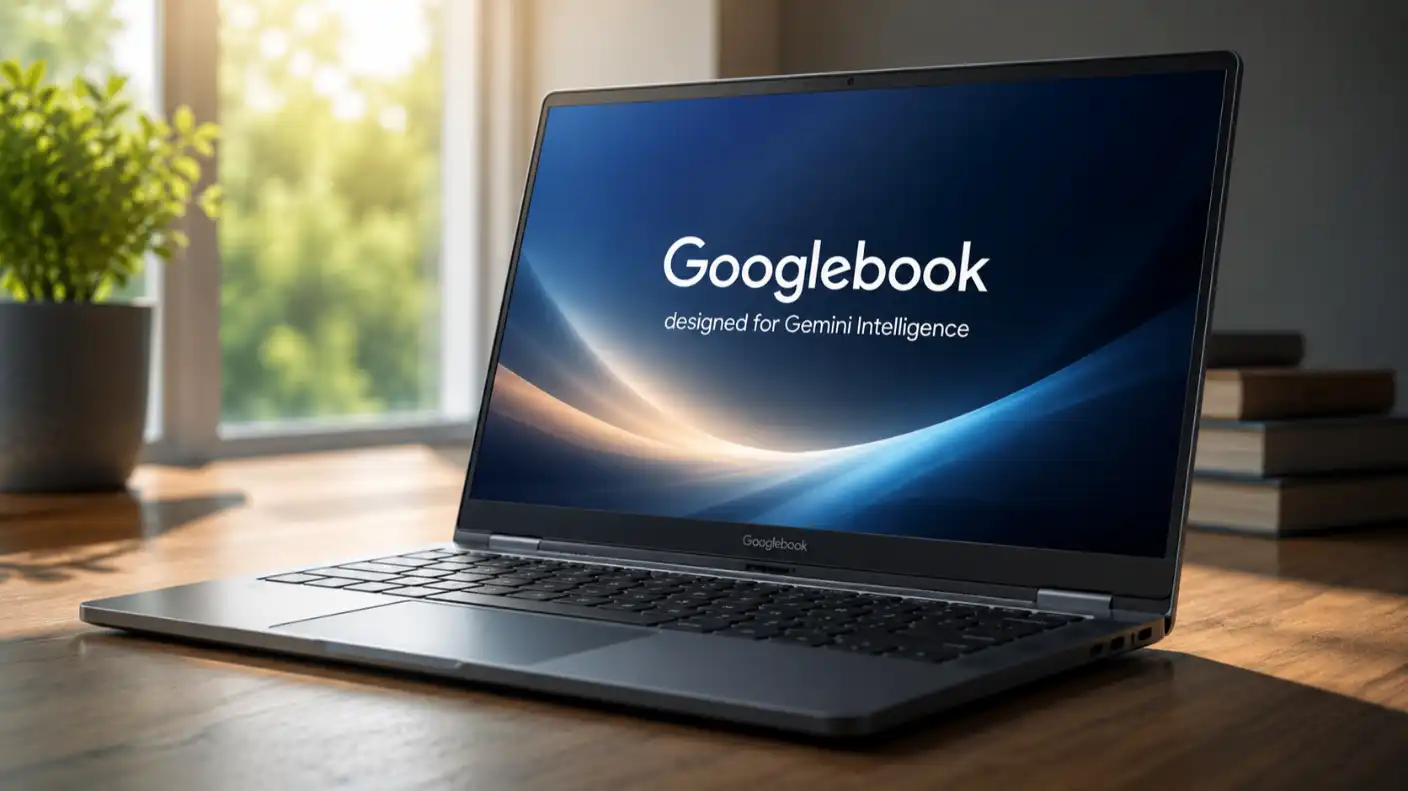
Google wants to change how we think about its computers. Last week, the search giant introduced a brand-new family of laptops called the Googlebook. For years, buyers associated Google software with cheap, basic Chromebooks used mostly in schools. The Googlebook takes a completely different path, targeting the premium market with expensive, high-end hardware.
A shipping manifest from last year accidentally revealed Google’s ambitious plans long before the official announcement. The leaked document details a premium laptop project operating under the secret codename Felino. This test machine features a 16-inch display, a massive 32 gigabytes of fast LPDDR5X memory, and 1 terabyte of internal storage space.
The processor sitting inside this machine shows exactly who Google wants to challenge. The documents indicate the laptop uses an Intel Panther Lake processor, which Intel calls the Core Ultra Series 3. This specific chip acts as a heavy-duty powerhouse, packing up to 16 individual computing cores to handle intense workloads and heavy multitasking.
Graphics performance also gets a massive boost. The leaked Panther Lake chip includes a graphics unit featuring 12 Xe3 cores. This level of graphics power allows users to edit high-resolution videos, play modern video games, and run demanding software without needing a bulky external graphics card.
Hardware engineers designed this system around a specific motherboard carrying the identification code Q7AP. While the leaked Felino model features a large 16-inch screen, the documents reveal that the exact same motherboard fits perfectly inside smaller 14-inch laptop shells. This design choice lets laptop makers offer two different screen sizes while using the same internal parts.
Before this leak surfaced, technology experts assumed Google would power the Googlebook line solely with Intel’s standard Wildcat Lake processors. Now, the strategy looks much more complex. Google will likely split the product line into two distinct tiers. Buyers can choose a premium model with a Panther Lake chip or save money by picking a mainstream model with a Wildcat Lake chip.
Intel is not the only company providing the brains for these new computers. Google signed deals with exactly 3 different processor suppliers to run the Googlebook project. Qualcomm and MediaTek will also design chips for the platform. This variety gives buyers a massive range of choices regarding battery life and raw processing speed.
Google will not build all these computers in its own private factories. The company relies on its long-standing hardware partners to push the devices into retail stores. Brands like Acer, ASUS, Dell, HP, and Lenovo will all design, manufacture, and sell their own unique versions of the Googlebook.
Every single company involved in this massive project shares one specific goal. They want to steal customers away from the Apple MacBook Neo. Apple shook up the laptop industry when it launched the MacBook Neo with an aggressive base price of just $599. That low price tag helped Apple capture a huge portion of the entry-level professional market.
However, Apple currently faces serious supply chain problems. A lack of available parts forced Apple to push retail prices higher over the last few months. Some retailers even added a 1.5% markup to the Neo just to keep them in stock. When companies spend over $1 billion developing a new laptop platform, they look for any weakness in their rivals. Apple’s supply issues give Google the perfect window to strike.
Pricing will determine the ultimate success or failure of the Googlebook project. If Lenovo or ASUS can put a 16-core Intel chip and 32 gigabytes of RAM into a Googlebook and sell it for a fair price, consumers will gladly switch platforms. Tech fans now have to wait for the official hardware launch later this year to see the final retail prices.