
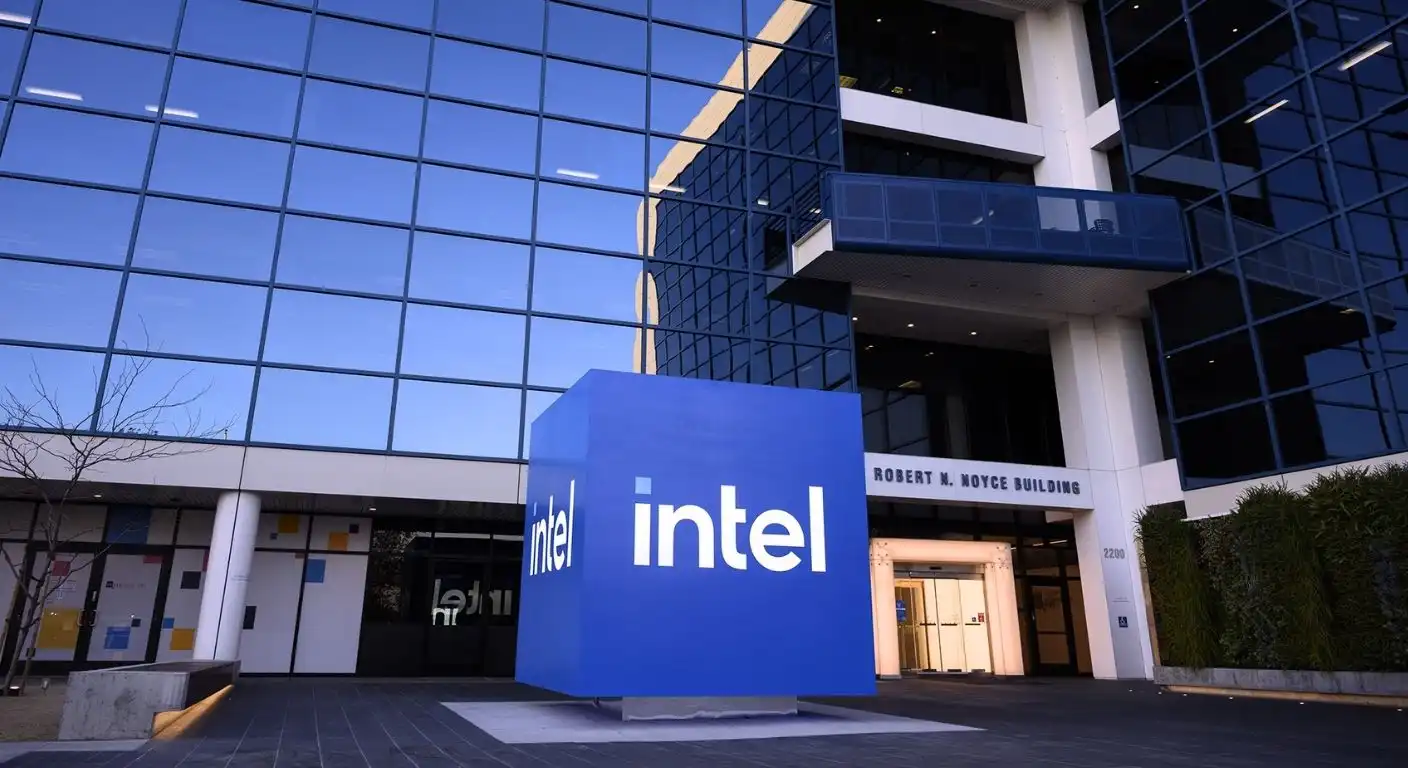
Intel Corporation announced two important leadership appointments today. These changes aim to strengthen the company’s main product business and push forward its innovation goals. The appointments bring fresh expertise and a clearer vision for Intel’s future in key technology areas.
Alex Katouzian will join Intel as executive vice president and general manager of the Client Computing and Physical AI Group. In this new role, Katouzian will work to connect Intel’s client computing business with new “physical AI” systems. These systems include things like robotics, self-operating machines, and other AI-powered devices.
Katouzian comes to Intel from Qualcomm Technologies, where he was most recently executive vice president and group general manager for mobile, computing, and extended reality (XR). He is well-known for his technical insights and a consistent history of successfully carrying out large-scale projects. His experience in mobile and XR could be a big asset as Intel looks to integrate AI more deeply into everyday devices.
Intel also announced that Pushkar Ranade has been officially appointed as Chief Technology Officer (CTO). He moves into this role after serving as interim CTO. As CTO, Ranade will be responsible for advancing Intel’s overall technology strategy. He will also lead special technology projects and drive development in crucial emerging areas such as quantum computing, neuromorphic computing, photonics, and new materials.
Ranade will continue to serve as chief of staff to the CEO. This dual role will help ensure that Intel’s technology strategy is closely aligned with its business priorities. Both Alex Katouzian and Pushkar Ranade will report directly to CEO Lip-Bu Tan, showing their importance to the company’s future direction.
These leadership changes come at a time when Intel is navigating intense competition in the chip industry and looking to reassert its leadership in areas like AI and advanced computing. Bringing in external talent like Katouzian and promoting Ranade, who has a deep understanding of Intel’s internal workings, suggests a balanced approach to driving innovation and market relevance.
The focus on “physical AI” under Katouzian highlights Intel’s ambition to go beyond traditional data center AI, extending its reach into real-world applications where AI interacts directly with its environment. Meanwhile, Ranade’s expanded role as CTO underscores Intel’s commitment to long-term technological advancements that could shape the future of computing.