

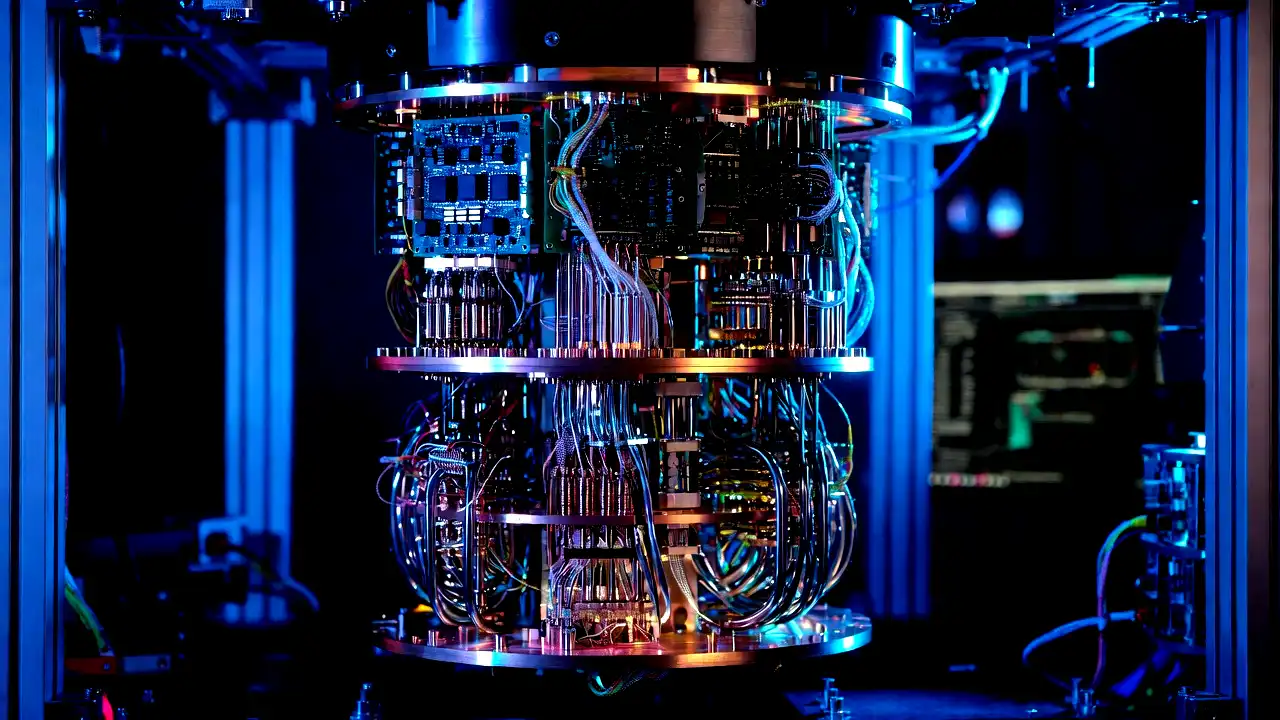
Scientists just reached a massive milestone in medical research. For the very first time, researchers successfully loaded a complete biological genome directly onto a quantum computer. Teams from the Wellcome Sanger Institute joined forces with experts from the universities of Oxford, Cambridge, and Melbourne to celebrate World Quantum Day. They chose the Hepatitis D virus for this complex experiment. By using an advanced IBM quantum computer featuring a 156-qubit Heron processor, the team proved that futuristic hardware can handle real biological data.
The researchers chose the Hepatitis D virus because it has a very compact genetic code. The virus contains roughly 1,700 base pairs, making it the perfect test subject for this early stage of quantum science. To make the experiment work, the team had to compress the complex genetic information into specific quantum states. These compressed states fit perfectly within the strict limits of the IBM machine. This successful test opens the door to solving massive biological problems that easily crash normal computers.
Traditional computers currently struggle to keep up with the massive explosion of medical data. Every day, hospital machines and lab computers face severe processing bottlenecks when scientists try to analyze genetic variations across huge populations. A regular computer looks at genetic codes one tiny piece at a time. When researchers try to analyze sequences from millions of people, standard computer chips simply overheat or run out of memory. This creates a huge delay in discovering new medical treatments and understanding rare genetic diseases.
Medical science has recently moved toward studying pangenomes, which combine genetic sequences from many individuals into a single massive dataset. Instead of relying on a single reference sequence, pangenomes branch onto thousands of data points to capture true genetic diversity. Dr. Sergii Strelchuk, a lead researcher from the University of Oxford, explained that pangenomes look exactly like a tangled maze of information. He noted that regular computers get hopelessly stuck inside this maze. To fix this, his team builds new quantum algorithms to find the absolute best path through the complex data.
Quantum computing offers a very real way to escape this data trap. Unlike a regular computer chip that reads data as either a 0 or a 1, a quantum machine represents many possible outcomes all at the same time inside its unique qubit states. This special ability allows the hardware to run complex genomic calculations far faster than classic methods. The research team wants to hit a massive goal in the near future. They plan to process full human pangenomes exactly 100 times faster than current medical tools.
While the Hepatitis D test did not achieve that massive speed boost today, it clearly demonstrates a realistic path toward achieving a huge quantum advantage. However, some scientists urge caution and warn against expecting instant miracles. Experts point out that we still do not know whether quantum systems will truly outperform classical methods until engineers test much larger genomes. The hardware needs to perform full, deep analyses of complex human DNA before the medical industry completely abandons its traditional supercomputers.
Even with these current physical limits, loading a complete viral genome into quantum hardware remains an impressive technical achievement. The researchers conclusively demonstrated that quantum biology works in the real world. The team now plans to spend the next 5 years focusing on scaling up this exact approach to larger viruses and eventually to human cells. They want to turn this highly experimental lab trick into a reliable, everyday software tool that doctors and researchers can use to cure diseases and save lives.