

Morgan Stanley believes that the evolution of artificial intelligence, particularly towards autonomous AI, will significantly increase demand for Central Processing Units (CPUs) and memory. This shift could reshape how data centers are built and broaden investment beyond the Graphics Processing Units (GPUs) that have largely driven the AI boom until now.
In a Sunday note, Morgan Stanley stated, “As AI transitions from generation to autonomous action, the computing bottleneck is shifting towards CPU and memory, driving a step-change in general-purpose compute intensity.” The brokerage emphasized that demand for GPUs will remain strong, but other components will become increasingly critical.
Morgan Stanley estimates that “agentic AI” could add an extra $32.5 billion to $60 billion to the data-center CPU market by 2030, a market already exceeding $100 billion. Agentic AI refers to systems capable of planning tasks and taking actions independently, rather than merely responding to prompts.
The report suggests that the next wave of agentic AI will rely more on coordination and management of tasks than just raw computing power. CPUs are increasingly serving as the control layer for these complex AI systems that manage multi-step operations.
Along with CPUs, memory demand is also expected to rise sharply. This expansion in AI spending will extend beyond just GPU manufacturers to include chipmakers, memory suppliers, and manufacturing equipment providers. Morgan Stanley also noted that companies in supply-constrained parts of this ecosystem could gain more pricing power.
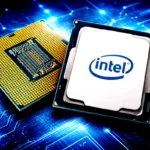
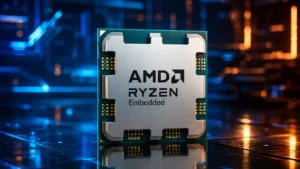
Morgan Stanley identified several companies as potential beneficiaries of this trend. In the CPU and accelerator space, these include Nvidia, AMD, Intel, and Arm. For memory, the brokerage highlighted Micron, Samsung, and SK Hynix. Lastly, in chipmaking and equipment, TSMC and ASML are expected to benefit.
This shift suggests a more diversified investment landscape in the AI sector. While GPUs will continue to be vital, the increasing complexity and autonomous nature of future AI systems will drive a greater need for robust CPUs to manage operations and substantial memory capacity to handle larger datasets and models. This will lead to a broader distribution of investment and opportunity across various segments of the semiconductor industry.