
For decades, the future of computing felt predictable. Our laptops and phones would get a little faster, the batteries would last a little longer, and the screens would get a little brighter. It was a steady march of progress. Now, a new word has entered the conversation, one that sounds like it was pulled from science fiction: “quantum.” It promises a leap in processing power so immense that it’s hard to comprehend, which leads many of us to wonder when we’ll be buying a laptop with a quantum processor inside. The answer is probably never, and that’s the most exciting part.
It’s Not a Faster Car; It’s a Teleporter
The first thing we need to understand is that a quantum processor isn’t just a faster version of the processor in your phone. A regular computer uses “bits,” which are like tiny light switches that can be either on (1) or off (0). A quantum computer uses “qubits,” which, thanks to the bizarre rules of quantum mechanics, can be a 1, a 0, or both at the same time. This doesn’t make it better at opening a web browser or playing a video game. It makes it brilliant at solving a very specific kind of problem: juggling a mind-boggling number of variables at once. It’s not a faster car for your daily commute; it’s a teleportation device for a completely different kind of journey.
The Computer in the Super-Freezer
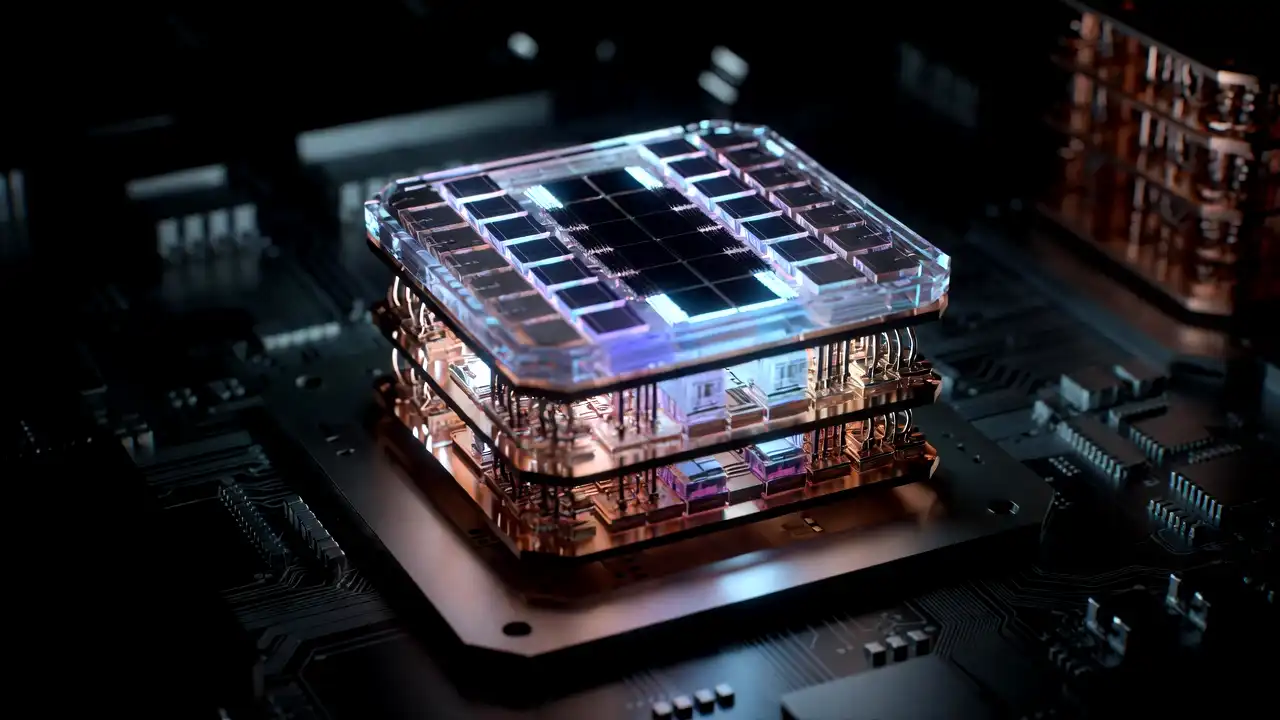
The second reality is the hardware itself. Today’s quantum processors are incredibly delicate. They are house-sized machines that have to be kept in a super-chilled, perfectly isolated environment, colder than deep space, just to keep their fragile qubits from making errors. They are sensitive to the tiniest vibration or change in temperature. This is not a technology that is going to be miniaturized and put into a thin and light laptop anytime soon. The natural home for a quantum computer is not your desk, but a massive, specialized data center owned by a company like Google or IBM.
So, How Will We Actually Use Them?
If you won’t own one, how will a quantum processor change your life? The answer is: indirectly, but profoundly. We will access their power through the cloud. Think about how we use powerful AI models today. You don’t have a giant AI supercomputer in your house; you just type a question into your phone, and the request is sent to a massive data center that does the hard work. The same will be true for quantum computing. A scientist trying to invent a new life-saving drug or a materials engineer designing a revolutionary new battery will be able to send their “impossible” problems to a quantum computer in the cloud.
The Invisible Revolution in Your Pocket
The results of those massive calculations will then be used to create the products we use every day. The new drug that was designed at a molecular level by a quantum computer will improve your health. The new battery material it helped invent will allow your phone to last for a week on a single charge. The quantum computer will be the invisible research and development lab for the entire world. You won’t see it, but you will hold the fruits of its labor in your hand.
A New Kind of Partnership
The future of quantum processors in consumer computing isn’t about replacing the chips in our laptops. It’s about a new kind of partnership. Our classical computers will continue to be our interface to the world, perfect for our everyday tasks. And in the background, when we face a problem that is too big for them to solve, we will have access to a completely new kind of machine, a quantum brain in the cloud, ready to tackle the grand challenges of science and technology. We won’t own the quantum computer, but we will all benefit from the incredible future it will help us build.