

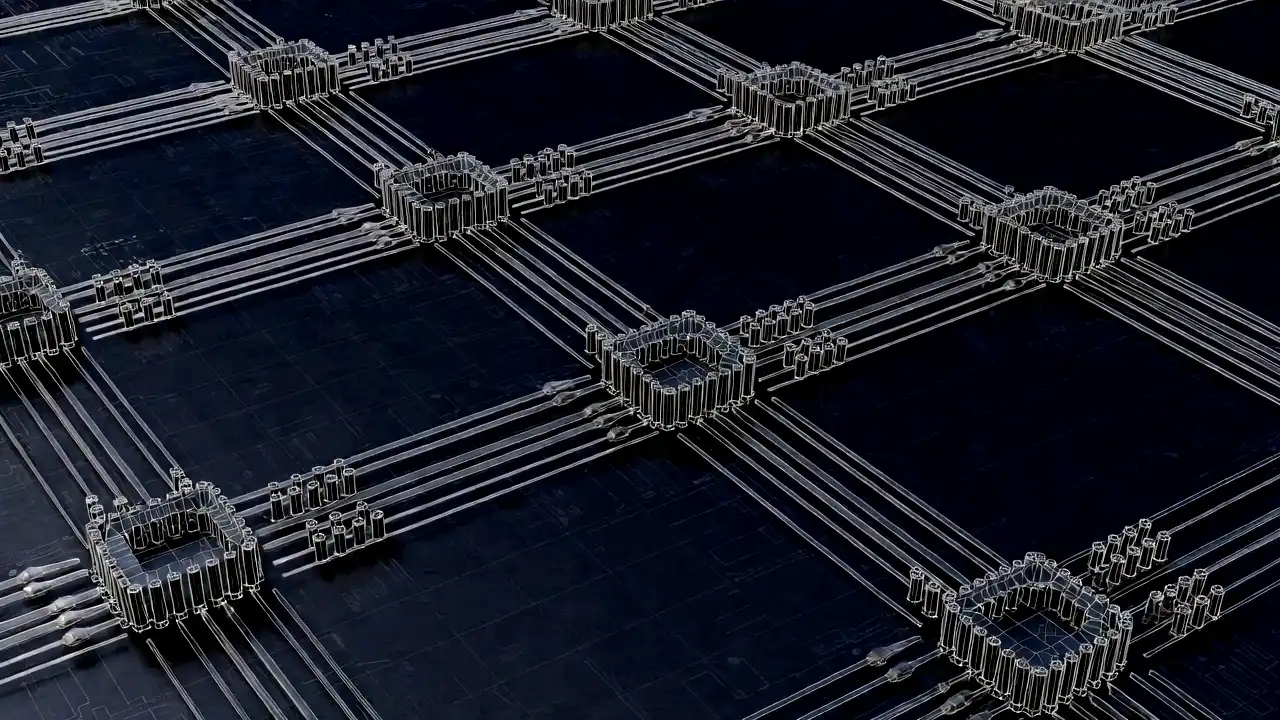
For 50 years, the story of computing has been the story of silicon. The magic of Moore’s Law—the relentless shrinking of silicon transistors—is what gave us everything from the personal computer to the smartphone. But that magic is starting to fade. We are bumping up against the hard physical limits of what silicon can do. We simply can’t make the components any smaller without them breaking down. To keep the revolution going, we need a new hero. And that hero might be made of carbon.
The Silicon Wall
Think of a silicon transistor as a tiny highway for electrons. For decades, we’ve gotten more performance by making the highway smaller and more narrow. The problem is that we’ve now made the highway so narrow that the electrons are starting to “leak” out, a quantum phenomenon called tunneling. It’s like trying to build a water pipe that’s only a few molecules thick; the water just starts seeping through the walls. This leakage wastes energy, generates heat, and makes the transistor unreliable. We have hit the silicon wall.
Enter the Perfect Straw
This is where a strange and wonderful material comes into the picture: the carbon nanotube (CNT). Imagine a sheet of carbon atoms, one atom thick, rolled up into a perfect, seamless tube. It’s like an infinitesimally small, perfectly constructed straw. This structure is a miracle of material science. It’s stronger than steel, and, most importantly, it’s an almost perfect conductor of electricity. Electrons can flow through this perfect tube with virtually no resistance, like water through a frictionless pipe.
The Two Big Wins: Speed and Efficiency
This perfect structure gives us two revolutionary advantages over silicon. The first is speed. Because electrons can move so easily through a nanotube, a CNT-based transistor can switch on and off much faster than a silicon one. This could lead to processors that are many times faster than the ones we have today. The second, and perhaps more important, advantage is efficiency. Less resistance means less wasted energy. Less wasted energy means less heat. A computer built with CNT transistors would be not just faster, but also radically more power-efficient. Imagine a phone that lasts for days on a single charge or a laptop that doesn’t need a noisy fan.
The Billion-Tube Challenge
So if these nanotubes are so great, why aren’t they in our computers already? The answer is a massive manufacturing challenge. A modern processor has billions of transistors, and each one needs to be perfect. Right now, it’s incredibly difficult to grow carbon nanotubes that are 100% pure and to align billions of them perfectly on a chip. This isn’t a science problem; we know the material works. It’s a colossal engineering puzzle. But brilliant teams at universities and companies around the world are making incredible progress, developing new techniques to purify and place these tiny tubes with ever-increasing precision.
The Heir to the Throne
Silicon has been a fantastic workhorse, and it will be with us for years to come. But its time as the king of high-performance computing is coming to an end. Carbon nanotube transistors represent the most promising heir to the throne. The road to mass production is steep and difficult, but the prize at the end is a future of faster, more efficient, and more powerful computing than we can currently imagine. The quest to build the next generation of computers is now a quest to master the art of building with carbon, one perfect, atom-thick tube at a time.