
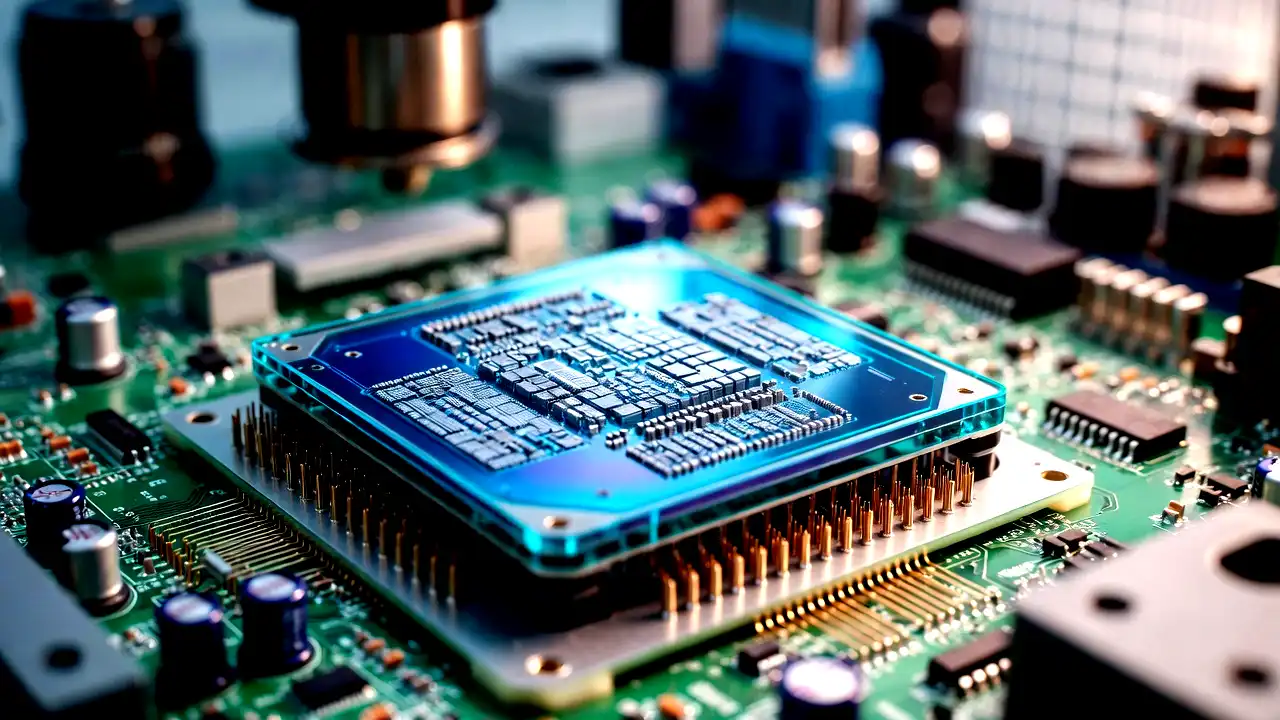
We spent the last decade obsessed with software. We marveled at the code that could write poetry or beat a grandmaster at chess. But in 2026, the conversation has shifted. We realized that a brilliant mind is useless without a body that can keep up. The bottleneck for autonomous systems—whether it’s a delivery drone or a self-driving truck—was never just the algorithm. It was the chip. We are now in the middle of a hardware revolution that is finally giving machines the physical speed to match their digital intelligence.
Chips That Copy the Human Brain
For years, we ran artificial intelligence on graphics cards designed for video games. They were powerful, but they were energy hogs. Today, we build chips specifically for thinking. These “neuromorphic” processors mimic the structure of the human brain. They don’t just crunch numbers in a straight line; they fire signals in a web, just like neurons. This allows a robot to recognize a face or a stop sign instantly using a fraction of the power. We stopped forcing the software to fit the hardware and started building the hardware to fit the mind.
Speed Is a Matter of Life and Death
A self-driving car cannot wait for a server in a data center to tell it to brake. That split-second delay creates accidents. The new rule is “edge computing.” The AI hardware lives right there on the device, not in the cloud. The car processes the image of a child running into the street and hits the brakes before it even sends a signal to the internet. This zero-latency processing makes autonomous systems safe enough for real-world chaos. The machine thinks for itself, right where it stands.
The Camera Becomes the Computer
In the old days, a sensor took a picture and sent the heavy file to a central computer to analyze. That was slow and wasteful. Now, the sensors are smart. A modern camera on a factory robot analyzes the video feed itself. It filters out the noise and only sends the relevant data to the main processor. If nothing changes in the scene, it stays quiet. This “sensor fusion” reduces the workload on the central brain and speeds up reaction times. The eyes of the machine are doing the thinking before the brain even gets involved.
Doing More with Less Power
An amazing robot is useless if the battery dies in twenty minutes. The biggest fight in 2026 is for efficiency per watt. Engineers are pushing the limits of physics to make chips that sip electricity instead of guzzling it. This is why we now see delivery drones that can fly across the city and back on a single charge. It is why warehouse robots work a full twelve-hour shift without stopping. The hardware handles the complex math without draining the juice, making autonomy practical for the first time.
Cooling Down the Thinking Machine
Thinking creates heat. Early AI systems needed giant fans and liquid cooling systems just to keep from melting. That works in a server room, but you can’t put a giant fan inside a small medical robot. The new generation of AI hardware runs incredibly cool. We are seeing the rise of optical computing, which uses light instead of electricity to move data. Light creates almost no heat. This allows us to pack massive computing power into tiny, sealed devices that don’t need heavy cooling equipment.
The Fight for the Factory Floor
We realized that relying on a single foreign supply chain for these critical chips was a massive risk. Nations and companies are racing to build their own AI hardware factories. It is a matter of security. If you cannot build the brain of the machine, you cannot build the machine. We are seeing a boom in local manufacturing to ensure the robots keep rolling. The country that stamps the silicon controls the speed of the future.
Conclusion
Software is still important, but hardware is the engine that drives it. We have entered a golden age of silicon where the physical computer matters just as much as the code running on it. By building specialized, efficient, and fast AI chips, we are finally giving autonomous systems the power they need to navigate our world safely. We are building bodies that are finally as smart as the minds we programmed.