
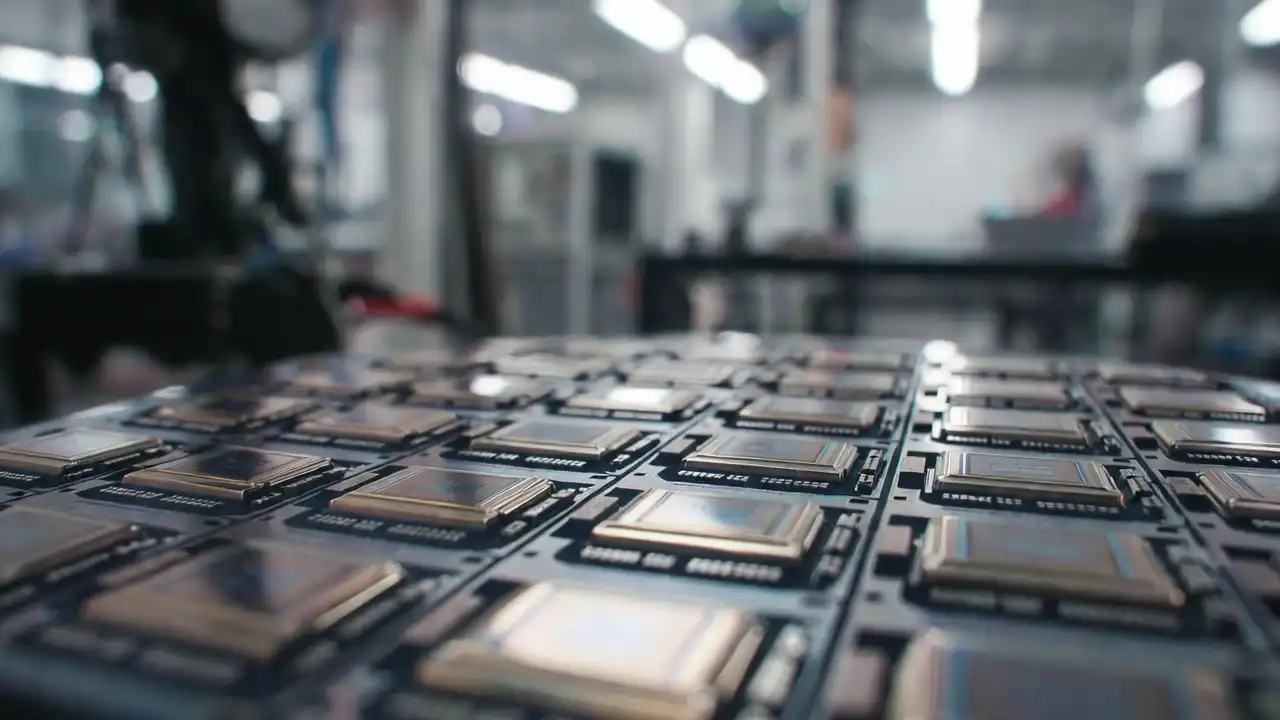
For the past 50 years, our world has been built on a silent hum—the hum of electricity flowing through silicon. Our computers, our phones, and the entire internet run on electrons, tiny particles pushing their way through microscopic copper highways. But that hum is not the sound of pure efficiency. It’s the sound of a traffic jam. The electrons are bumping into each other, creating resistance and generating heat. We are reaching the physical limits of how fast and how small we can make these electronic roads. To take the next great leap in computing, we need a new kind of highway. And that highway will be built with light.
The Problem with Electrons
The fundamental problem with our current computers is that they run on things with mass. Electrons are physical particles. When you force billions of them through a tiny wire, they behave like a crowd in a narrow hallway. They jostle, they create friction, and they waste a huge amount of energy as heat. This is why your laptop gets hot and needs a fan. It’s why massive data centers spend almost as much money on air conditioning as they do on computing. We are fighting a constant battle against the heat generated by our own electronic friction.
The Freedom of the Photon
This is where photonic processors come in. A photonic processor doesn’t use electrons to do its calculations; it uses photons, the fundamental particles of light. And photons are magical. They have no mass. They travel at the speed of light. And, most importantly, two beams of light can pass right through each other without interfering. The traffic jam is over. A photonic chip replaces the copper wires with tiny, microscopic waveguides that steer beams of light. It’s a computer that runs not on a flow of particles, but on a flicker of light.
The Two Great Wins: Speed and Efficiency
This shift from electricity to light gives us two revolutionary advantages. The first is speed. Information transmitted as light is moving at the ultimate speed limit of the universe. This has the potential to create processors that are orders of magnitude faster than anything we have today, performing calculations with virtually no delay. The second, and perhaps more important, advantage is efficiency. Because photons don’t create friction, a photonic processor generates a tiny fraction of the heat of an electronic one. Imagine a data center that doesn’t need a colossal cooling system, or a phone that could run for days on a single charge. This isn’t just a speed boost; it’s a radical solution to the energy crisis of modern computing.
Where Will We See It First?
You won’t be buying a photonic laptop next year. This technology is still in its early days, and it’s incredibly complex to manufacture. The first place we will see this revolution is in the belly of the beast: the massive data centers that power our AI models and cloud services. These are the places where the demand for speed and energy efficiency is most intense. The first photonic processors will be highly specialized co-processors, working alongside traditional chips to handle the brutal workload of training the next generation of artificial intelligence.
A New Era of Computation
The silicon chip and the electron gave us the digital revolution. They took us from the vacuum tube to the smartphone. But that era is reaching its physical end. The photonic processor represents the next great paradigm shift. It is a fundamental rethinking of what a computer is, trading the silent hum of electricity for the silent flash of light. The journey will be long, but the destination is a future where the only limit to our computing power is the speed of light itself.